
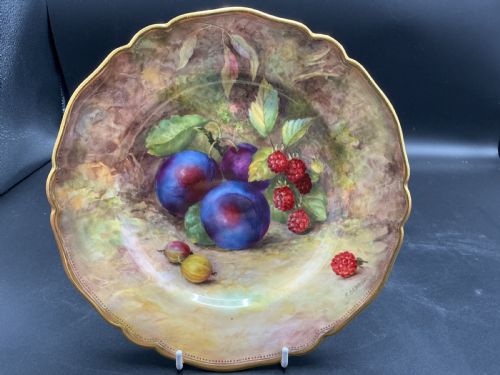
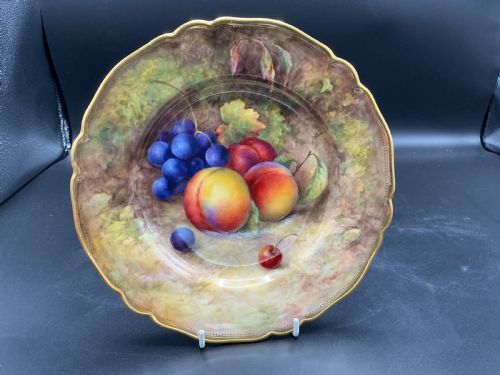
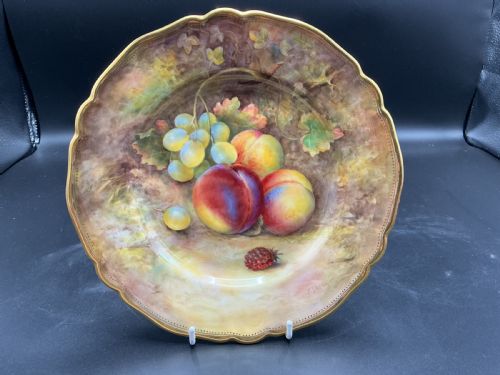
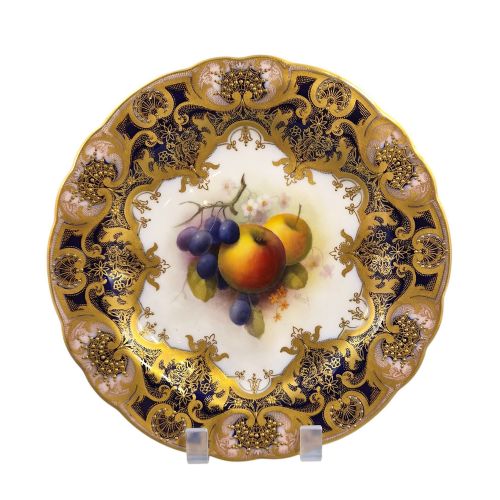
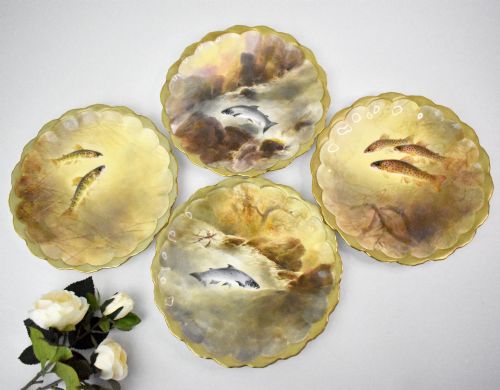


Gold Rimmed Cabinet Plate
These gold rimmed cabinet plate examples offer hand-painted artistry and fine porcelain for display.
Gold Rimmed Cabinet Plate
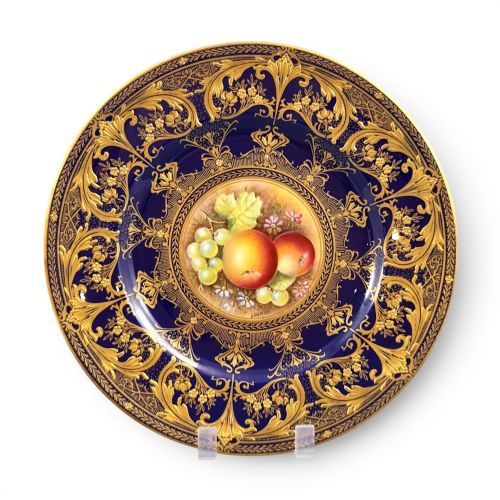
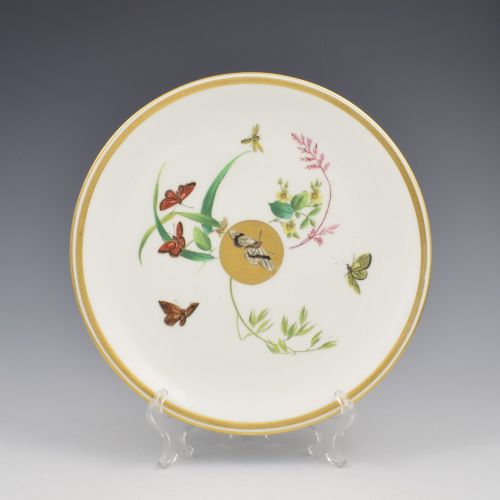
A gold rimmed cabinet plate is a decorative ceramic piece meant for display rather than daily dining, often featuring hand-painted scenes or botanical studies. Buyers searching for a gold rimmed cabinet plate encounter Victorian and Edwardian works alongside mid-twentieth-century designs.
The selections span bone china and porcelain forms from English potteries and continental makers. Forms range from standard cabinet plates and dishes to larger wall chargers and dessert service pieces.
Makers represented include Royal Worcester, Royal Doulton, Minton, Coalport, and Wedgwood. Dates stretch from the nineteenth century through the 1960s.
Materials and Craftsmanship
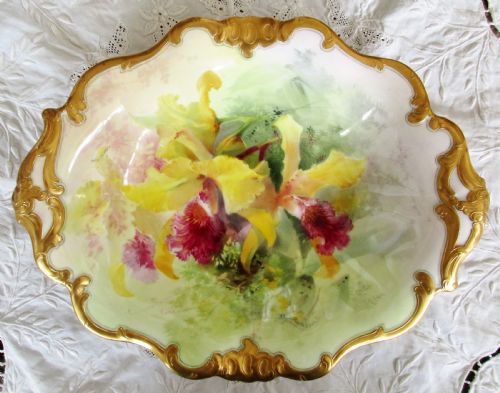
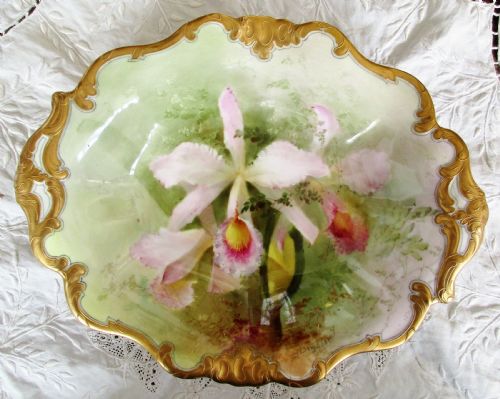
Potters shaped fine porcelain and bone china into plates, chargers, and basketweave dishes. Artisans applied hand-painted details including fruit, orchids, fish, and historical scenes.
Gilding, gold leaf, and gilt enamel provided the distinctive metallic borders and highlights. Kiln firing fixed both the ceramic body and the surface enamel decoration.
Listings feature porcelain and bone china pieces spanning the nineteenth century through the 1960s, incorporating Victorian and Edwardian styles.
Distinctions in Quality
The skill of the hand-painted subject matter largely defines the standard of the work, from detailed fruit studies to simpler patterns. Signed pieces by known painters carry distinct artistic attribution.
The application of gold leaf and the crispness of the porcelain moulding separate standard production from exhibition-grade plates.
Royal Worcester·Royal Doulton·Minton·Coalport·Wedgwood·Bloor Derby·Royal Crown Derby·John Ridgway·Fukagawa
The Gold Rimmed Cabinet Plate Glossary
- Cabinet plate
- A decorative ceramic plate intended for display in a cabinet or on a wall rather than for practical table use. These pieces often feature elaborate painted subjects and gilt borders.
- Gilding
- The application of gold leaf or gold paint to the rim or surface of ceramics. This technique frames the painted central design.
- Bone china
- A type of soft-paste porcelain containing bone ash, known for its high strength and milky whiteness. English potteries utilised this material extensively.
- Charger
- A large decorative plate used as a base or displayed on its own. They provide a wider canvas for painted scenes than standard dinner plates.
Gold Rimmed Cabinet Plate: Frequently Asked Questions
How were cabinet plates displayed?
These plates were typically shown in glass-fronted cabinets or hung on walls using specialist wire hangers. They served as focal points in Victorian and Edwardian drawing rooms.
Owners curated them to showcase artistic taste and fine porcelain manufacturing.
What subjects are painted on them?
Common motifs include botanical studies of orchids, natural history subjects like fish, and detailed fruit compositions. Classical scenes and Japanese-inspired aesthetic designs also appear.
Artists often signed their painted works directly onto the ceramic surface.
Are these plates meant for dining?
Cabinet plates and chargers are created for visual display rather than daily service use. Their delicate porcelain bodies and raised gilding are vulnerable to cutlery marks.
Using them for food risks damaging the painted enamel and gold rims.
How do I identify the period?
Makers' marks on the reverse of the porcelain provide the primary clue to dating a piece. Stylistic markers such as aesthetic movement patterns or rococo revival shapes also indicate the era.
Exhibition plates and signed artist works often correspond to specific decades between the nineteenth and twentieth centuries.