
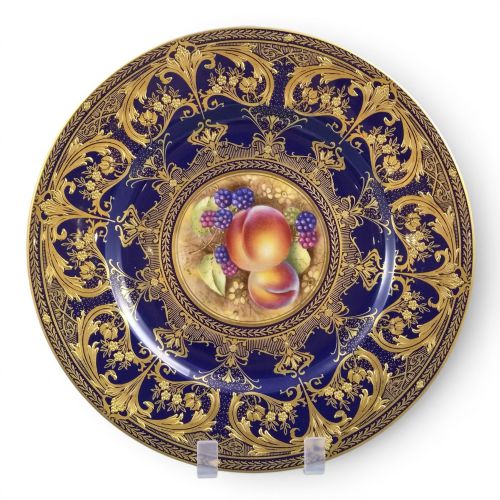
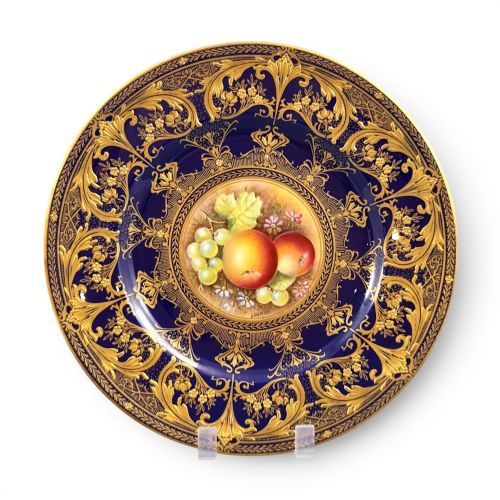


Royal Worcester Fruit Plate
A royal worcester fruit plate brings painted naturalism and rich gilding to the table, making these fine porcelain pieces enduringly collectable.
Identifying Royal Worcester Fruit Plates
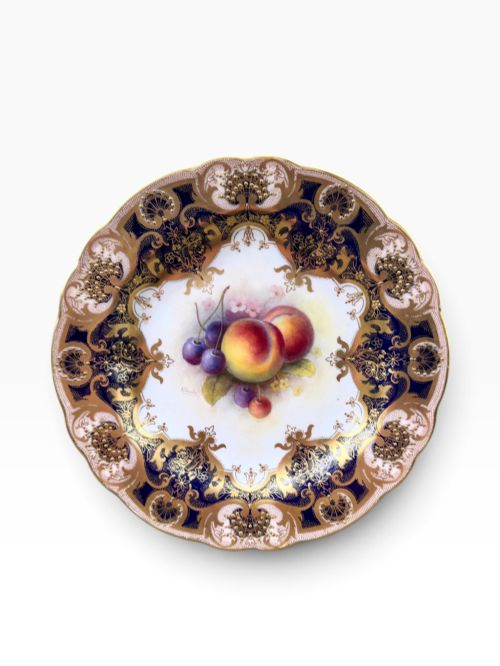
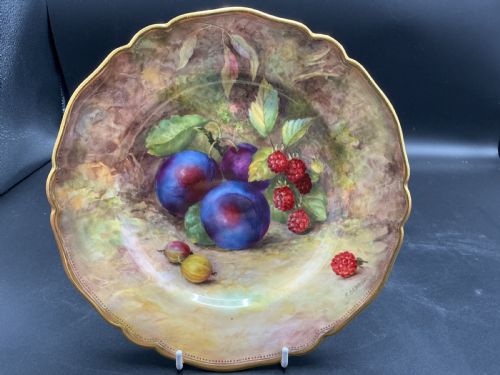
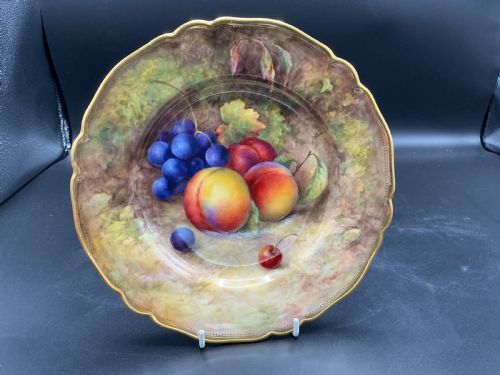
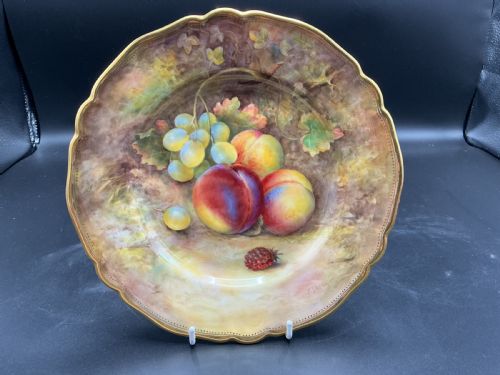
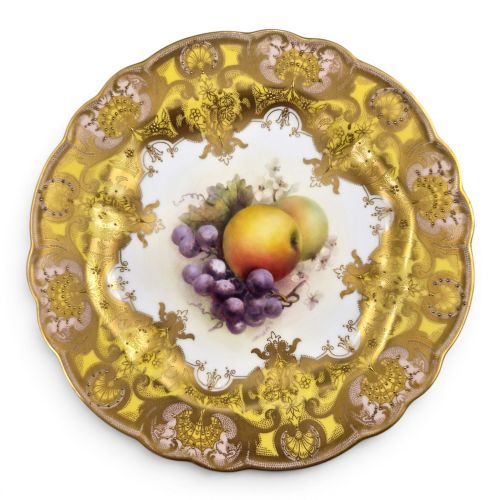
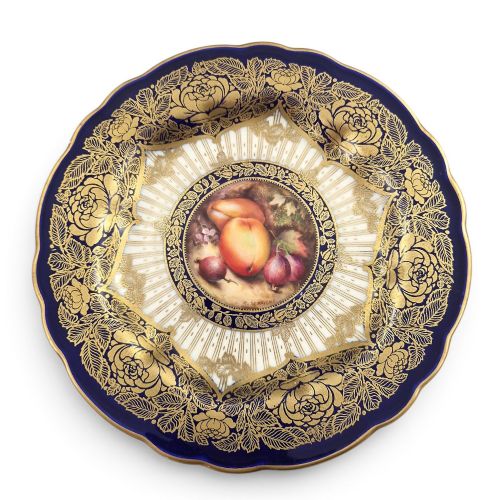
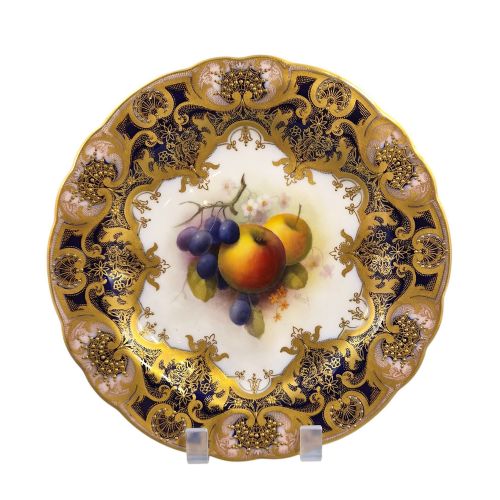
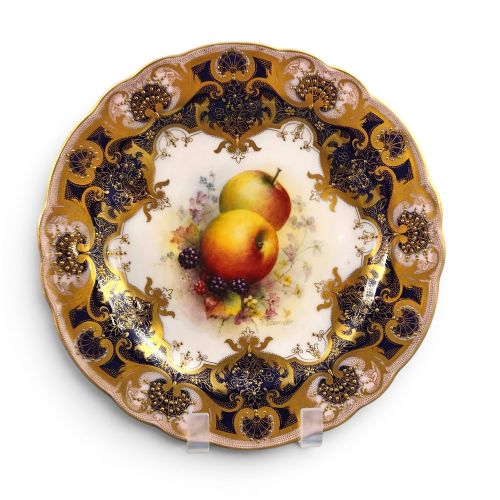
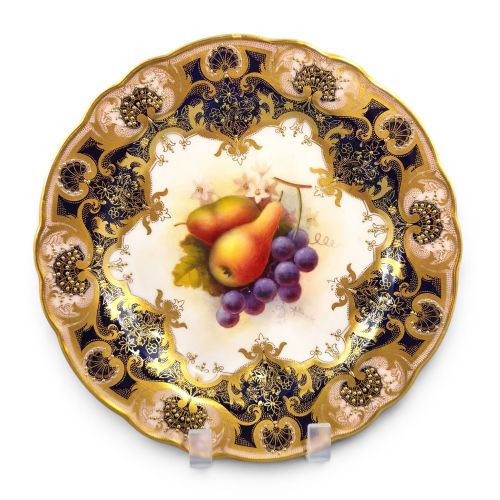
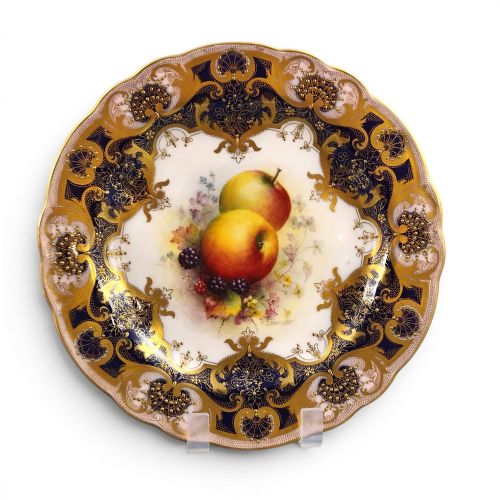
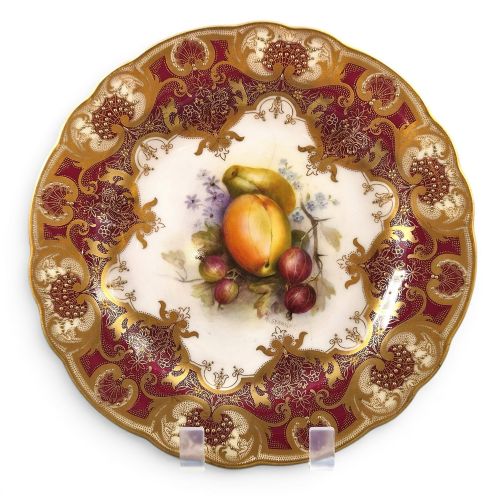
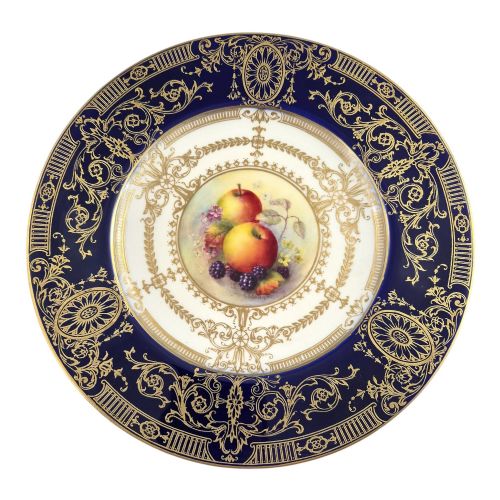
A royal worcester fruit plate is a fine porcelain piece created for display in cabinets or formal dining. Most examples take the form of cabinet plates featuring hand-painted studies of peaches, apples, cherries, and blackberries.
The objects span periods from the Edwardian era through the nineteen fifties, including George V and Art Deco influences. Makers adapted the basic form into various edges, such as rope edges, star edges, and ribbon handles.
Collectors frequently encounter cabinet plates and dinner plates bearing the signatures of celebrated porcelain artists. These pieces range from standard tea plates to large dinner sizes and sandwich plates.
Materials and Techniques
Potters shaped porcelain and bone china to form the body of each plate before applying a smooth white glaze. Artisans then painted naturalistic fruit studies using detailed enamel pigments.
Decorators finished the borders with gold leaf, gilding, and acid etched gilt patterns to frame the central painted fruit. Many items feature raised gilt detailing around rope edges and star edges.
Retail Price Guide 2026
Typical UK retail prices for royal worcester fruit plate, calculated from the Sellingantiques database of over a million retail prices indexed since 2003. This retail price guide relies exclusively on Sellingantiques data; no external sources or auction records are used, so the figures do not describe the wider market.
Richard Sebright painted so many peaches and blackberries that British dining rooms essentially became orchards.
Assessing Quality and Execution
The distinction between standard items and the top of the range rests upon the skill of the artist and the complexity of the gilding. Signed work by master painters commands greater attention than unsigned production.
Elaborate borders involving acid etched gilt and heavy gold leaf elevate a piece above plain edge variants. The density of the painted fruit and the subtlety of the enamel shading determine visual depth.
Albert Shuck·Richard Sebright·Brian Leaman·Maple and Co·Horace Price·Harry Ayrton·J Smith
The Royal Worcester Fruit Plate Glossary
- Cabinet plate
- A decorative ceramic piece intended for display in a cabinet rather than for everyday dining. These items often feature intricate hand-painted central motifs and rich gilding.
- Acid etched gilt
- A decorative technique where acid bites into the porcelain surface before gilding, creating a textured matte and shiny gold pattern. This method adds depth to the borders.
- Rope edge
- A moulded plate rim shaped to resemble a twisted rope, frequently highlighted with gold leaf. It appears widely on dessert and dinner sizes.
- Enamel
- Opaque glass-like pigments applied over the glaze to render vibrant colours in fruit studies. Firing fixes these pigments permanently to the porcelain.
- Bone china
- A type of porcelain incorporating bone ash, yielding a strong, translucent body suited to fine tablewares. It forms the foundation for many painted works.
Frequently Asked Questions
Are these plates meant for dining?
Most examples function primarily as cabinet pieces or decorative items rather than everyday tableware.
The delicate enamel painting and extensive gilding are preserved best when kept away from regular use and dishwashers.
How do I know who painted the fruit?
Many decorators signed their work directly onto the painted surface near the fruit cluster.
Signatures such as Sebright or Ayrton indicate individual artistry, while unsigned pieces rely on factory marks for dating.
What edge styles exist on these plates?
Potters shaped the rims into rope edges, star edges, and plain configurations.
Some specialist serving pieces also include ribbon handles or sandwich plate formats.
When were these painted pieces made?
The recorded output spans the Edwardian period through the mid twentieth century, including the nineteen twenties and thirties.
Stylistic shifts reflect periods from George V designs to later Art Deco influences.