

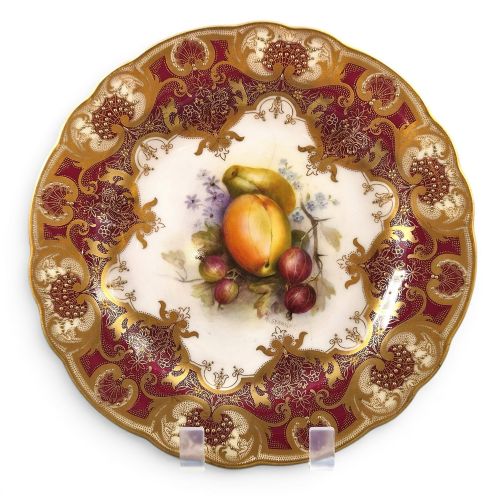
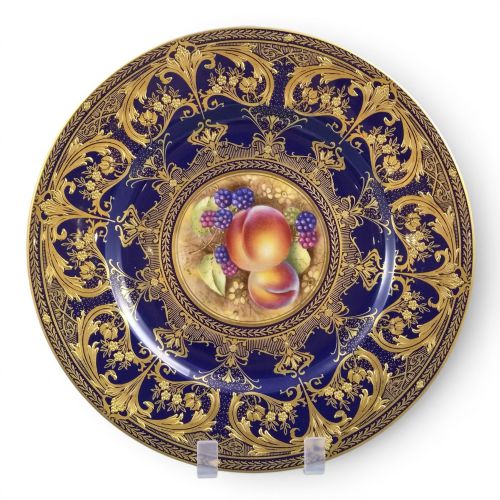
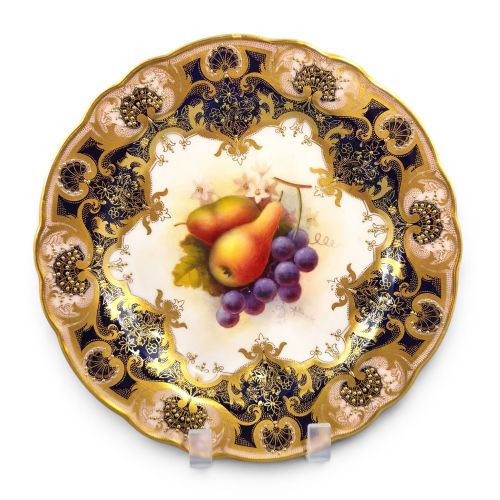
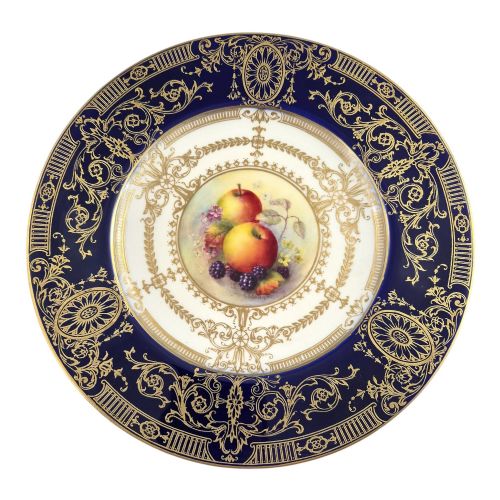


Signed Royal Worcester Plate
A signed royal worcester plate brings studio-painted fruit and florals into the home, prized by collectors for hand-painted artistry.
Signed Royal Worcester Plate
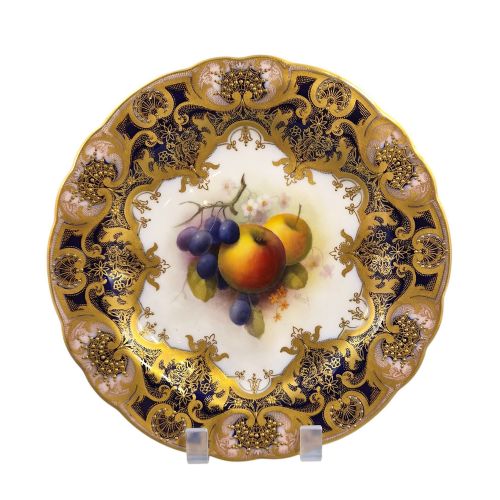
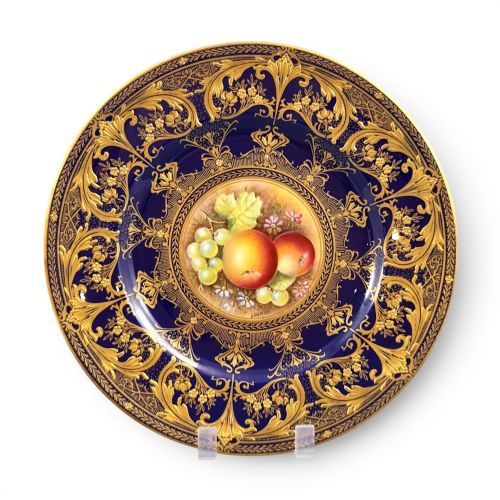
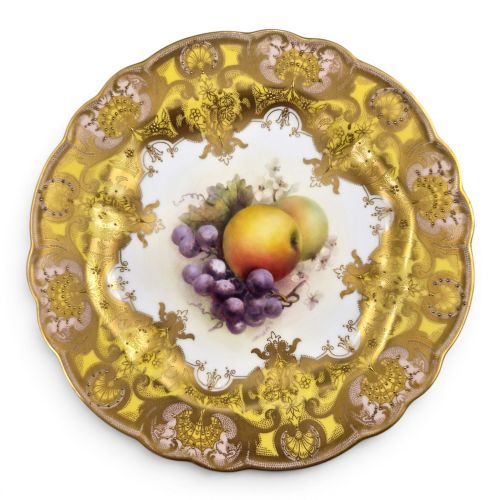
A signed royal worcester plate represents the peak of British porcelain painting, featuring detailed studies of fruit and flowers. These pieces function primarily as cabinet plates and decorative dishes rather than everyday tableware.
The pieces on this page span several decades, including Edwardian examples alongside 1920s, 1930s, and mid-century items. The most common form met here is the fruit-painted cabinet plate bearing a recognised artist signature.
Makers and decorators worked within traditional English styles, producing rope edge, star edge, and standard cabinet formats. Each dish serves as a canvas for botanical and still-life artistry executed on porcelain.
Materials and manufacture
The manufacture relies upon fine porcelain and bone china as the core body for each dish. Artisans applied enamel paints by hand to depict fruit and floral subjects directly onto the ceramic surface.
Gold leaf, gilding, and gold gilding were applied to the rims and borders to frame the central painted scene. These metallic highlights underwent kiln firing to bond securely with the porcelain body.
Signed Royal Worcester Plate Retail Price Guide 2026
Typical asking prices for signed royal worcester plate among the pieces listed under this phrase on Sellingantiques today, from the lower quarter to the upper quarter. They describe what is for sale here now, not the wider market.
Painters spent decades perfecting the exact sheen of a ripe peach on porcelain.
Assessing quality
Quality rests primarily upon the skill of the painter and the complexity of the fruit or floral arrangement. Plates bearing signatures from established studio artists demonstrate superior brushwork and depth of colour compared to standard productions.
The richness of the gilding and the crispness of moulded edge details, such as rope or star borders, also separate standard items from finer examples. Preservation of the enamel colours without rubbing indicates careful handling over the decades.
Richard Sebright·Albert Shuck·Harry Ayrton·Brian Leaman·Ernest Phillips
The Signed Royal Worcester Plate Glossary
- Cabinet plate
- A decorative ceramic dish intended for display in a cabinet rather than for dining use. These items usually feature intricate painted scenes.
- Bone china
- A type of porcelain containing bone ash that offers high strength, chip resistance, and a translucent white body. It forms the base for many fine British ceramics.
- Gilding
- The application of gold leaf or gold paint to ceramic surfaces, particularly along rims. This technique adds a decorative metallic border to framed painted scenes.
- Enamel
- Vitreous coloured glass fused to porcelain during firing to create permanent painted imagery. Artists use these pigments for detailed botanical and fruit studies.
- Rope edge
- A moulded ceramic border shaped to resemble twisted rope. This stylistic feature often frames hand-painted fruit compositions.
Signed Royal Worcester Plate: Frequently Asked Questions
How were these plates used?
These pieces were created primarily for display in cabinets or on sideboards as decorative works of art rather than for serving food.
Their delicate enamel painting and gold leaf borders made them unsuited for everyday dining, positioning them as luxury display items.
How do I identify the artist?
Signatures typically appear in script near the edge of the central painted fruit or floral scene. Examining the initials or full surname allows collectors to attribute the work to specific studio painters.
Comparing the signature style against known factory records helps confirm the decorator and approximate production period.
What are rope edge plates?
Rope edge plates feature a moulded rim that imitates the texture of a twisted cord, framing the central painting. This decorative border was popular across various decades of production.
The style adds tactile relief to the perimeter of the porcelain dish, complementing the detailed fruit studies in the centre.
How should I care for them?
Display these items away from direct sunlight to prevent any fading of the hand-painted enamel colours over time. Dust them gently with a soft cloth and avoid using chemical cleaning agents on the gilded borders.
When storing or moving the dishes, use padded dividers to protect the porcelain surfaces and metallic rims from friction.