

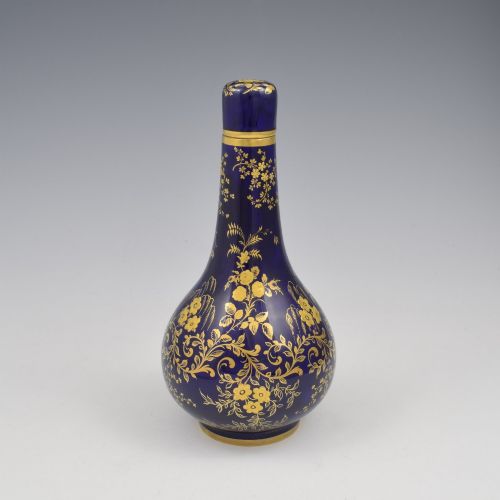
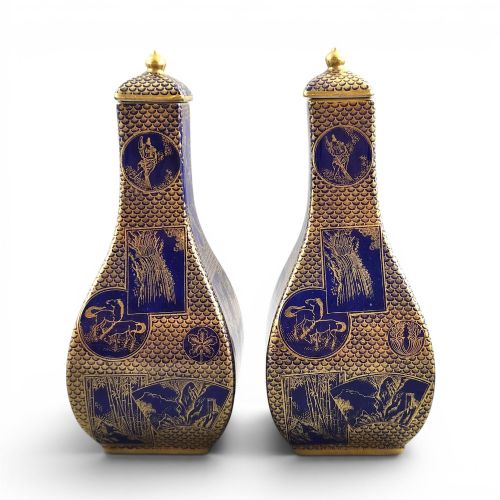

Gold Porcelain Vase
A gold porcelain vase brings together luminous ceramic bodies and rich metal leaf or gilding to catch the eye.
Gold Porcelain Vase
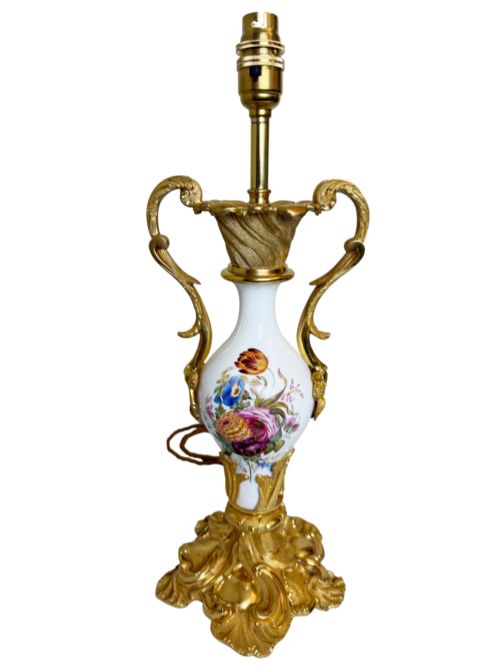
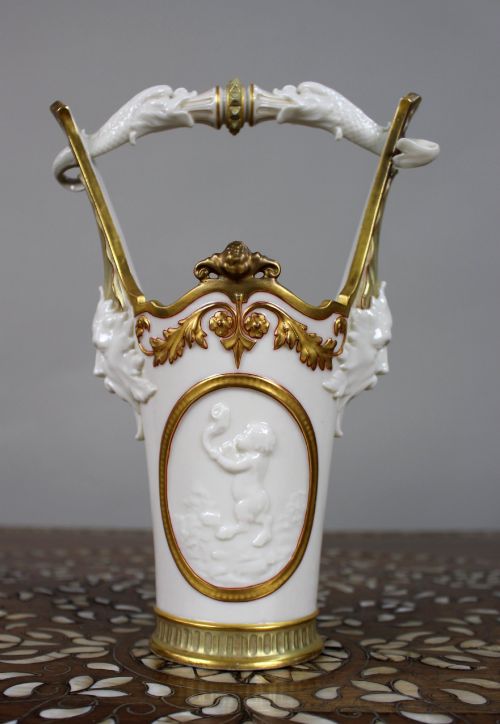
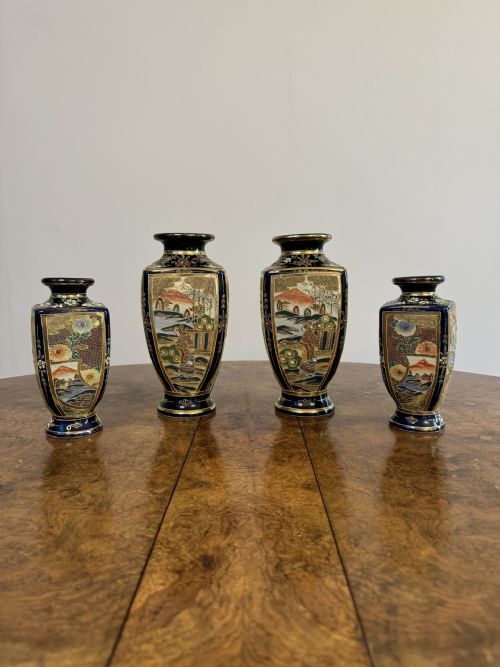
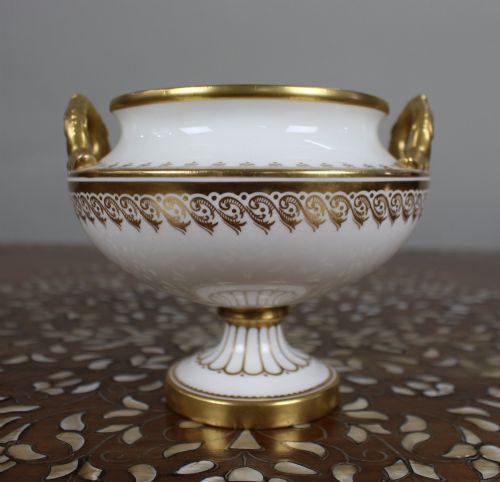
A gold porcelain vase combines a ceramic body with metallic decoration, appearing across centuries of English, European, and Japanese production. When searching this phrase, a buyer encounters forms ranging from intimate miniature vessels and cabinet pieces to large garniture sets and converted table lamps.
The selections span periods from the Georgian and Regency eras through the Victorian decades and into the twentieth century. English factories such as Worcester, Spode, and Coalport sit alongside continental makers and Japanese Satsuma workshops in the material record.
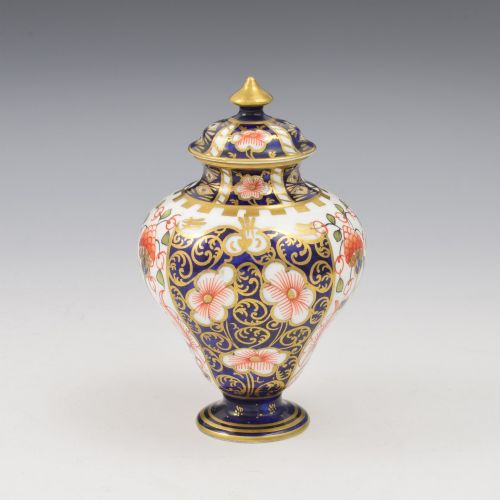
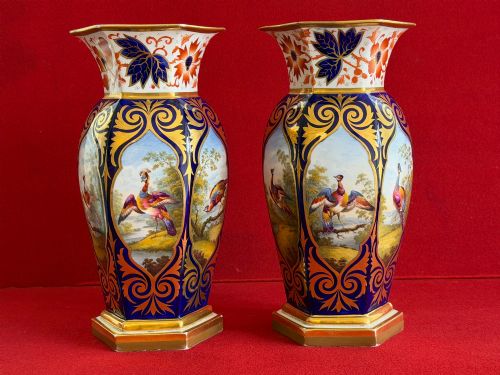
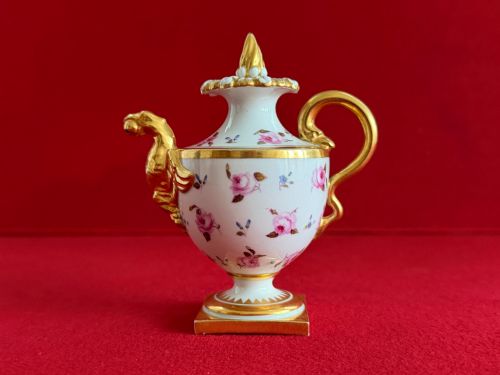
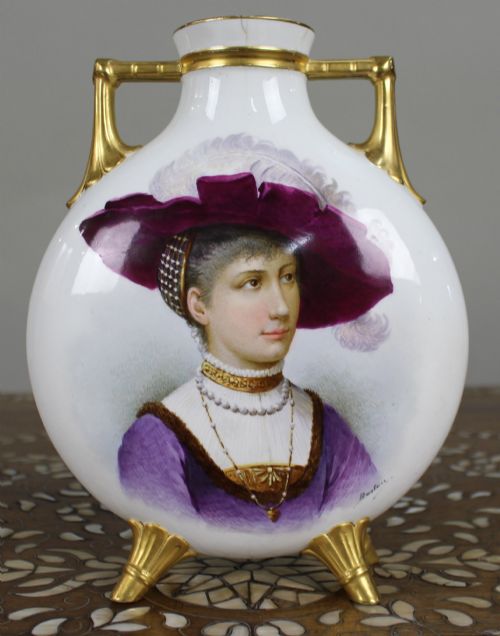
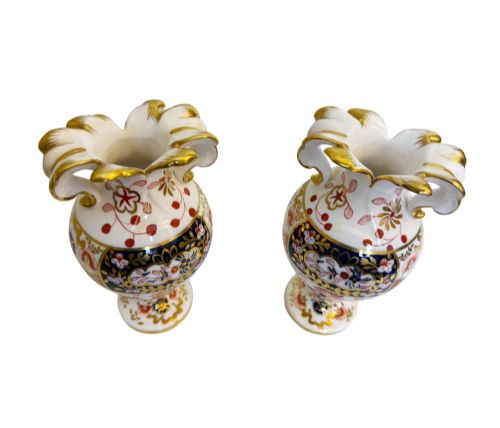
Vessels take many shapes, including campagna urns, moon flasks, amphorae, and lidded jars. Glazed surfaces often feature hand-painted floral motifs, figural scenes, or Imari palettes enhanced by applied gold leaf and gilding.
Materials and technique
Makers shaped fine clay bodies into porcelain, earthenware, or ironstone before firing them at high temperatures to create durable vessels. Artisans then applied white, blue, or coloured glazes as a foundation for subsequent ornamentation.
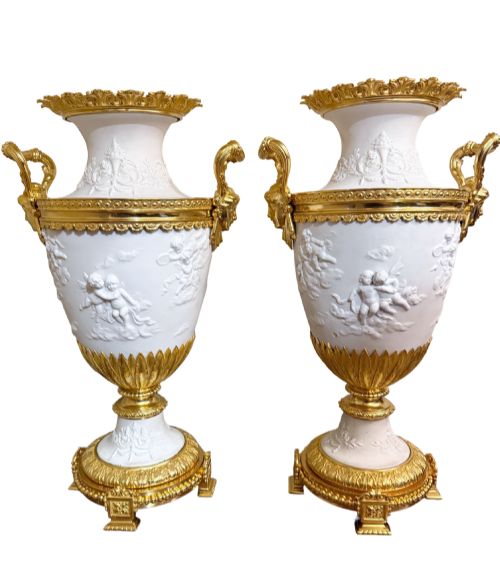
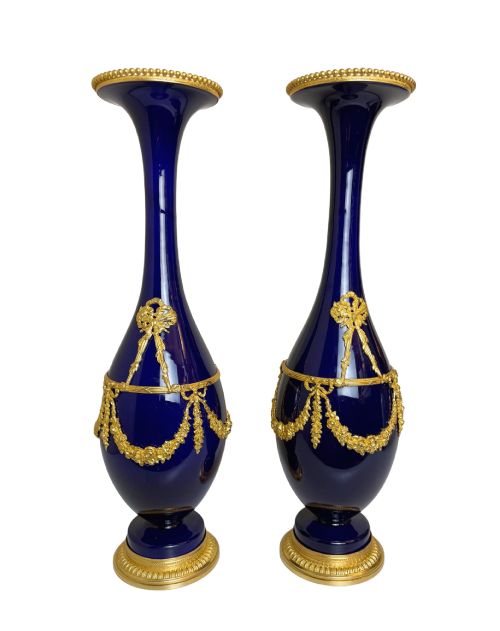
Decoration relied on skilled hand-painting with enamel colours followed by the careful application of gold leaf, liquid gold, or gilding. Many continental and English pieces also integrated cast gilt bronze or ormolu mounts to frame the ceramic body.
Some nineteenth-century makers decorated parrot vases with vibrant enamels designed to mimic tropical plumage under the parlour light.
Distinctions in quality
The standard of a piece rests upon the precision of the hand-painted details and the depth of the gilding. Fine examples display crisp brushwork in figural or botanical scenes executed by named artists or recognised factory studios.
The integration of metal mounts, such as cast gilt bronze or ormolu, separates standard production from exceptional works. Heavier, more complex ceramic forms with intricate reticulation or sculptural handles also indicate higher levels of craftsmanship.
Flight Barr and Barr·Royal Worcester·Spode·Coalport
The Gold Porcelain Vase Glossary
- Imari
- A decorative style featuring rich underglaze blue and iron red ironstone or porcelain enhanced with gold highlights.
- Gilding
- The application of gold leaf or ground gold to ceramic surfaces to create metallic highlights and borders.
- Ormolu
- Cast bronze mounts treated with a gold wash or mercury gilding, frequently seen framing nineteenth-century vessels.
- Campagna urn
- A bell-shaped classical vessel form set on a pedestal foot, often fitted with two loop handles.
- Reticulation
- An openwork ceramic technique where portions of the vessel wall are cut out before firing to create a lace-like pattern.
Gold Porcelain Vase: Frequently Asked Questions
How do I date a gold porcelain vase?
Dating relies on factory backstamps, ceramic body composition, and stylistic markers such as Regency shapes or Aesthetic Movement motifs. Examining the application of the gilding and any signatures also helps place the piece within a specific period.
Changes in glaze technology and registration numbers further narrow the production window for nineteenth and twentieth-century examples.
Were these vases meant for flowers?
Many forms served purely decorative functions on mantlepieces, cabinets, or as part of large garniture sets. Specific shapes like rose water sprinklers, pot-pourri jars, and spill vases were designed to hold botanicals or scent.
Using antique vessels with water requires caution to protect internal historic glazes from mineral deposits.
What is Satsuma porcelain?
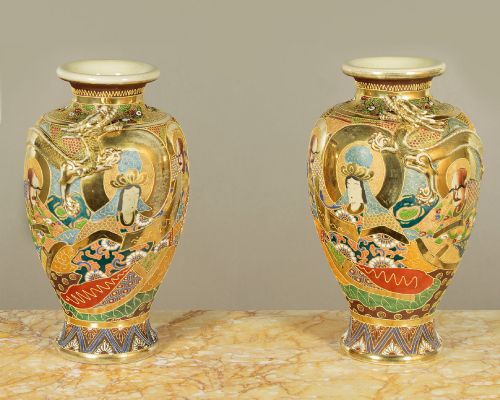
Satsuma ware consists of an earthenware or ceramic body covered with a characteristic ivory crackle glaze. Artisans decorated these surfaces with elaborate enamel patterns and heavy gold leaf.
Many fine examples were produced in Kyoto and Kobe for export during the nineteenth and early twentieth centuries.
How should I clean gilded porcelain?
Dusting with a soft, dry cloth is the safest method to maintain delicate enamel and gold leaf surfaces. Moisture and modern cleaning agents can lift fragile gilding applied over the glaze.
Professional conservation advice should be sought for pieces with significant accumulation of grime.