




Gold Ormolu Bowl
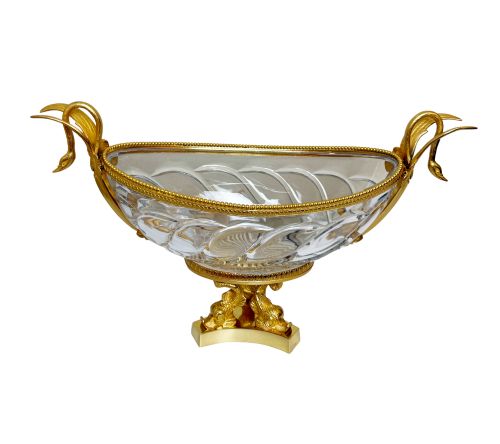
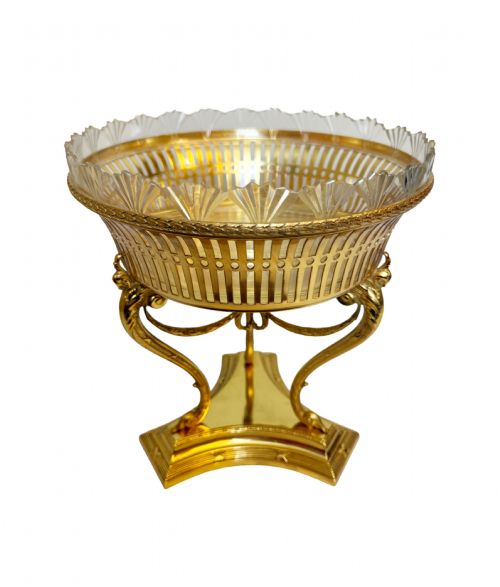
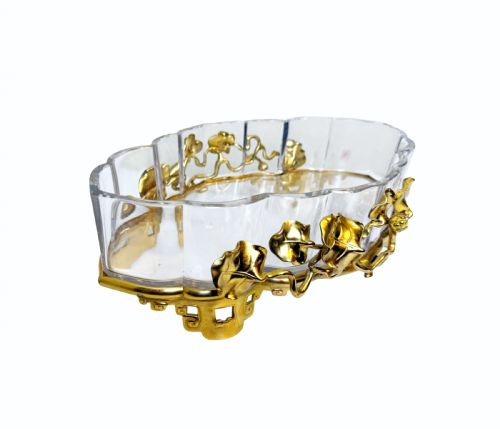
A gold ormolu bowl brings a flash of gilt bronze and crystal to a table, combining heavy metal mounts with glass, porcelain or enamel.
Gold Ormolu Bowl
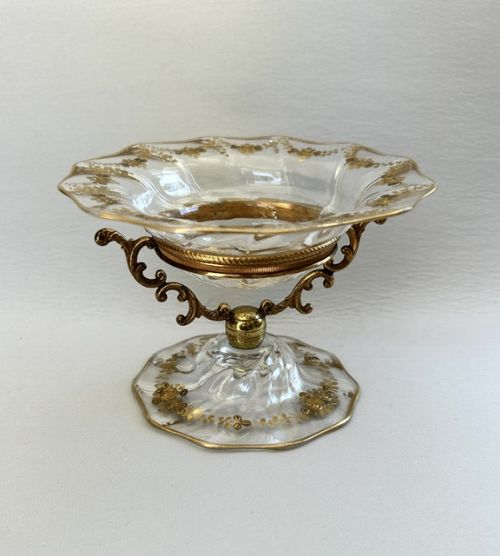
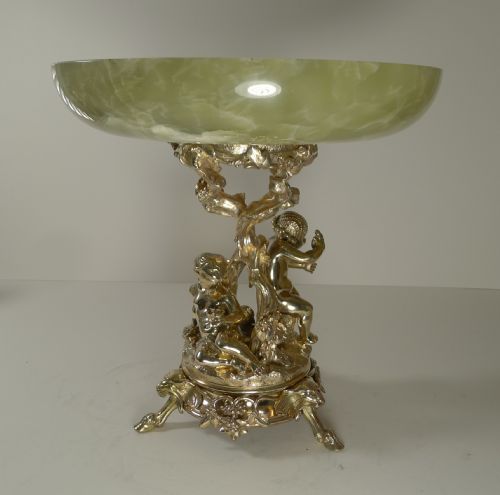
A gold ormolu bowl search brings up decorative vessels, centrepieces, tazzas, jardinieres and comports designed to sit on tables and sideboards. These pieces function as decorative dishes and centrepieces rather than utilitarian tableware.
Most items on this page date from the nineteenth century, spanning periods from Regency to Art Nouveau. French workshops dominate, producing pieces shaped by Rococo Revival, Empire and Neoclassical styles.
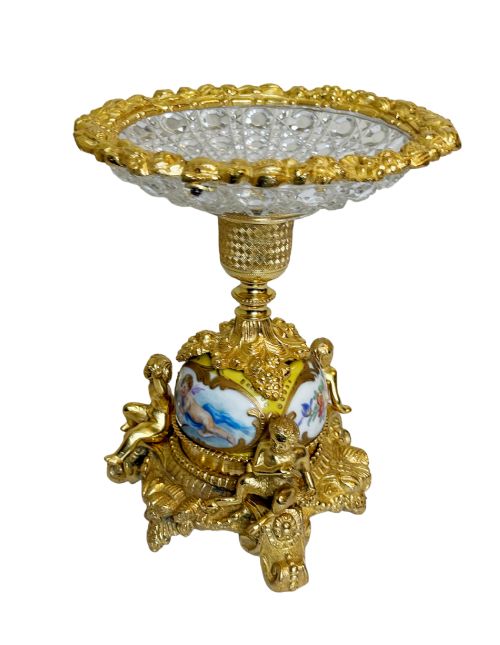
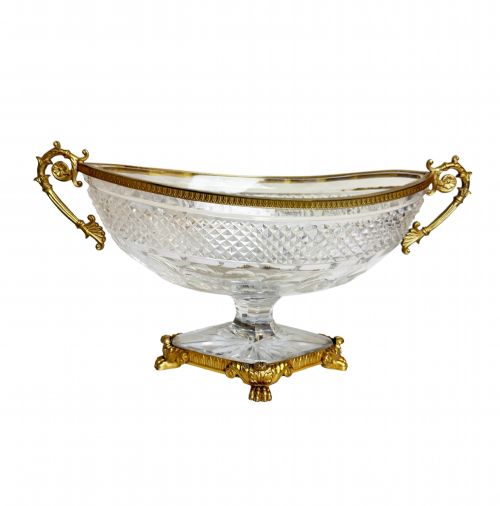
The form often combines a metal stand or mount in gilt bronze and ormolu with a vessel insert made from cut crystal, glass, Sevres porcelain, Limoges enamel or hardstones like Malachite and Blue John.
How they were made
Maker's workshops cast bronze into frames, mounts, cherubs and mermen figures before applying fire gilding to create the ormolu finish. Cut crystal and glass inserts were shaped separately and fitted precisely into the metal mounts.
More elaborate vessels incorporate porcelain panels from Sevres or Samson, alongside detailed champleve and Limoges enamel work. Artisans assembled these mixed-media objects using threaded screws and pins to join bronze, stone and glass.
Listings feature items spanning the Regency period through to 1910, predominantly originating from French workshops.
What varies in quality
The crispness of the bronze casting sets the baseline for quality, distinguishing sharp relief work on cherubs and foliate scrolls from soft, blurred details. Heavier gauge metalwork and thicker cut crystal inserts indicate superior manufacturing standards.
The integration of secondary materials also alters the character of the piece, as seen in the selection of hand-painted porcelain plaques, genuine hardstones and complex enamel work rather than plain glass.
Christofle Paris·Louis Pierre Malpass·Samson
The Gold Ormolu Bowl Glossary
- Ormolu
- Gilt bronze produced by applying a mercury and gold amalgam to cast bronze and heating it to drive off the mercury. This technique creates a rich, matte gold surface finish on nineteenth-century French mounts.
- Tazza
- An elevated decorative dish on a short foot or stem, frequently utilised for presentation on dining tables or sideboards. They appear in gilt bronze paired with crystal or malachite.
- Jardiniere
- A decorative receptacle designed to hold plants or floral arrangements, often fitted with a removable metal or glass liner to protect the outer frame. Many examples feature ormolu mounts and bronze handles.
- Champleve
- An enamelling technique where troughs or cells are hollowed out of the metal surface and filled with coloured glass paste before firing. It appears on nineteenth-century mounts and centrepiece frames.
- Centrepiece
- A large decorative object placed in the middle of a dining table or serving surface, often combining a cut crystal bowl with a gilt bronze stand.
Gold Ormolu Bowl: Frequently Asked Questions
What were gold ormolu bowls used for?
These vessels served primarily as decorative centrepieces on dining tables and sideboards during formal dinners and receptions. They were designed to hold fruit, flowers or simply to display fine craftsmanship.
The inclusion of waterproof glass and crystal inserts allowed them to hold water for floral arrangements without damaging the surrounding gilt bronze mounts.
How do I date a nineteenth century centrepiece?
Dating relies on examining the stylistic cues, such as the heavy neoclassical symmetry of the Regency period versus the flowing asymmetry of Rococo Revival or the later lines of Art Nouveau. Material combinations also help narrow down the period.
Maker marks, where present on the bronze or porcelain elements, provide a firmer manufacturing window within the broader nineteenth century span.
Are the glass inserts usually original?
Many pieces retain their original cut crystal or glass bowls, shaped specifically to fit the contours of the surrounding ormolu frame. Replacement glass does occur due to the fragile nature of crystal over time.
Inspect the fit at the rim and base to see if the glass sits flush within the bronze mounts.
How should I clean gilt bronze and ormolu?
Gilt bronze requires gentle dusting with a soft, dry brush to prevent dirt accumulation in the recessed details of the casting. Avoid harsh chemical cleaners and metal polishes that strip the thin gold layer from the bronze underneath.
Glass and crystal inserts can be removed and washed in warm soapy water, provided they are dried completely before returning them to the metal frame.