



French Empire Style Centrepiece
A french empire style centrepiece brings classical grandeur to a table, combining weighty cast metals with rich glass and marble.
French Empire Style Centrepiece
A french empire style centrepiece stands as a dramatic focal point on a dining table or sideboard, drawing heavily on classical antiquity and the Napoleonic era. The pieces seen here span the nineteenth century, including the Regency and Napoleon III periods, alongside later Victorian interpretations.
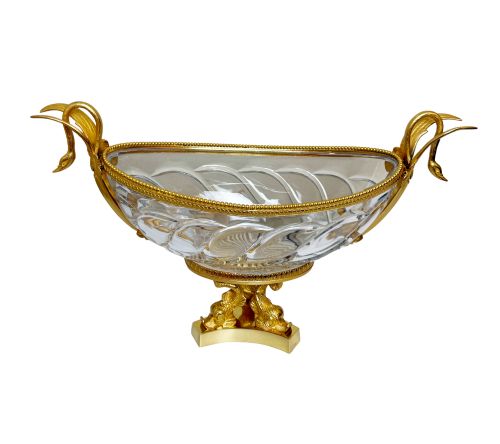
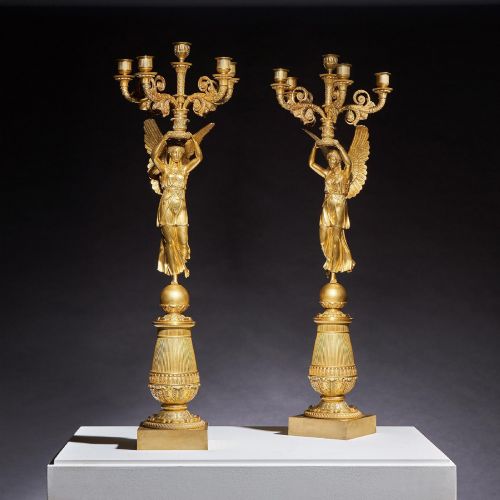
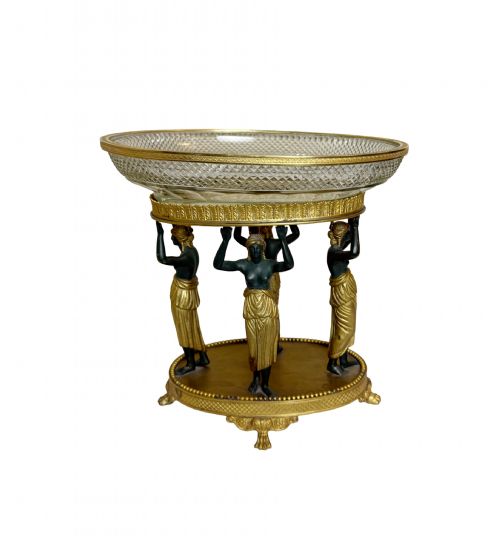
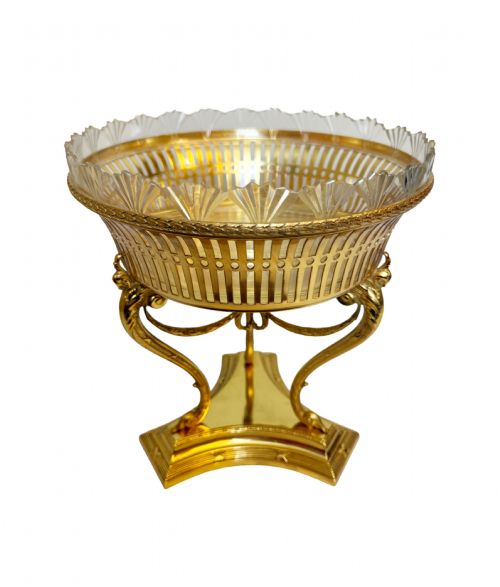
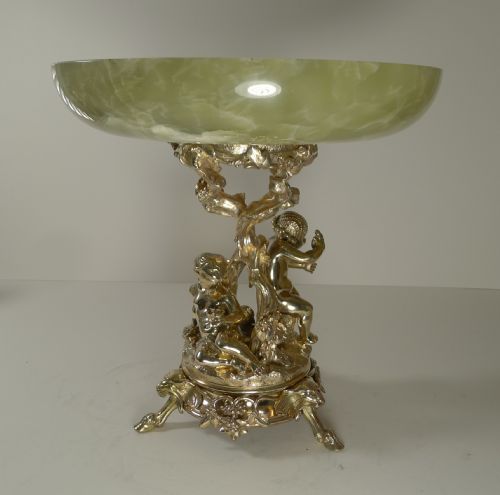
Most examples take the form of heavy centrepiece bowls, tazzas, and decorative urns, often fitted with glass inserts or cut glass vessels. Paired candelabra and candlesticks also appear frequently, sharing the same architectural proportions and sculptural mounts.
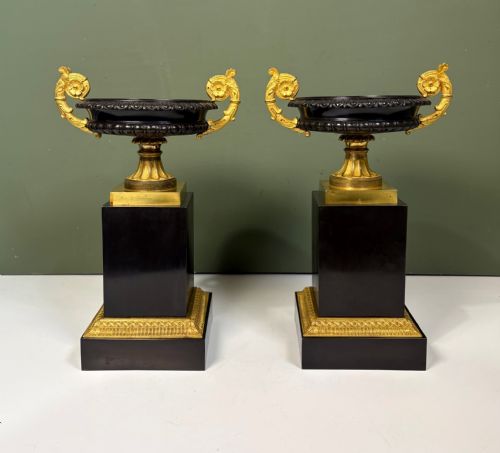
Origins range from confirmed French workshops to Regency British makers influenced by continental taste, as well as Grand Tour souvenirs. Buyers encounter everything from simple brass and bronze vessels to elaborate gilt bronze designs resting on rouge marble bases.
Materials and construction methods
Makers relied on bronze, patinated bronze, and brass as the structural backbone for these works, applying rich layers of ormolu and gilt bronze to create sharp contrast. Cast metal mounts were chased by hand to sharpen details like foliage, classical figures, and claw feet.
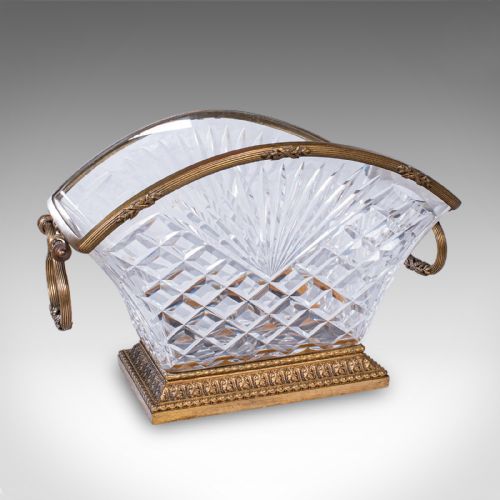
Vessels incorporated heavy cut glass and crystal inserts, often secured within metal frames or designed to hold fruit and floral arrangements. Marble plinths, particularly rouge marble and white marble, provided stable, dense footings that added physical weight and colour.
Judging quality and craftsmanship
The distinction between standard production and the finest work lies in the crispness of the metal chasing and the depth of the gilding. High quality pieces exhibit sharply defined cast details that retain their original contrast between polished ormolu and dark patinated bronze.
Materials also dictate tier: thick hand-cut crystal and dense, well-figured rouge marble elevate a piece far above simple pressed glass and common brass. The weight of the casting and the structural integration of glass inserts into metal mounts reveal the maker's original investment of time and skill.
Pierre Philippe Thomire·Christofle, Paris
The French Empire Style Centrepiece Glossary
- Ormolu
- Gilded bronze produced by applying a mercury and gold amalgam to a bronze base and heating it. The process leaves a deep, matte gold surface finish.
- Tazza
- A shallow bowl or cup mounted on a stem and foot, used historically for serving fruit or sweets. It acts as a primary form in classical centrepieces.
- Patinated bronze
- Bronze that has been chemically treated to darken the surface colour. This dark tone provides contrast against bright gilt mounts.
- Grand Tour
- The traditional journey of continental Europe undertaken by wealthy young men of the eighteenth and nineteenth centuries. Travellers collected classical antiquities and decorative art to bring home.
- Regency
- The British design period spanning the early nineteenth century. It heavily adopted classical French motifs and military themes.
French Empire Style Centrepiece: Frequently Asked Questions
What was a centrepiece used for?
These large vessels served as ornamental centrepieces on formal dining tables, often holding fruit, flowers, or sweetmeats during large banquets. They were designed to impress guests and reflect the host's wealth and refined taste.
Beyond dining, they doubled as permanent architectural ornaments on sideboards and console tables when not in active use.
How do I clean gilt bronze?
Gilt bronze and ormolu require gentle dusting with a soft, dry brush to prevent the accumulation of dirt in the chased crevices. Avoid all commercial metal polishes, abrasive cloths, and liquid cleaners, as these will strip away the delicate gold layer.
If a piece requires deeper cleaning, consult a professional conservator to avoid permanent damage to the historic surface.
Are glass inserts original?
Many surviving centrepieces retain their original heavy cut glass or crystal bowls, which were custom-molded to fit the metal frames. Because glass breaks easily over centuries of use, replacement inserts appear with some frequency.
Check the rim thickness, weight, and wear patterns on the underside of the glass to assess whether it matches the age of the bronze base.
How do I distinguish Regency from Napoleon III?
Regency pieces reflect early nineteenth-century British interpretations of classical styles, often incorporating distinct nautical, Egyptian, or neoclassical motifs. They tend to feature restrained lines and disciplined use of bronze and ormolu.
Napoleon III works date from the later nineteenth century and typically display a heavier, more eclectic revivalism, combining multiple historical periods with exuberant ornamentation.