
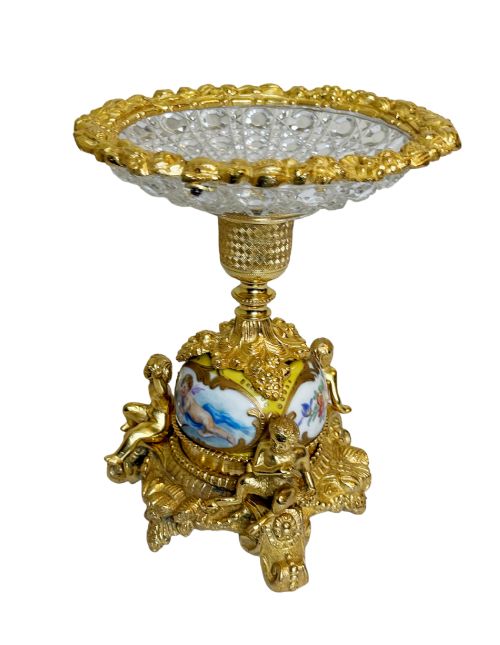
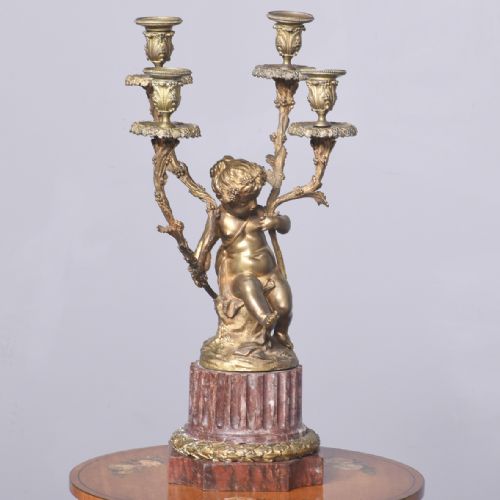


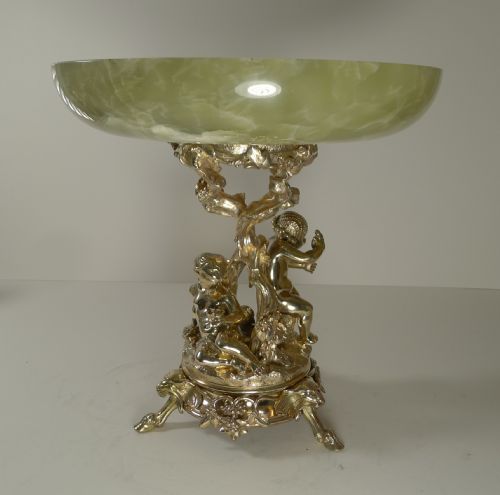

Ormolu Cherub Centrepiece
An ormolu cherub centrepiece brings sculptural drama to a table, pairing gilt metal figures with marble, crystal or porcelain.
Ormolu Cherub Centrepiece
When you search for an ormolu cherub centrepiece, you are looking at nineteenth-century decorative metalwork designed to command attention on a dining table or sideboard. These pieces combine cast bronze mounts with figures of putti or cherubs, often supporting bowls, tazzas or candle arms.
The versions most likely to meet you on this page date from the Victorian period back to Regency and French Empire eras. They frequently incorporate contrasting materials such as white or black marble, malachite, cut crystal and hand-painted porcelain.
Makers and workshops across France and Britain produced these elaborate items in styles ranging from French Rococo Revival to Louis XVI and Neoclassical. Their primary function was visual display, serving as the focal point of formal interior decoration.
How they were made
The foundation of these objects lies in metal casting, using both gilt bronze and patinated bronze to create depth and contrast. Artisans applied mercury gilding or electroplating to achieve the rich golden ormolu surface that defines the style.
Stonemasons and lapidaries shaped the marble, cut crystal and semi-precious stones like malachite that form the bases and vessels. Bronze figures of cherubs were cast separately and hand-chiseled before being joined to the stone and metal structure with pins and screws.
Materials appearing across the inventory include gilt bronze, patinated bronze, porcelain, marble, cut crystal, malachite and blue john.
What varies in quality
The crispness of the chasing on the bronze cherubs separates standard production from superior examples, where facial expressions and hair strands remain sharply defined. Heavier castings use more bronze and display greater stability in their joints and mounts.
The selection of secondary materials shifts the value significantly, with flawless cut crystal, rich black marble or genuine malachite marking out more ambitious commissions. Original gilding that retains its matte and burnished contrasts indicates a piece preserved without harsh cleaning.
Christofle Paris
The Ormolu Cherub Centrepiece Glossary
- Ormolu
- Gilt bronze produced by applying a gold and mercury amalgam to cast bronze, or through modern electroplating methods. The finish provides a warm, golden lustre that resists tarnishing.
- Tazza
- A shallow ornamental bowl or cup mounted on a stem and foot. These vessels often form the upper section of a centrepiece designed to hold fruit or flowers.
- Putto
- A plump, naked child figure, frequently winged, depicted in classical art and sculpture. They appear throughout nineteenth-century decorative metalwork as cherubs holding candle arms or supporting bowls.
- Comport
- An ornamental dish raised on a foot, used for serving fruit or sweets at formal dining tables. They appear in porcelain and glass during the Victorian period.
- Patinated bronze
- Bronze treated with chemicals to produce a dark brown, green or nearly black surface colour. This dark tone provides a visual contrast against bright ormolu mounts.
Ormolu Cherub Centrepiece: Frequently Asked Questions
What is an ormolu cherub centrepiece?
An ormolu cherub centrepiece is a nineteenth-century decorative table ornament made from gilt bronze and featuring sculptural child figures. These objects often incorporate bowls, tazzas or candle arms.
They draw on French styles like Rococo Revival, Louis XVI and Empire, combining cast metal with materials such as marble, crystal and porcelain.
How were centrepieces used originally?
In nineteenth-century dining rooms, these centrepieces occupied the middle of the table during formal meals. They served as decorative focal points rather than functional serving dishes.
Some designs doubled as candelabra or flower holders, adding height and illumination to elaborate tablescapes.
How do I style one today?
Place an ormolu cherub centrepiece on a large dining table, sideboard or console where its sculptural details can be viewed from multiple angles. Keep the surrounding surface relatively clear to let the gilt bronze and stone stand out.
Avoid placing them in direct sunlight or damp areas to protect the delicate gilt surface and natural stone components.
How can I tell the period?
Dating relies on stylistic clues, casting techniques and the choice of secondary materials like marble or majolica porcelain. Nineteenth-century pieces often reflect revival styles popular during the Victorian, Regency and Napoleon III eras.
Signatures or foundry marks stamped into the bronze can also narrow down the date and place of manufacture.