



Gilded Bronze Tazza
A gilded bronze tazza sits proudly as a heavy ornamental centrepiece, bringing nineteenth-century French elegance and rich metallic sheen to any table.
Gilded Bronze Tazza
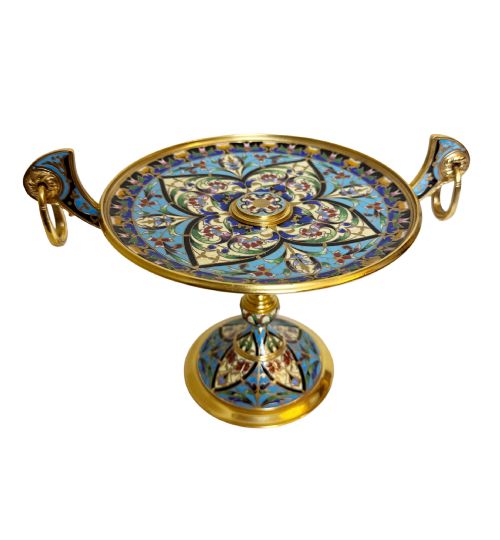
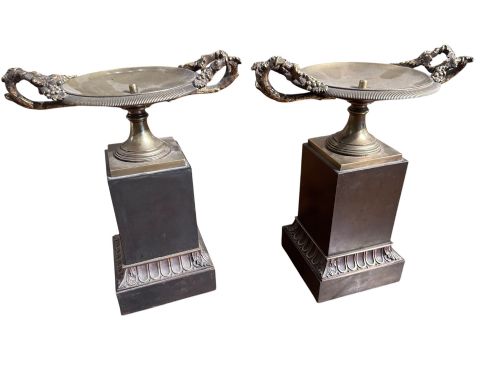
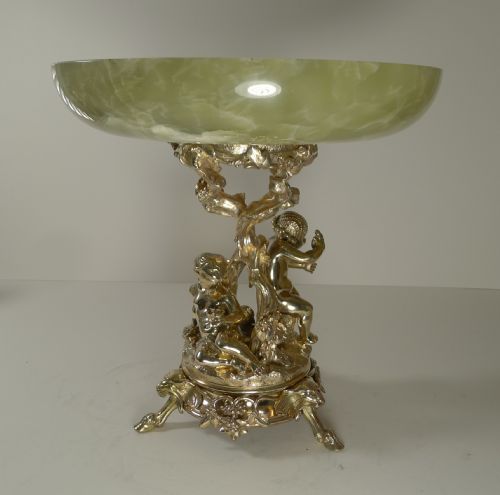
A gilded bronze tazza stands as an elevated ornamental dish or bowl designed for display during the nineteenth century. These pieces function as decorative centrepieces, comports, and bonbonières originating primarily from French workshops.
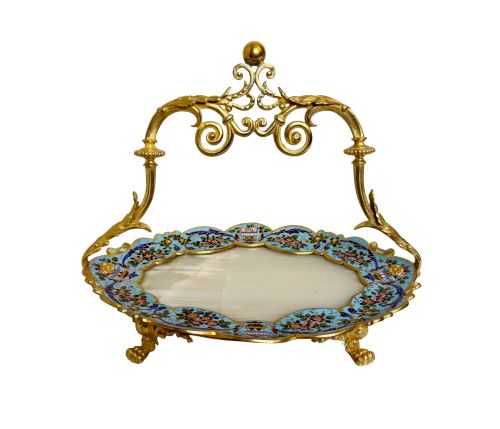
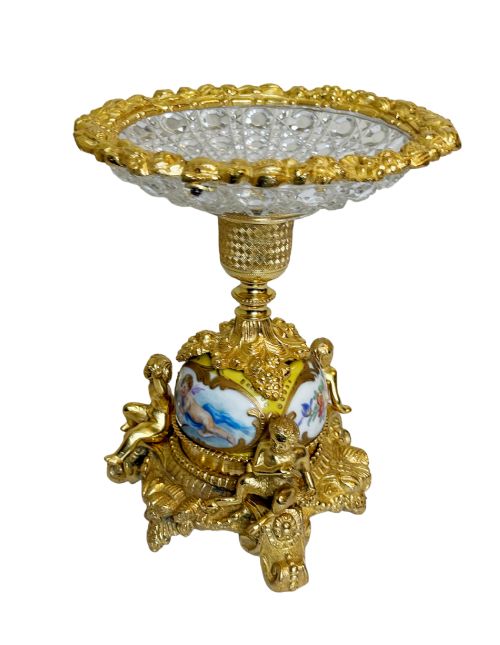
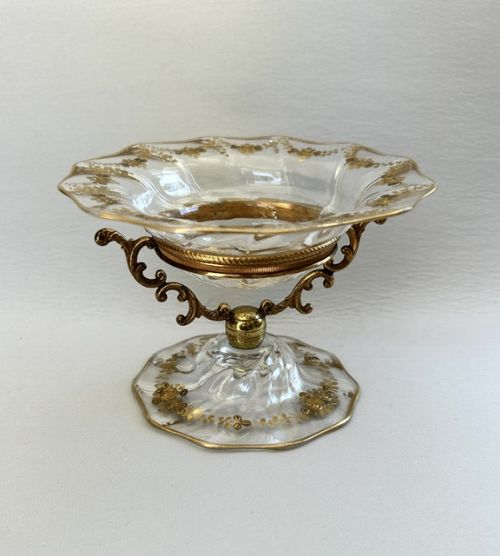
The versions most commonly met on this page combine gilded bronze or ormolu mounts with contrasting materials like porcelain, marble, onyx, glass, and shell. They take forms ranging from classical revival urns to elaborate footed trays supported by cherubs or mermen.
How they were made
Maker's workshops cast bronze components using traditional methods before applying a mercury gilding or gold wash known as ormolu. This gilded surface requires careful finishing to achieve the bright metallic lustre characteristic of French chateau ornaments.
Artisans combined these metal mounts with fragile elements such as Sevres porcelain, Limoges enamel plaques, cut crystal, and champleve enamel work. Natural materials like onyx, marble, and shell were shaped to form the central dishes and plinths.
Listings feature items spanning the nineteenth century, including specific dates from eighteen-fifty through nineteen-hundred.
What varies in quality
The distinction between standard production and the finest work lies in the crispness of the bronze casting and the depth of the gilding. Master cased figures and mounts show sharply rendered details in hair, drapery, and ornamentation without soft edges.
Material combination and artistic collaboration elevate certain pieces above others. Incorporating hand-painted porcelain plaques, intricate champleve enamel, or sculptural figures such as mermen and cherubs indicates higher ambition in design.
Christofle Paris
The Gilded Bronze Tazza Glossary
- Tazza
- A shallow ornamental bowl or dish mounted on a stem and foot. This form serves primarily as a decorative centrepiece or display dish.
- Ormolu
- Gilded bronze produced by applying a mercury and gold amalgam to a bronze object and heating it. The technique yields a rich golden finish typical of French decorative arts.
- Champleve
- An enamelling technique where troughs or cells are hollowed out of a metal surface and filled with vitreous enamel before firing. It creates vibrant coloured patterns framed by metal lines.
- Comport
- A large elevated dish used for holding fruit or sweetmeats on a dining table. They share a similar raised foot format with tazzas.
- Grand Tour
- A cultural journey undertaken by wealthy young Europeans through France and Italy to collect art and antiquities. Items purchased often included ornamental bronzes and marble pieces.
Gilded Bronze Tazza: Frequently Asked Questions
What is a gilded bronze tazza?
A gilded bronze tazza is an elevated ornamental dish supported by a stem and foot, created primarily in nineteenth-century France. These decorative objects combine cast bronze with gold-coloured ormolu finishes.
They frequently incorporate additional materials such as porcelain, enamel, marble, or cut crystal to serve as dramatic table centrepieces.
How were these centrepieces used?
Nineteenth-century households utilised these decorative bowls and comports as striking centrepieces for dining tables and salons. They were displayed during meals to hold fruit, sweetmeats, or simply to showcase wealth and taste.
Many pieces also functioned as decorative ornamental urns on sideboards and mantelpieces within grand interiors.
How do I style a tazza at home?
Place a gilded bronze tazza on a dining table, sideboard, or open console where light can catch the ormolu surface and contrasting enamel or porcelain elements. Their height makes them ideal focal points for rooms decorated in classical or revival styles.
Keep the surrounding space uncluttered to allow the detailed casting and sculptural figures like cherubs or mermen to stand out.
How do I identify French Empire and Rococo styles?
French Empire pieces from the nineteenth century typically display neoclassical symmetry, austere dignity, and martial motifs inspired by ancient Rome. Rococo Revival designs instead feature asymmetrical scrollwork, natural foliage, and playful sculptural figures.
Examining the mounts, materials, and overall silhouette helps distinguish between Napoleon III grandeur and earlier nineteenth-century chateau aesthetics.