




Gilded Bronze Fruit Bowl
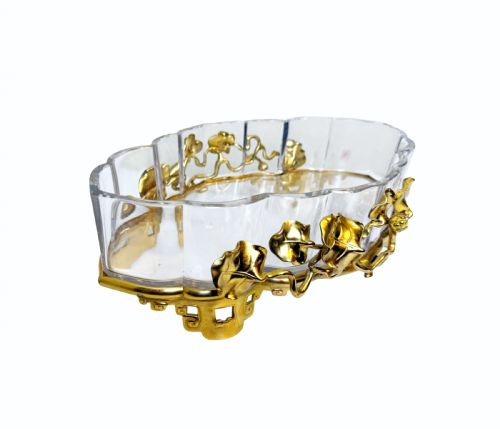
A gilded bronze fruit bowl brings nineteenth-century French splendour to a dining table through heavy metalwork and clear glass.
Gilded Bronze Fruit Bowl
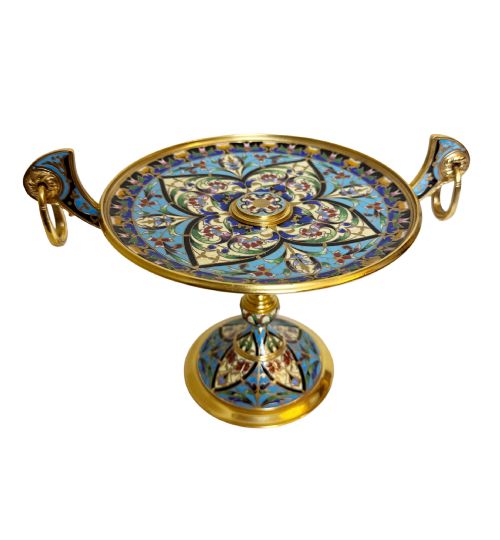
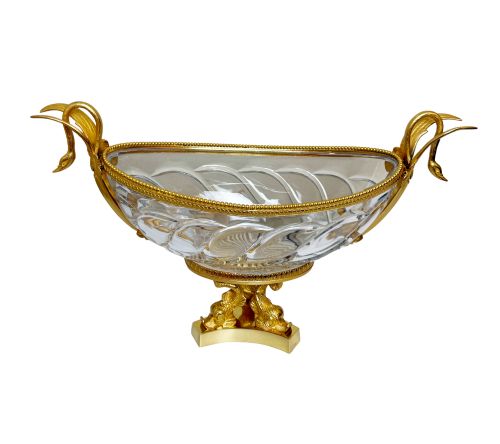
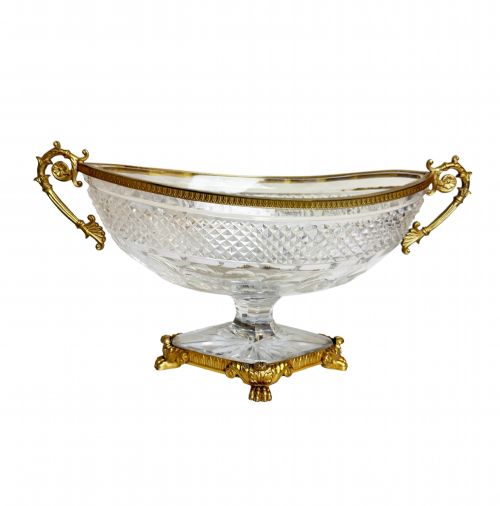
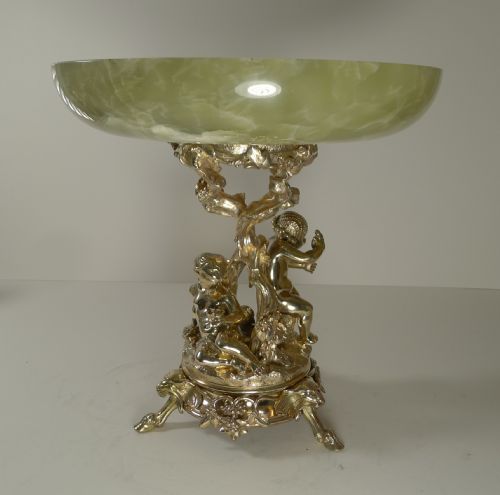
When you search for a gilded bronze fruit bowl, you are looking at substantial nineteenth-century French table pieces designed to hold fruit or serve as dramatic centrepieces. The examples on this page span from eighteen-eighty to nineteen-ten, taking the form of comports, tazzas, and decorative bowls.
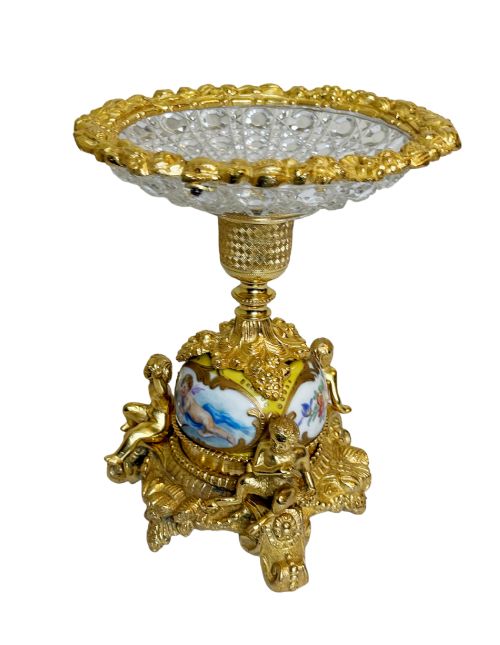
Most pieces combine cast metal frames with cut crystal, glass, or porcelain vessels. You will frequently encounter French Rococo Revival, Empire, and Art Nouveau styles, alongside Napoleon III designs featuring cherubs or mermen.
Makers such as Christofle, Paris, appear among these items, alongside Sevres style porcelain and Limoges enamel plaques. The typical piece relies on heavy gilt bronze or ormolu mounts to secure the central crystal bowl or porcelain dish.
Materials and construction
The metal components are cast in bronze before receiving a rich layer of gold gilt or ormolu finish. These mounts require precise hand-chasing to define sculptural details like cherubs, mermen, and scrolling foliage.
Glass and crystal vessels are heavy, deep-cut, and fitted exactly into the metal frames. Where porcelain is used, as with Sevres style or Samson porcelain and Limoges enamel plaques, the painted panels are integrated directly into the metal body.
Listings feature eighteenth-eighty to nineteen-ten pieces in French Rococo Revival, Empire, and Art Nouveau styles.
Judging the quality
Quality rests in the crispness of the cast metal and the weight of the crystal or porcelain. Fine examples show deep, sharp chasing on the ormolu figures and mounts, whereas simpler pieces rely on standard casting without hand-finishing.
The integration of materials also defines the standard. A superior piece aligns the gilt bronze frame seamlessly with a heavy cut crystal bowl or hand-painted enamel plaque, showing no gaps in the mountwork.
Christofle Paris·Samson Porcelain·Limoges Enamel
The Gilded Bronze Fruit Bowl Glossary
- Ormolu
- Gilded bronze, typically produced in France during the eighteenth and nineteenth centuries. The technique involves applying a gold amalgam to a bronze base and heating it.
- Tazza
- A shallow bowl raised on a stem and foot, used for serving fruit or display. It forms a common silhouette among nineteenth-century centrepieces.
- Comport
- A decorative dish or bowl elevated on a pedestal for table service. These pieces frequently pair crystal bowls with gilt bronze stands.
- Champleve
- An enamelling technique where troughs are carved into the metal surface and filled with vitreous enamel before firing. It appears on nineteenth-century tazzas.
- Empire
- A neoclassical design style spanning the late eighteenth and nineteenth centuries, characterised by military motifs and classical symmetry.
Gilded Bronze Fruit Bowl: Frequently Asked Questions
What is a gilded bronze fruit bowl used for?
These pieces were originally designed for holding fruit or acting as table centrepieces during formal nineteenth-century dining.
Today, they function primarily as decorative objects for sideboards, dining tables, or mantelpieces, though many remain sturdy enough to hold fruit.
How do I identify French Rococo Revival style?
French Rococo Revival pieces feature asymmetric scrolling, naturalistic floral motifs, and organic curves derived from eighteenth-century design.
In these items, the gilt bronze mounts often curve organically around the glass or porcelain bowl.
What is the difference between ormolu and gilt bronze?
Ormolu and gilt bronze refer to the same material of gilded bronze, with ormolu being the traditional term used for French metalwork.
Both terms describe a bronze object finished with a layer of gold.
How do I care for crystal and gilt bronze?
Clean the crystal or glass bowl separately with warm soapy water, avoiding harsh abrasives that might scratch the surface.
Dust the gilt bronze mounts gently with a dry microfibre cloth to protect the gold finish from wear.