


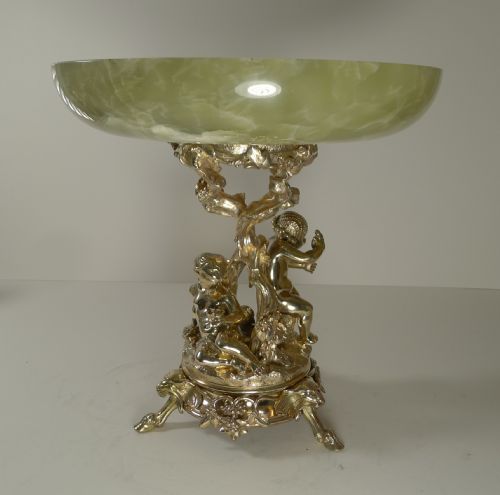

Gilt Bronze Onyx Stand
These gilt bronze onyx stand pieces combine rich stone and cast metal to anchor a room, bringing classical weight and French Empire presence.
Gilt Bronze Onyx Stand
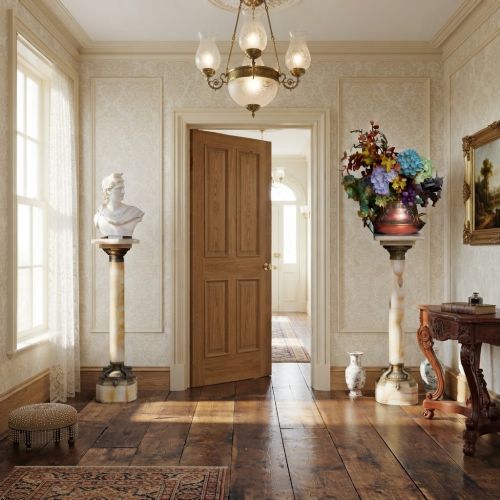
When you search for a gilt bronze onyx stand, you are looking at substantial decorative pieces designed to elevate sculptures, urns, or lamps within a room. The forms available range from tall torchere columns and pedestals to smaller desk accessories, centrepieces, and candlesticks.
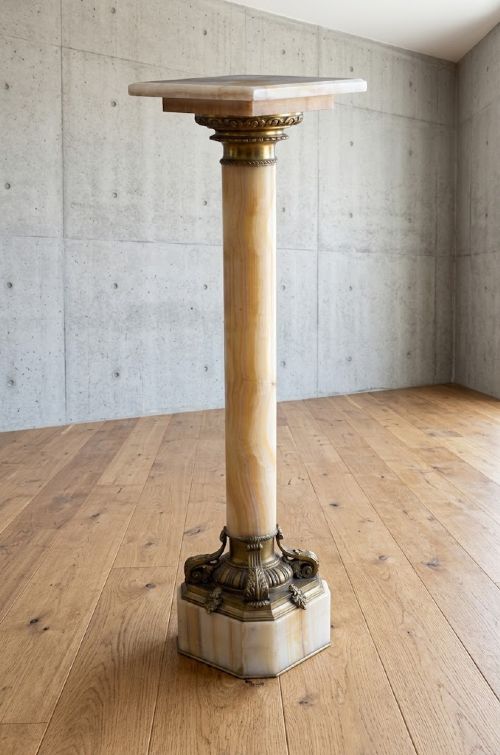
You are most likely to meet 19th Century French examples on this page, particularly Victorian and Edwardian pedestals and columns. These objects frequently combine polished banded stone shafts with cast metal mounts in Neoclassical or Classical Revival styles.
The materials unite pale or honey-toned stone with warm metallic accents, drawing on design vocabularies from the Napoleon III period and French chateau aesthetics. They serve both a functional support role and a primary decorative statement in an interior.
Materials and construction
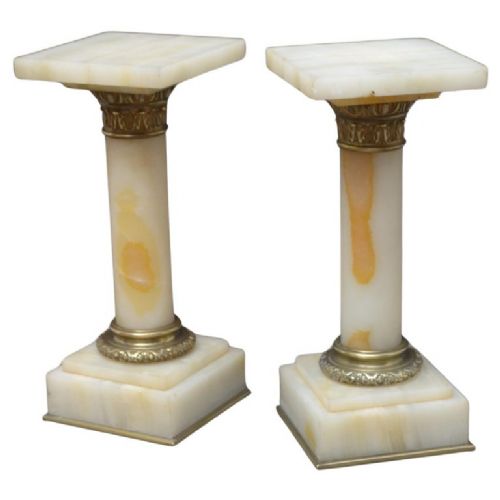
Maker workshops turned and polished solid stone to form the main columns, shafts, and bases of these pieces. Onyx and marble provide the heavy, smooth structural core.
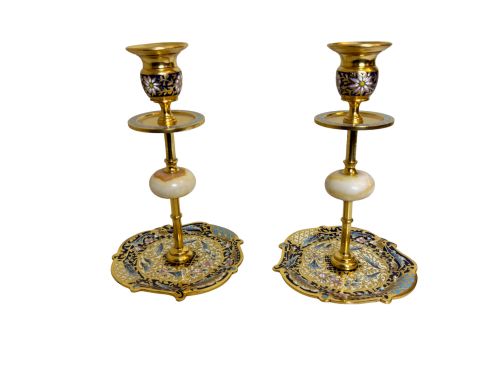
Metalworkers cast bronze and brass components, applying fire-gilding or ormolu finishes to create bright metallic collars, capitals, and bases. Champleve enamel occasionally appears as an added decorative layer on smaller items like candlesticks and ink-stands.
Listings feature 19th Century and Edwardian pieces, combining onyx, marble, ormolu, and champleve enamel in neoclassical styles.
Evaluating quality
Quality rests on the crispness of the bronze chasing and the depth of the gilding on the mountings. Sharply defined acanthus leaves and collars separate superior castings from softer, simpler metalwork.
The choice and figuring of the stone sections also dictate the grade of the piece. Uniform, richly banded onyx or carefully selected marble shafts show greater material investment than plain or heavily repaired stone.
Christofle Paris
The Gilt Bronze Onyx Stand Glossary
- Ormolu
- A technique of applying finely ground high-carat gold to a bronze object using mercury amalgam. This gilding method creates a deep, durable metallic lustre.
- Champleve
- An enamelling technique where troughs are carved into the metal surface and filled with vitreous paste before firing. It produces vibrant coloured patterns alongside the bronze.
- Torchere
- A tall stand or pedestal originally designed to carry a torch or candle. In later periods, it became a freestanding column for displaying decorative objects.
- Neoclassical
- A style drawing inspiration from the classical art and architecture of ancient Greece and Rome. It relies on symmetry, columns, and classical motifs.
- Plinth
- The heavy base or lower block supporting a column, statue, or pedestal. It grounds the vertical stone shaft visually and physically.
Gilt Bronze Onyx Stand: Frequently Asked Questions
What were these pedestals used for originally?
These columns and pedestals were built to elevate bronze figures, marble busts, or large urns in period drawing rooms. They raised decorative works to eye level so guests could inspect the details.
In larger houses, matched pairs framed doorways, fireplaces, or window recesses to create a formal architectural balance.
How do I clean the onyx and ormolu?
Dust the stone and metal surfaces gently with a soft, dry microfibre cloth to remove everyday particles. Avoid harsh chemical cleaners, alcohol, or abrasive pads that can strip the gold finish.
Onyx is sensitive to acids and moisture, so keep liquids away from the stone surface entirely. Professional metal conservation is recommended for tarnished or fragile gilding.
Are these pieces French in origin?
Many of these items trace back to 19th Century French workshops influenced by Second Empire and Classical Revival tastes. Paris makers produced numerous columns, centrepieces, and ink-stands utilising local design traditions.
Similar neoclassical revival pieces also emerged from broader European workshops during the Victorian and Edwardian eras.
How do I date a gilt bronze onyx stand?
Dating relies on combining the stylistic clues of the metal mounts with the turning style of the stone shaft. 19th Century examples often feature heavier bronze casting and classical motifs associated with Napoleon III or Victorian aesthetics.
Edwardian pieces from around 1900 can display lighter proportions while maintaining the traditional marble and ormolu material pairing.