


Cut Crystal Tazza
A cut crystal tazza brings height and brilliance to a table, combining clear lead crystal bowls with metals like gilt bronze and silver plate.
Cut Crystal Tazza
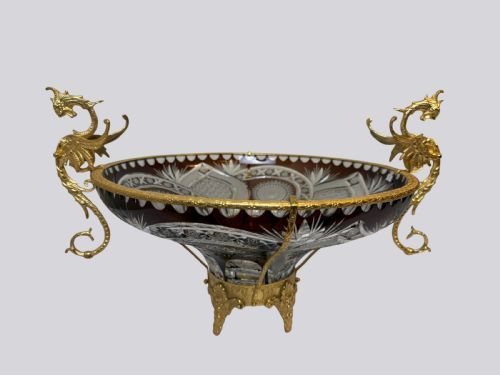
When you search for a cut crystal tazza, you are looking at elevated serving vessels and decorative centrepieces featuring faceted glass or crystal bowls mounted on stems or metal stands. These pieces span from the nineteenth century into the early twentieth century, taking forms such as pedestal bowls, sweet dishes, and elaborate table centrepieces.
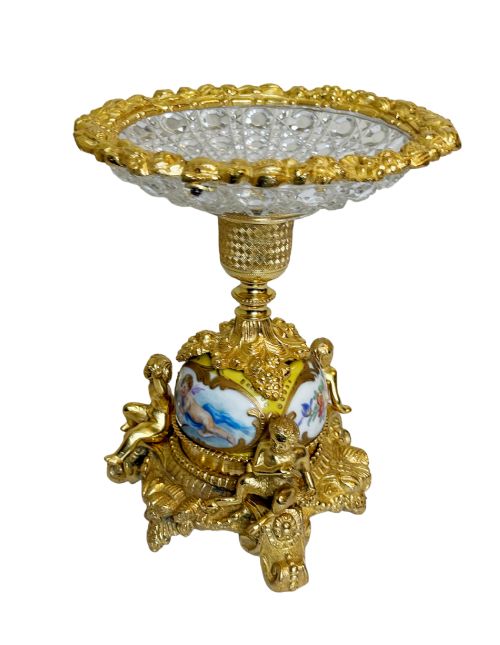
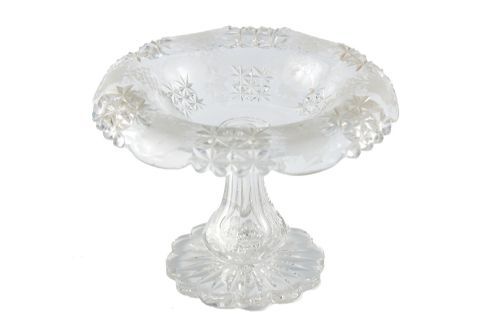
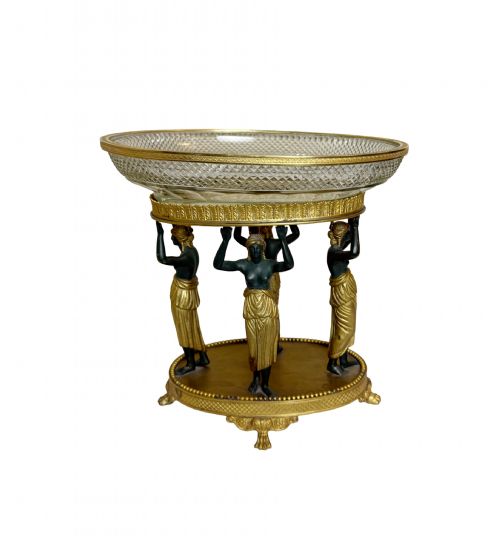
The versions most commonly met on this page include Victorian examples in clear or coloured glass with etched decoration, alongside grander Continental pieces pairing cut crystal with gilt bronze or patinated bronze mounts.
Makers and makers' marks occasionally appear, such as Christofle et Cie, alongside English silver-plate mountings and French Rococo Revival or Empire styling.
How they were made
The glass elements rely on heavy lead crystal or clear glass, shaped by blowing and then heavily cut on a wheel to produce deep facets and geometric patterns that catch the light. Etched decoration often supplements the cutting on Victorian pedestal bowls and sweet dishes.
Metal components involve cast gilt bronze, patinated bronze, and silver plate, which are secured to the glass bowls via threaded rods, collars, or elaborate mounts featuring cherubs and classical detailing.
Some nineteenth-century tazzas include gilded cherubs steadfastly holding up bowls of fruit, ensuring your dining table comes with its own mythological support staff.
What varies in quality
Quality rests in the crispness of the glass cutting and the weight of the lead crystal, where sharper facets and thicker metal mounts indicate finer production. Simpler etched glass tazzas contrast with elaborate French Empire and Rococo Revival centrepieces involving finely cast bronze cherubs and multi-part construction.
The integration between the glass bowl and the metal base dictates the overall stability and finish, distinguishing standard domestic wares from grander salon display pieces.
Christofle et Cie
The Cut Crystal Tazza Glossary
- Tazza
- A shallow bowl raised on a stem and foot, used historically for serving small delicacies or as a decorative centrepiece.
- Lead crystal
- Glass containing a high proportion of lead oxide, which increases brilliance, weight, and the softness required for deep wheel-cutting.
- Gilt bronze
- Bronze that has been coated with a layer of gold or gold-coloured alloy, frequently termedormolu in French pieces.
- Grand Tour
- A traditional journey through Europe undertaken by upper-class young men in the eighteenth and nineteenth centuries, associated with the acquisition of decorative art objects.
Cut Crystal Tazza: Frequently Asked Questions
What is a cut crystal tazza used for?
These elevated vessels functioned historically for presenting sweetmeats, fruit, or small delicacies during formal dining.
Today, they serve primarily as decorative centrepieces on dining tables, sideboards, or mantels where their faceted crystal can catch the light.
How do I date a cut crystal tazza?
Dating relies on examining the style of the metal mounts, such as French Rococo Revival or Empire detailing, alongside the cutting style of the glass.
Victorian English examples often feature distinct etched floral motifs combined with silver plate or heavy lead crystal pedestals.
Are these pieces made entirely of glass?
Many examples combine heavy lead crystal or clear glass bowls with metal structures including gilt bronze, silver plate, or patinated bronze.
Some pieces incorporate cast figures like cherubs into the stem or base, while others consist purely of an etched glass pedestal bowl and stand.
How should I clean a cut crystal tazza?
Wash the glass component gently in warm soapy water using a soft cloth, avoiding harsh abrasives that might scratch the surface or damage etched areas.
Keep metal mounts dry and dust them gently with a soft brush to preserve the gilt bronze or silver-plated finish.