
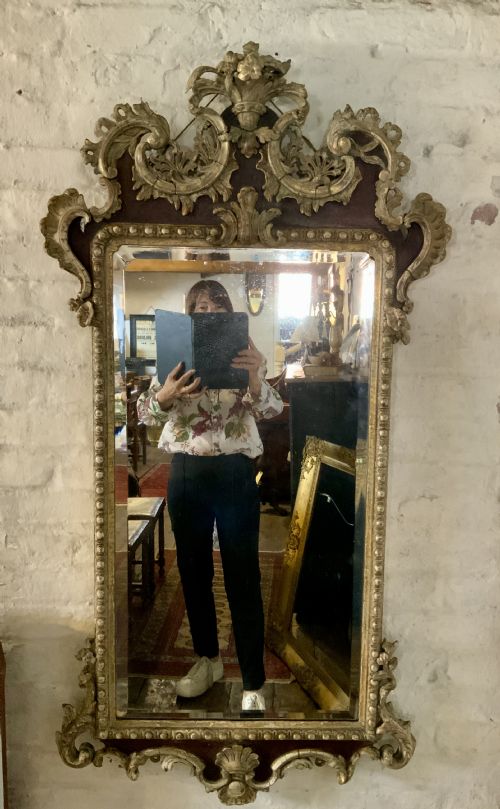
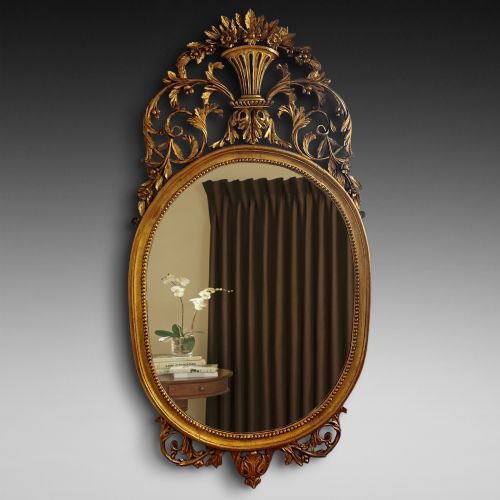
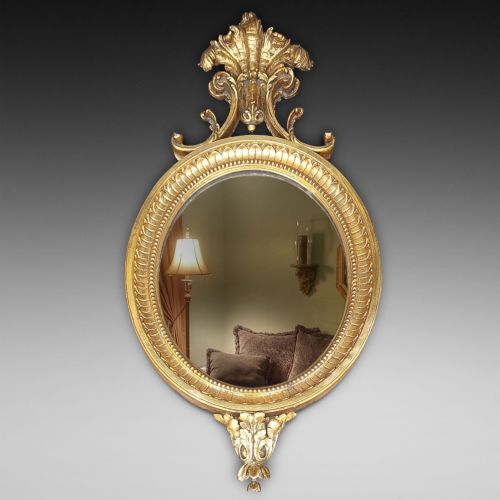
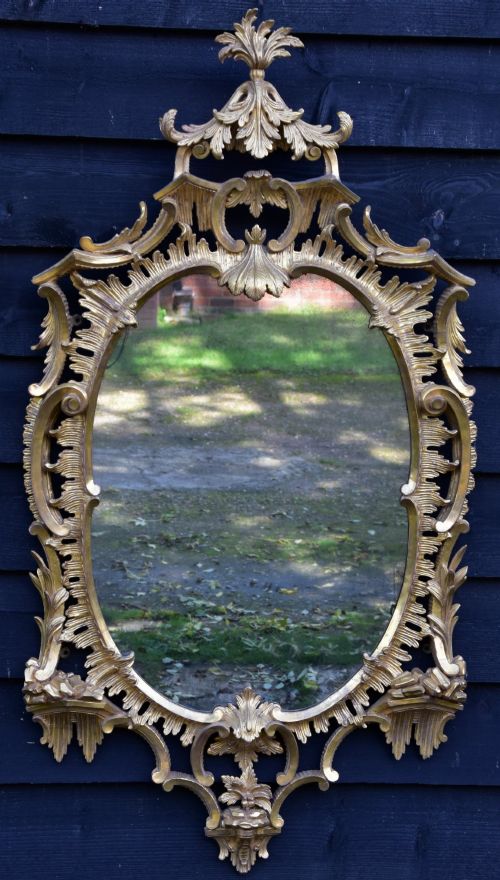


Gold Leaf Looking Glass
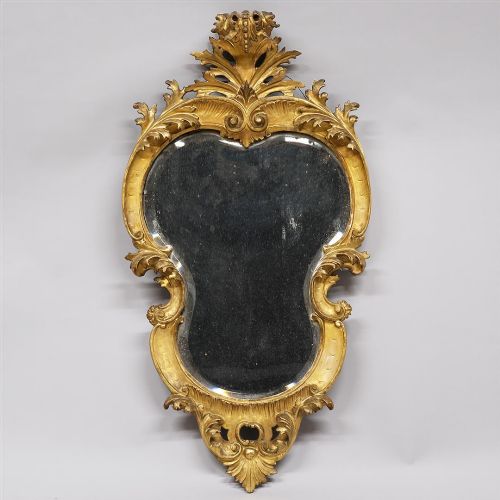
A gold leaf looking glass brings reflected light and deep, gilded warmth into a room, spanning periods from Georgian elegance to Victorian scale.
Gold Leaf Looking Glass
When searching for a gold leaf looking glass, a buyer encounters wall mirrors shaped by centuries of stylistic shifts. The most frequent examples on this page date from the eighteenth and nineteenth centuries, taking forms that range from simple oval frames to elaborate overmantles.
Origin and period dictate much of the character found in these wall mirrors. Pieces span Georgian, Regency, and Victorian eras alongside continental interpretations like French Rococo and Italian Neoclassical styles.
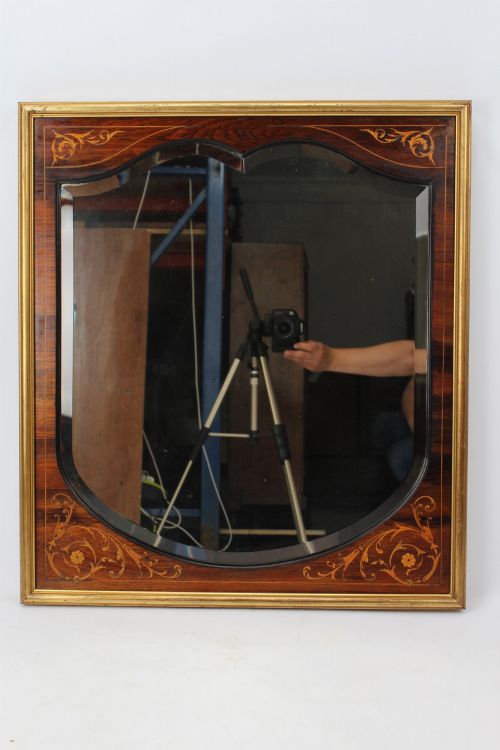
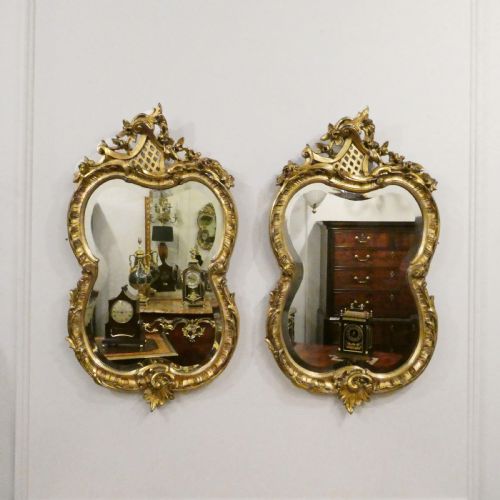
Makers and craftsmen utilised varied formats, including paired mirrors and smaller wall-hanging pieces. Walnut and rosewood support parcel gilt or fully gilded surfaces across the selection.
How they were made
The foundation of these frames typically relies on carved wood or moulded gesso built over a wooden base. Artisans applied thin sheets of gold leaf to build a luminous metallic surface.
Sand moulded gesso and intricate hand carving define the surface detail on many pieces. Specialised techniques allowed craftsmen to achieve rope twists, ribbons, bows, and scrolling foliage.
Mirror glass sits within these gilded frames, sometimes original to the piece or replaced during its history. Joinery methods reflect the period of origin, utilising traditional corner blocks and secure backing boards.
Several mirrors include hand-painted floral details alongside traditional giltwood, proving that past owners occasionally personalized their decor.
What varies in quality
The crispness of the carved detail separates exceptional examples from standard production. Deep relief work and sharply defined gesso ornamentation indicate skilled hand craftsmanship.
The integrity and coverage of the gold leaf layer alter the visual depth of the object. Superior gilding reflects light evenly while retaining the subtle texture of the underlying wood and gesso.
The Gold Leaf Looking Glass Glossary
- Giltwood
- Wood that has been coated with gold leaf or gold paint. This material forms the primary structure of most traditional looking glasses.
- Gesso
- A plaster mixture applied to wood frames as a smooth base for gilding. It allows craftsmen to carve intricate relief patterns before applying gold leaf.
- Overmantle
- A large mirror designed to hang specifically above a fireplace mantel. These pieces often feature wide proportions to anchor the wall space above a hearth.
- Girandole
- A wall mirror featuring attached candle sconces or arms. The reflective glass multiplies the candlelight within a darkened room.
- Parcel gilt
- A finishing technique where portions of an object are gilded while other areas reveal the natural wood grain underneath. This provides contrast against walnut or rosewood elements.
Gold Leaf Looking Glass: Frequently Asked Questions
Where should I hang a large overmantle mirror?
These large mirrors traditionally sit directly above a fireplace mantelpiece to reflect light and anchor the reception room. They also function effectively on main hallway walls to expand visual space.
Ensure the wall anchors match the substantial weight of carved wood and gesso frames. Professional fixings protect both the wall structure and the antique frame.
How do I clean an antique giltwood frame?
Dust the carved surfaces gently with a soft, dry brush to prevent dirt accumulation within the gesso crevices. Avoid chemical sprays or wet cloths that can damage delicate gold leaf.
Professional conservators should handle any repairs to flaking gesso or damaged gilding. Gentle maintenance preserves the original surface finish over decades of domestic use.
Are these mirror glasses original?
Many older pieces retain their original mercury or early silvered glass, which often exhibits characteristic foxing and soft distortion. Replacement glass frequently appears in pieces that have undergone restoration.
Examine the backboards and frame rebates to understand the relationship between the glass and the structure. Both original and replaced plates hold distinct historical appeal for collectors.
How do I identify a Regency period mirror?
Regency looking glasses frequently incorporate classical motifs, convex plates, or ebonised reeded details within the frame construction. Heavy gesso ornamentation and bold architectural lines distinguish these nineteenth-century pieces from earlier Georgian designs.
Look for construction clues on the reverse, including old pine backing boards and hand-cut screws. Comparing the proportions against documented period examples helps confirm the date.