

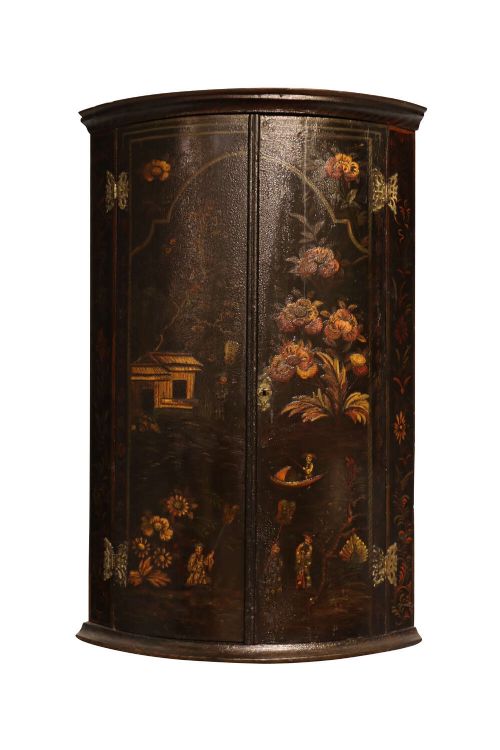


Gold Lacquer Cabinet
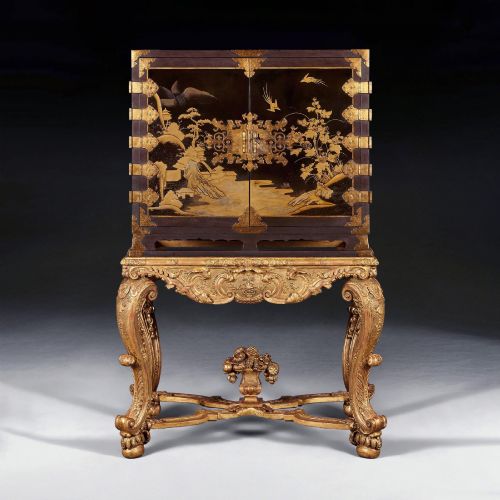
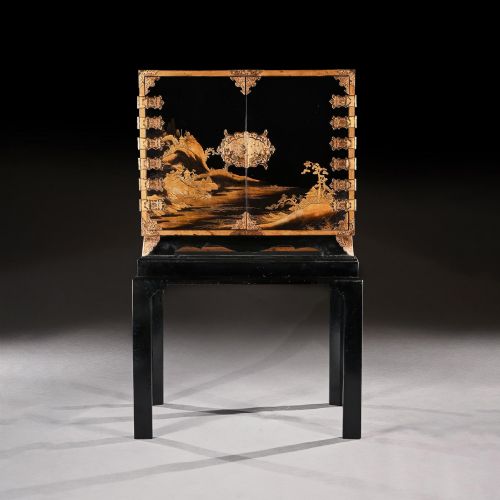
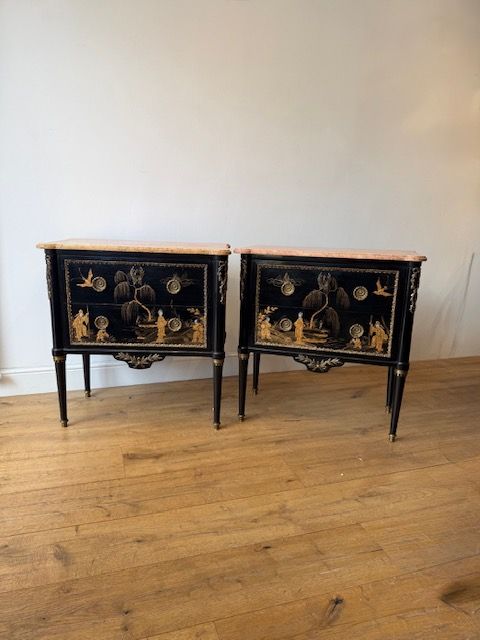
A gold lacquer cabinet brings brilliant metallic sheen and narrative scenes to a room, ranging from Japanese export work to European Chinoiserie.
Gold Lacquer Cabinet
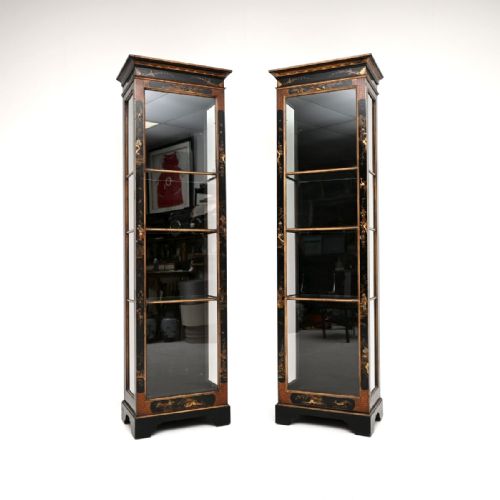
When you search for a gold lacquer cabinet, you encounter a diverse group of storage pieces decorated with applied metallic finishes and painted or carved details. These items span periods from the seventeenth century through to the Edwardian era and the nineteen-twenties.
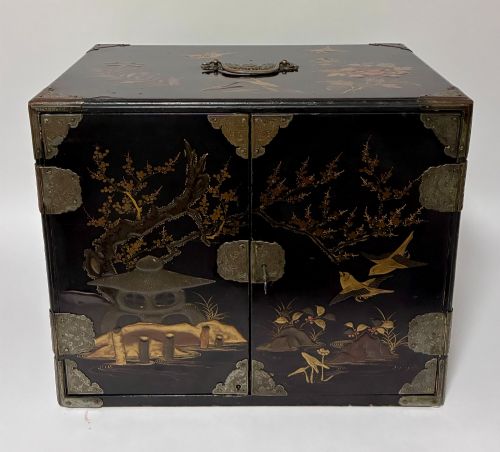
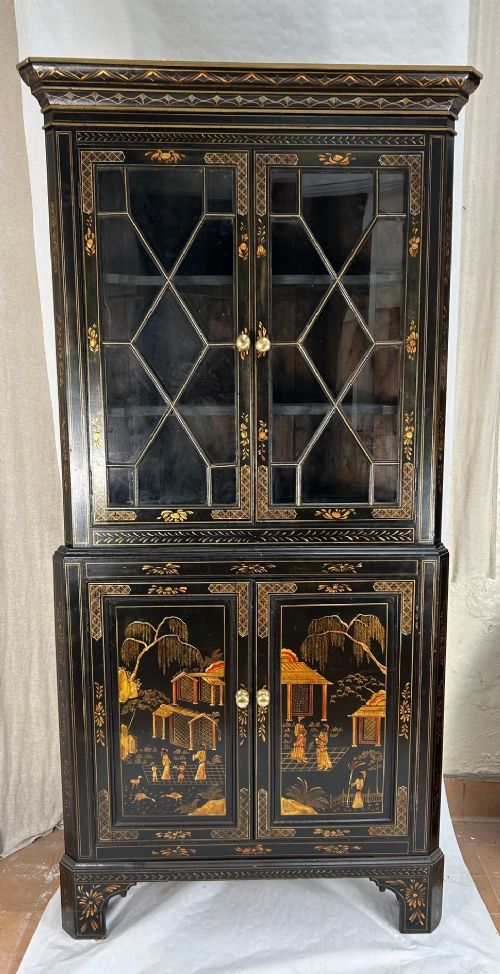
The forms vary widely across the selection. You find large display cabinets, corner cupboards, bureaux, side cabinets, and smaller table-top kodansu boxes or writing cabinets.
Origin points are similarly varied, taking in Japanese Meiji period workshops, Chinese Qing dynasty pieces, and European interpretations including Georgian, Regency, and Edwardian Chinoiserie.
How they were made
Maker construction relies on timber carcases coated in multiple layers of lacquer, sometimes combined with glass panels, metal mounts, and brass hardware.
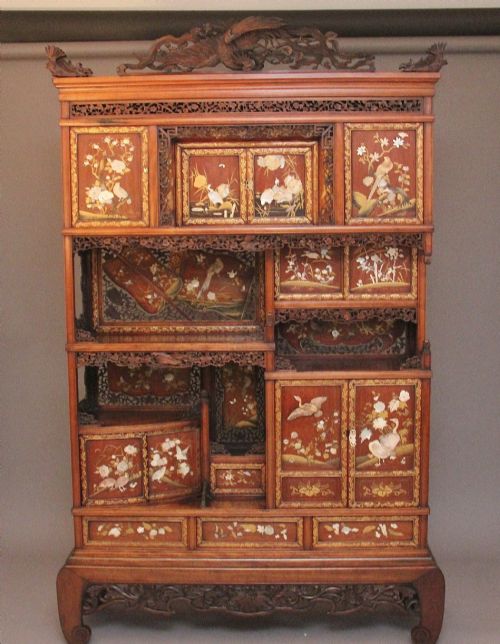
Decorative surfaces utilise gold leaf, gilt, and intricate pen-work to build up pictorial scenes, motifs, and patterns across the wood, occasionally incorporating shibayama or carved elements.
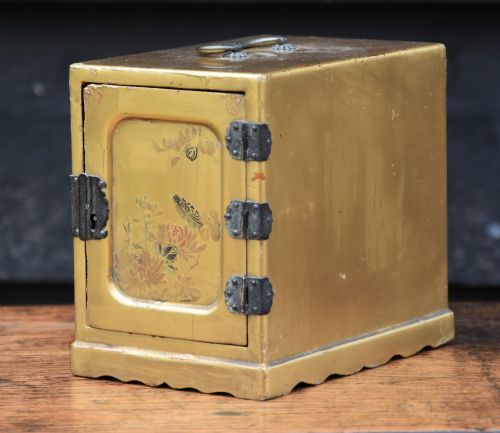
Several miniature table cabinets appear alongside room-sized display cases, proving that grand decorative schemes occasionally come in tiny packages.
What varies in quality
The depth and execution of the lacquering process dictate much of the distinction between examples, with finer pieces displaying smooth, multi-layered finishes that resist heavy cracking.
The precision of the painted or gilded decorative scenes, alongside the integration of stands, brass mounts, and internal fittings, separates standard decorative furniture from masterwork pieces.
The Gold Lacquer Cabinet Glossary
- Chinoiserie
- European decorative style imitating Chinese and East Asian artistic traditions. It appears frequently on English and continental furniture from the Georgian period onward.
- Kodansu
- A small Japanese tabletop cabinet or chest with multiple internal drawers. These pieces often feature detailed gold lacquer decoration.
- Shodana
- A traditional Japanese display cabinet featuring asymmetrical shelving and cupboards. They are frequently encountered from the Meiji period.
- Japanned
- European imitation of East Asian lacquerwork using specialised varnishes and metallic dust. This finish characterises many English and continental pieces.
- Pen-work
- A decorative technique using fine ink lines on a prepared ground to create intricate patterns. It is seen on Regency period cabinets.
Gold Lacquer Cabinet: Frequently Asked Questions
Where should I place a lacquer cabinet?
These cabinets suit reception rooms, studies, or hallways where their reflective surfaces and detailed panels receive ambient light.
Keep them away from direct sunlight and fluctuating heat sources to protect the lacquer finish.
How do I clean a gold lacquer cabinet?
Dust the surface gently with a soft, dry cloth on a regular basis.
Avoid commercial polishes, water, or abrasive cleaners, as these can damage the delicate gold leaf and lacquer layers.
What is the difference between Japanese and Chinoiserie pieces?
Japanese pieces originate from makers in Japan, often during the Meiji period, utilising traditional export lacquer techniques and motifs.
Chinoiserie items are European interpretations made in Britain, Italy, or France that emulate East Asian styles.
How do I identify a cabinet on stand?
A cabinet on stand consists of a main upper storage body resting upon a separate supporting base, which may be carved, gilded, or fitted with cabriole legs.
This format lifts the main storage area off the floor for a more balanced display.