
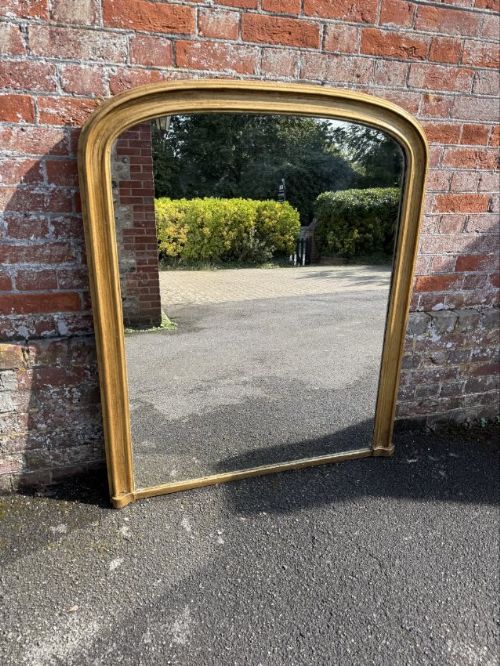
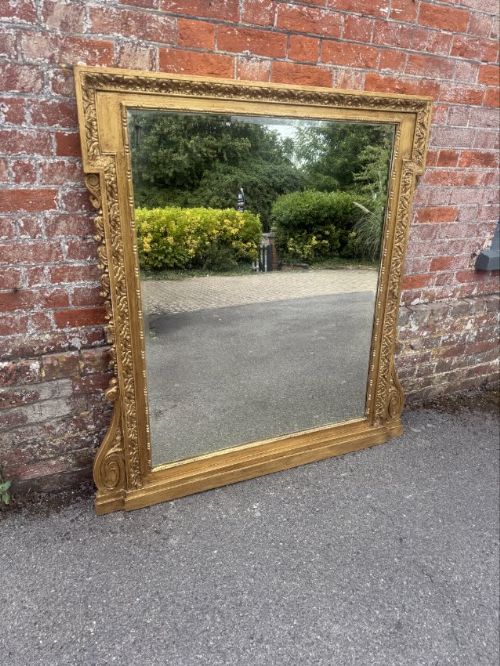
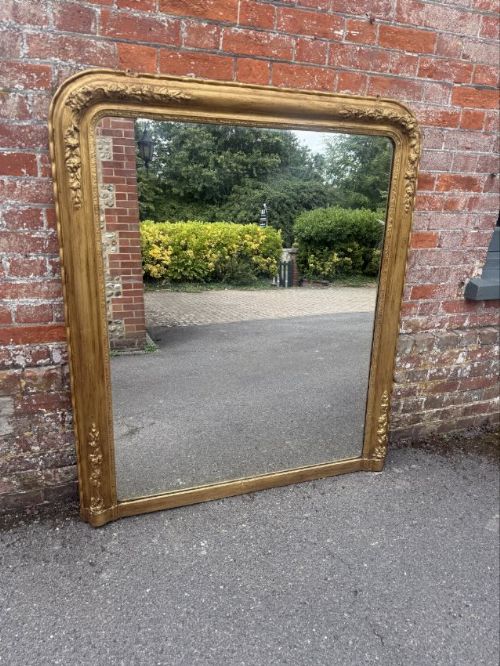
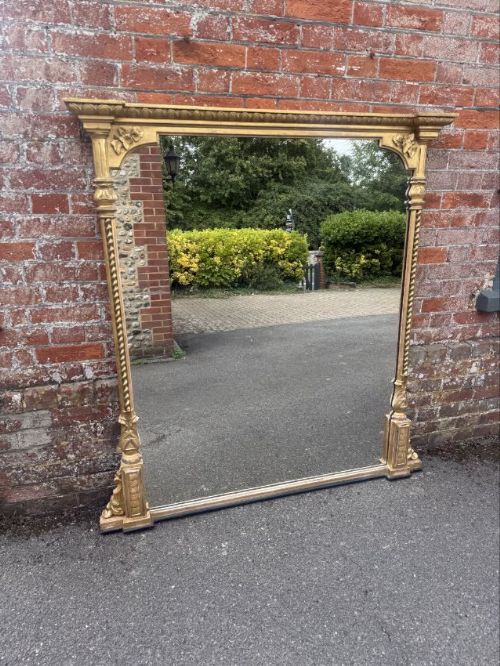
Gold Chimney Mirror
A gold chimney mirror brings warmth and reflective breadth to a room, hung low where the hearth once drew the eye.

Gold Chimney Mirror
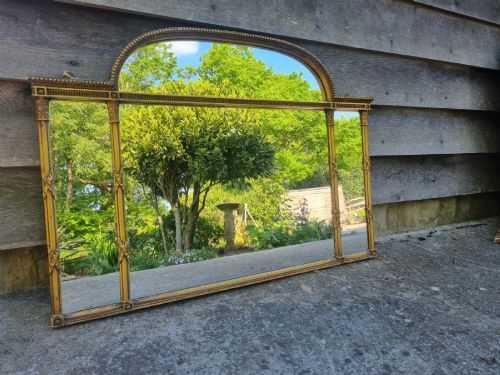
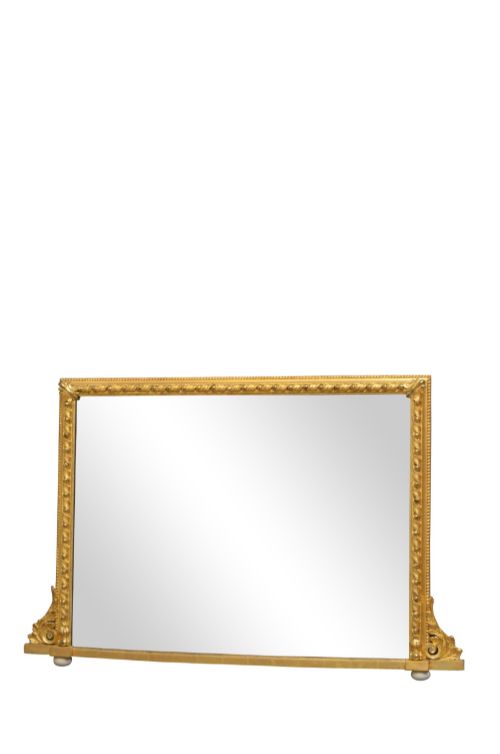
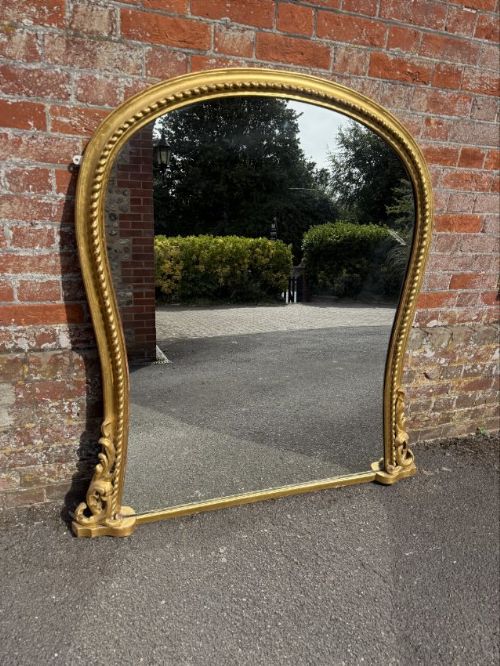
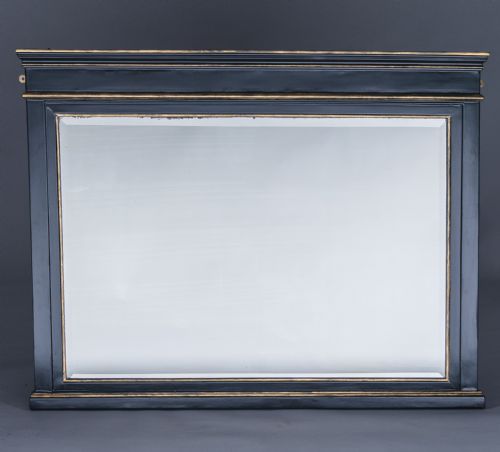
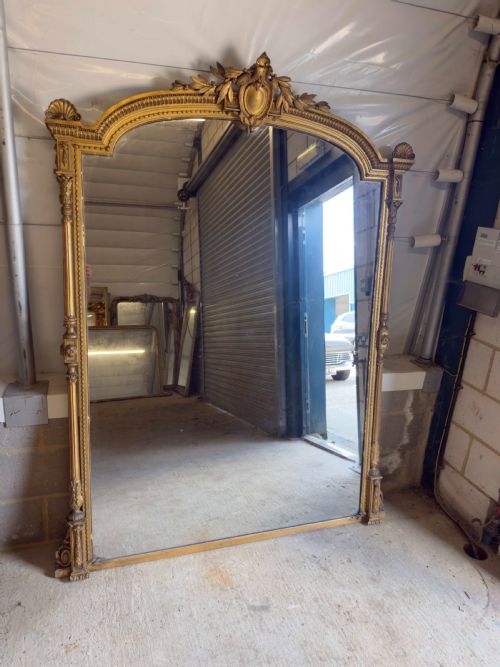
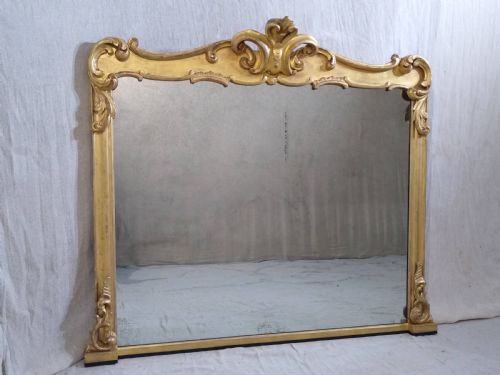
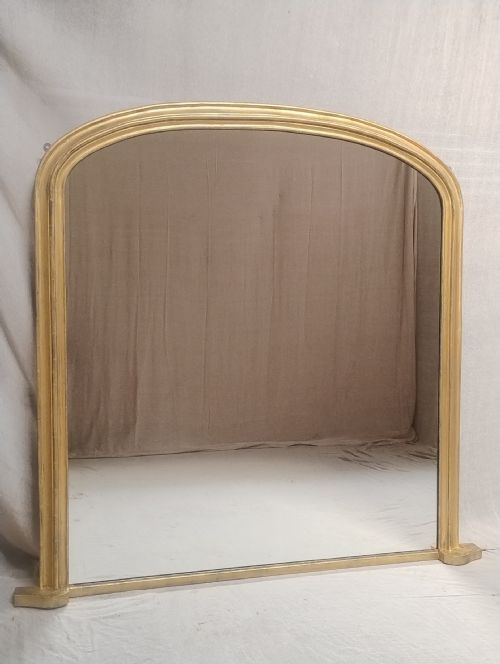
A gold chimney mirror, most frequently encountered here as a large overmantle mirror, sits horizontally above a fireplace to capture and multiply the light of the room. These pieces span the nineteenth century, drawing heavily on Regency, Victorian, and Edwardian periods.
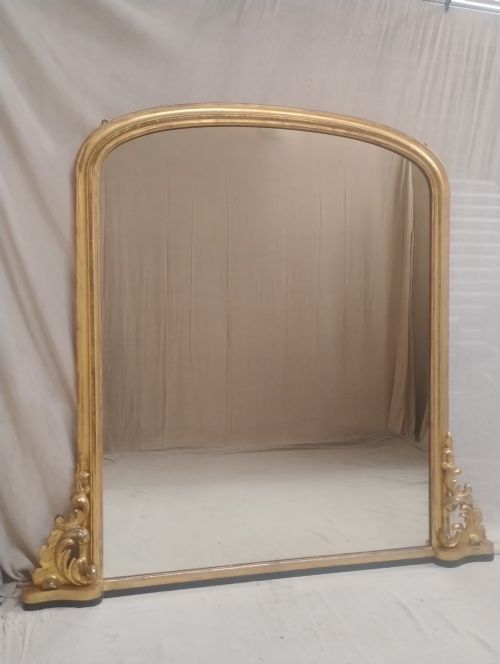
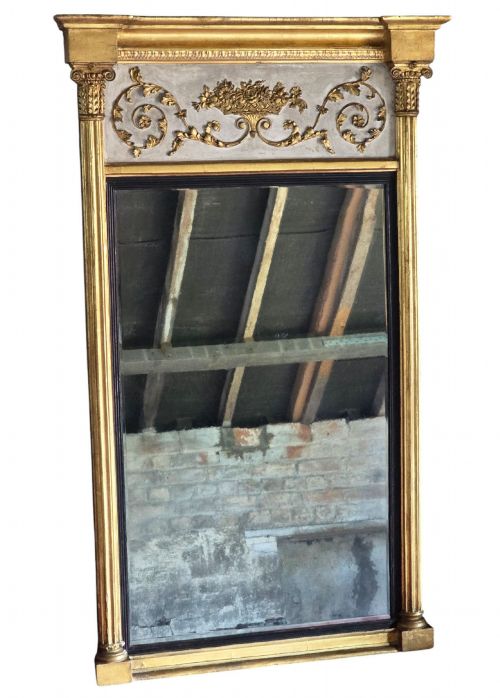
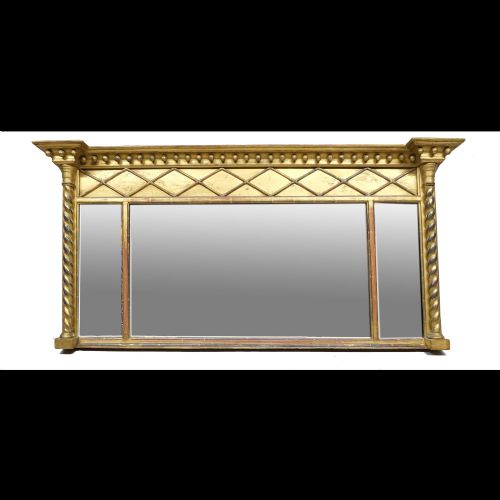
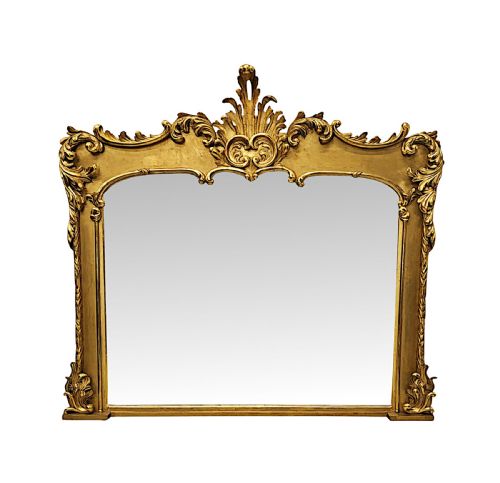
The format is generous in scale, designed to fill the chimney breast with arched, shaped, or rectangular wooden frames finished in gleaming metal leaf or composition ornament. Examples range from tripartite Regency plates to robust Victorian arched designs with carved gesso details.
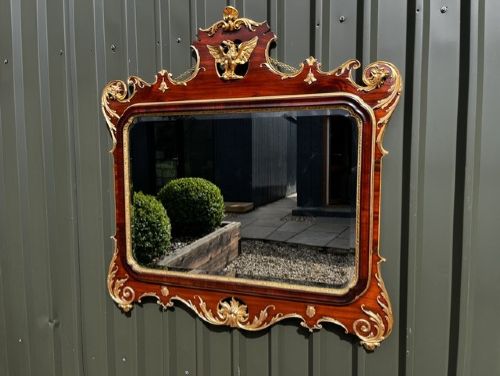
Originating largely from English workshops, these mirrors also reflect broader European styling, including Neoclassical, Rococo Revival, and Louis Philippe influences.
Materials and Construction
Carved wooden foundations of pine or similar timber provide the structural core for these heavy frames, often built with structured joints to support the wide format.
Gesso, a mixture of chalk and binder, is applied over the wood and modelled into crisp rope twists, ribbed columns, or elaborate leaf motifs before being gilded with gold leaf or finished with metallic composition.
Heavy mirror glass is set within the rebate, frequently displaying original characteristics such as light foxing or foxed silvering accumulated over the decades.
Distinguishing the Finer Examples
The depth and crispness of the carved wood and gesso ornamentation dictate the visual strength of the frame, separating hand-worked relief from heavier, mass-produced composition mouldings.
Originality of the glass plate and the integrity of the gilding contribute substantially to the character of the piece, where untouched surfaces retain a softer, warmer patina than later restorations.
The Gold Chimney Mirror Glossary
- Overmantle
- A large mirror designed specifically to be hung on the wall immediately above a fireplace mantelpiece. These frames are typically wider than they are tall.
- Gesso
- A plaster-like material applied to wooden frames to provide a smooth, mouldable surface for subsequent gilding. It allows intricate relief patterns to be formed.
- Foxing
- Age-related spots and discolouration within the silver backing of a mirror glass. This chemical oxidation appears as soft dark clouds or speckles.
- Giltwood
- Timber that has been coated with gold leaf or gold paint. It provides a bright, reflective metallic finish to nineteenth-century frames.
- Trumeau
- A decorative wall mirror incorporating a painted or carved panel above the glass. These originate from French interior design traditions.
Gold Chimney Mirror: Frequently Asked Questions
How do I hang a heavy gold chimney mirror safely?
These frames carry significant weight due to their dense wooden construction and thick glass plates. They require heavy-duty fixings secured directly into the masonry or studs of the chimney breast.
Professional wall anchors and substantial picture wire or mirror brackets distributed across the frame ensure the load is supported safely.
Are foxed glass panels considered a fault?
Foxed glass is a natural result of ageing as the silver backing slowly oxidises over time. Many collectors prize this characteristic for the gentle, distorted reflection and historic authenticity it brings.
Original foxed plates should be preserved whenever possible rather than replaced with modern, faultless mirror glass.
How do Regency and Victorian mirrors differ?
Regency mirrors tend to favour architectural restraint, featuring classical motifs like reeded columns, ball details, and compartmentalised triple plates. Victorian examples often embrace heavier proportions with exuberant arched tops and deeply modelled gesso scrolls.
Both styles remain well-suited to traditional interior settings above a fireplace.
Can these mirrors be placed in modern rooms?
The scale and reflective surface of a large gilt frame make it an effective focal point in contemporary spaces as well as period homes. Leaning the mirror directly on a mantel or wall rather than hanging it adds a relaxed, unstructured balance to minimalist interiors.
The warm gold tone complements both neutral and saturated wall colours.