


Gold Brass Urn
A gold brass urn brings warmth and historic weight to a room, functioning as a decorative vessel, lamp or clock.
Gold Brass Urn
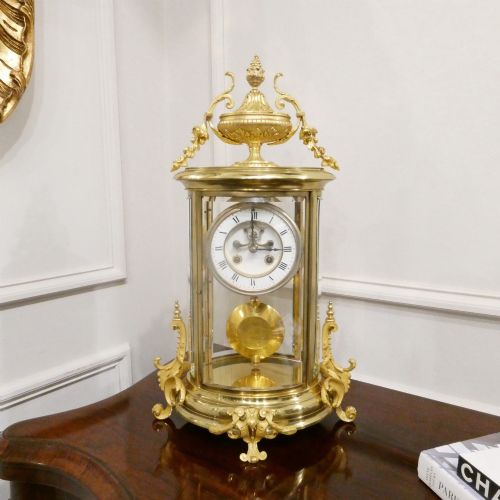
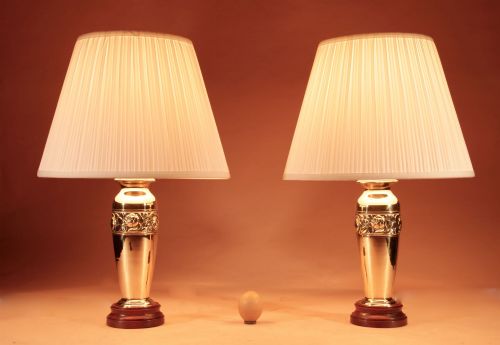
A gold brass urn search encompasses decorative vessels, mantel clocks, table lamps, and fireplace accessories spanning the nineteenth and early twentieth centuries. Pieces range from Victorian brass planters and pierced vases to French gilt bronze mantel clocks and ewers.
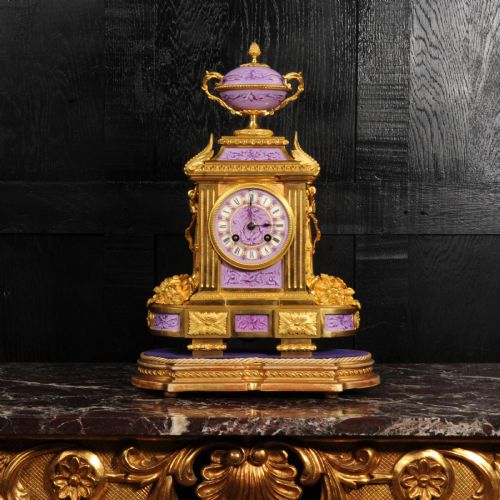
Makers and manufacturers employed diverse styles including Neoclassical, Louis XVI, and Art Deco, working in materials such as ormolu, gilt metal, and polished brass. These objects often incorporate marble bases, porcelain panels, and enamel details.
The items found here frequently originate from English, French, and Chinese workshops, capturing decorative tastes from the eighteen-fifties through the nineteen-thirties. Many lighting adaptations and clock movements preserve functional utility alongside ornamental presence.
Materials and construction methods
Casting and chasing form the backbone of these pieces, particularly in French gilt bronze and ormolu mounts where metalworkers achieved sharp relief through detailed hand-chiselling. Brass, gilt metal, and bronze serve as the primary structural foundations for vases, clocks, and wall lights.
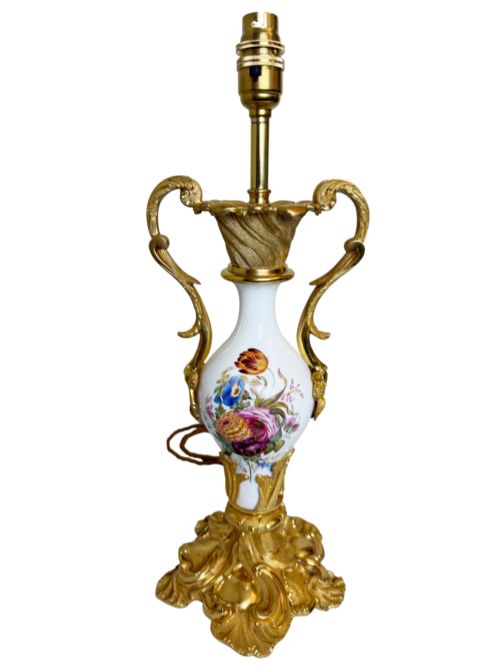
Surface gilding and patination techniques define the golden finish, applied via mercury gilding on earlier pieces or later electroplating methods. Artisans combined these metallic elements with contrasting materials like Sienna marble, Sèvres porcelain, and coloured glass.
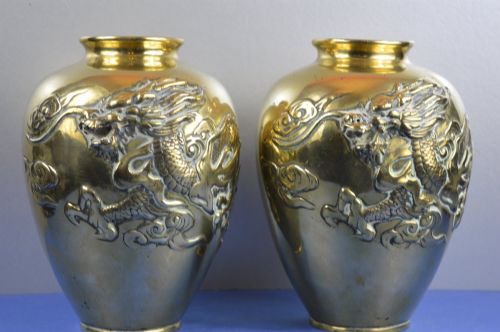
Some heavy Chinese dragon vases weigh five kilogramnes, offering a remarkably solid grip on history.
Distinctions in craftsmanship
The clarity of the chased detail and the crispness of cast ornamentation separate standard production items from superior workshop output. Deeply undercut bronze and finely pierced brass show a higher level of artisan involvement.
Material integration also dictates quality, seen in the selection of genuine marble bases, hand-painted porcelain inserts, and robust clock movements signed by established makers.
Achille Brocot·Samuel Marti·Casier
The Gold Brass Urn Glossary
- Ormolu
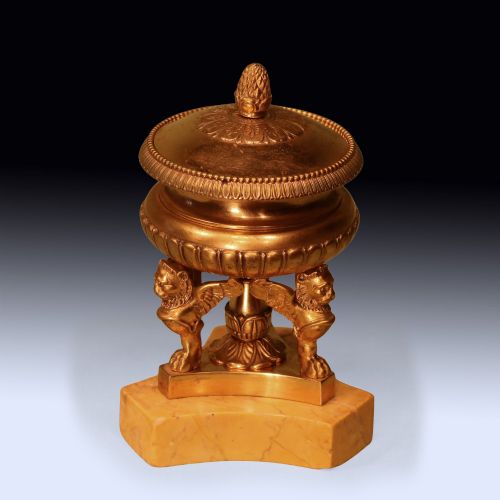
- Gilded bronze, where a finely ground gold-mercury amalgam is applied to a bronze base and heated to drive off the mercury. This technique creates a durable, warm metallic lustre seen on French decorative objects.
- Gilt Bronze
- An alloy of copper and tin coated with a layer of gold. It provides structural strength for intricate casting while retaining a bright golden surface.
- Ewer
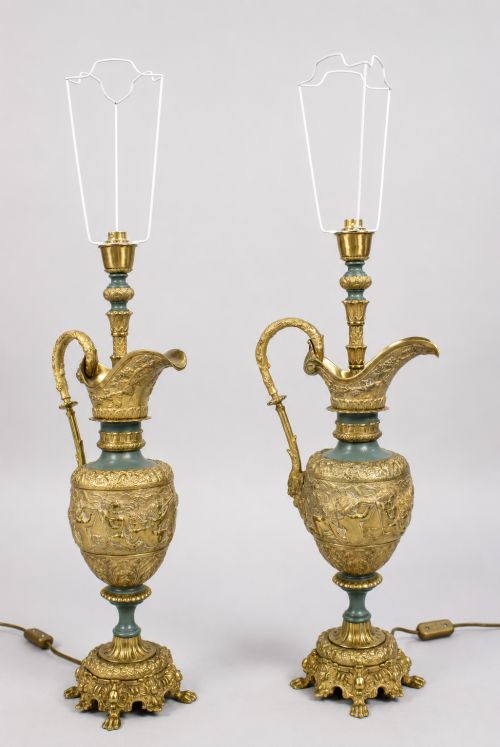
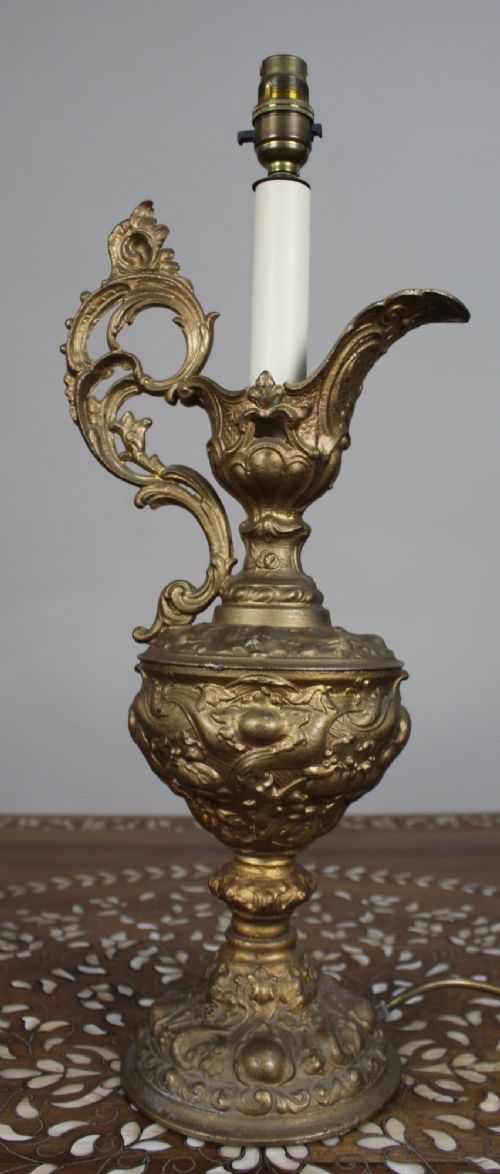
- A large jug with a wide spout and ornate handle, historically used for pouring water. In decorative metalwork, ewers frequently serve as decorative urns or form the bodies of converted table lamps.
- Candelabra
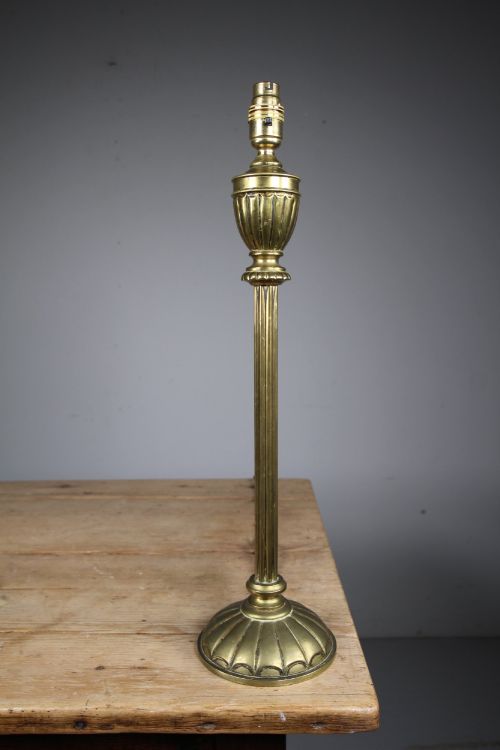
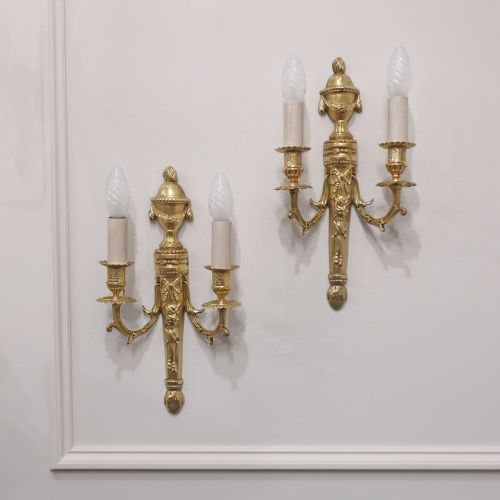
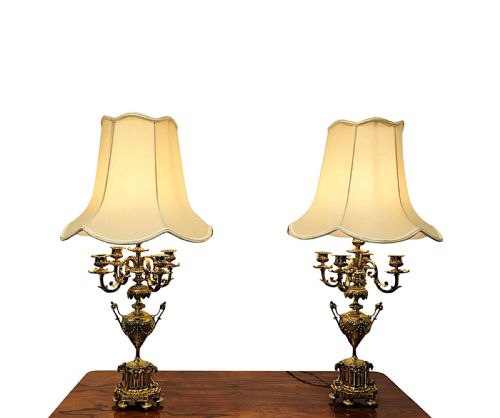
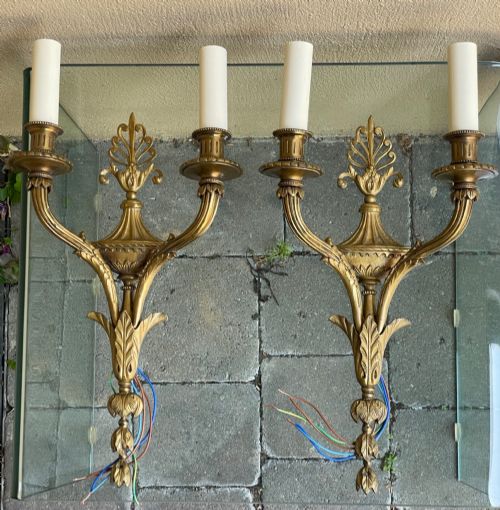
- A branched candlestick holder designed to support multiple candles. Many examples feature central shafts decorated with classical urn motifs and gilt metal mounts.
- Toleware
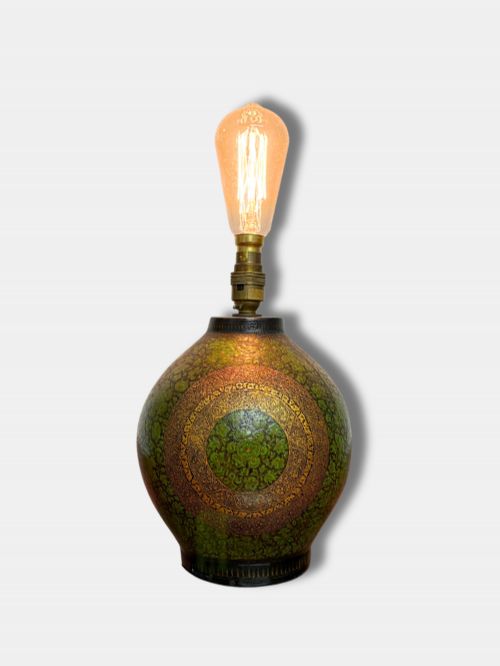
- Lacquered or enamelled metalware, typically tin or iron, painted with floral or scenic designs. These items often take the form of domestic vessels and coffee urns.
Gold Brass Urn: Frequently Asked Questions
How do I clean a gold brass urn?
Dust gently with a soft, dry cloth to protect the surface finish and any delicate gilding. Avoid abrasive polishes or chemical cleaners that can strip thin gilt layers from brass or bronze.
For pieces with intricate chased detailing, a soft artist brush helps remove buildup from recessed areas without scratching the metal.
Can these converted lamps be rewired?
Many items, including candelabra and ewer table lamps, have been adapted for modern electrical standards over time. Professional electricians can easily update internal wiring to meet current safety requirements.
Check the base or interior channels to ensure the original metal structure remains unaltered before undertaking any rewiring work.
Where were these metal objects placed?
Nineteenth-century interiors featured these decorative items on mantelpieces, side tables, and as part of grand fireplace garnitures. Clock urns and candelabras anchored the centre of receiving rooms.
Planters and jardinieres stood on dedicated stands or window ledges to display plants within formal living spaces.
How do I identify the period?
Stylistic cues such as Neoclassical ram masks, Louis XVI revival garlands, and clean Art Deco geometric lines point to specific eras of manufacture. Examining the casting quality, fastening screws, and marble types helps narrow down the decade.
Signatures on clock movements or bronze mounts offer direct confirmation of the maker and working period.