


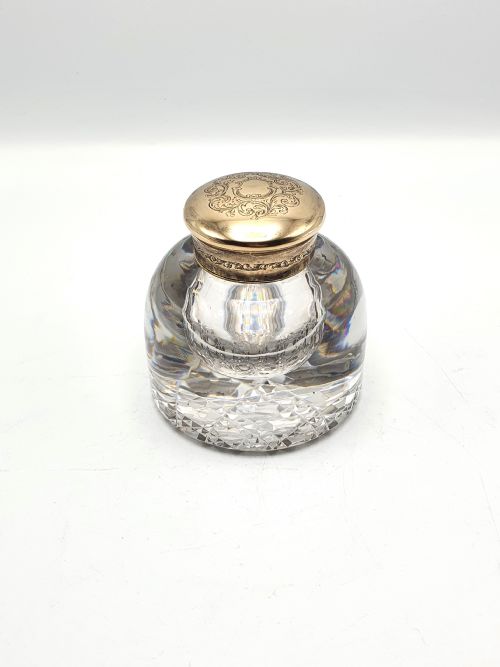


Engraved Brass Pot
An engraved brass pot brings pattern and warmth into a room, taking the form of jardinières, cachepots, and vessels.
Engraved Brass Pot
When you search for an engraved brass pot, you find hollow vessels shaped for plants, display, and utility. The examples here span the Victorian and Edwardian eras, reaching back to the mid nineteenth century and into the early twentieth century.
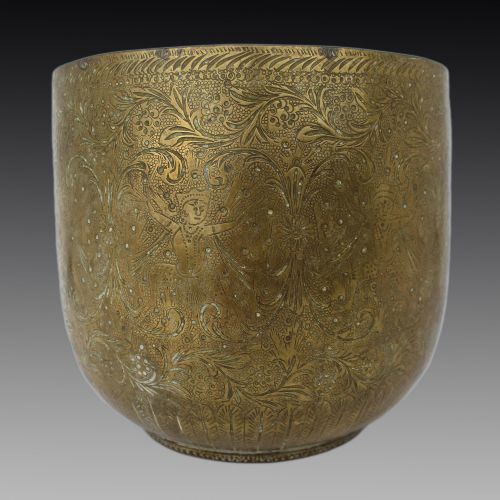
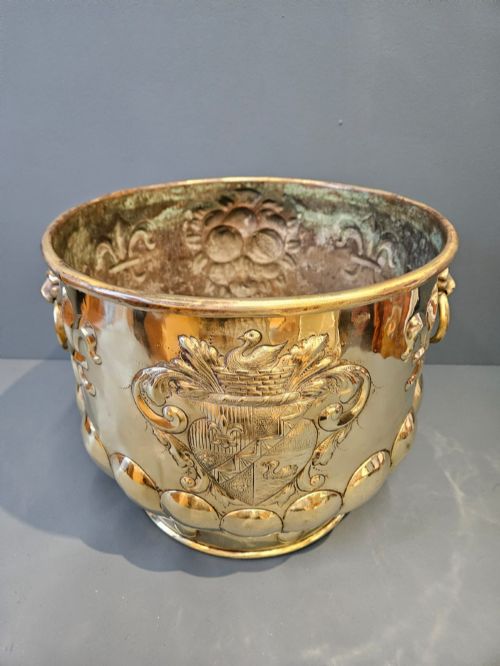
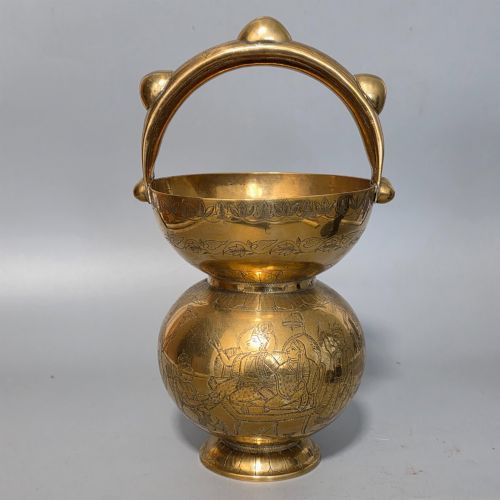
The forms vary from large jardinières and planters down to smaller trinket boxes, vases, and ceremonial vessels. Many carry distinct design influences from Anglo-Indian, Chinese, Japanese Meiji, and Victorian Orientalism aesthetics.
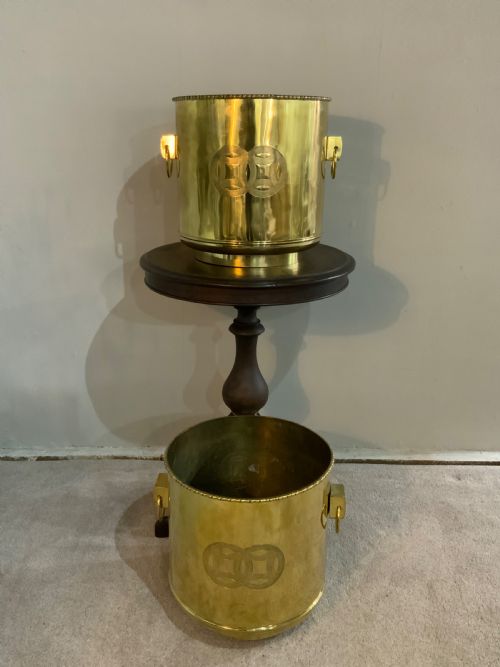
You are most likely to encounter planters and cachepots designed to hold foliage or sit upon furniture as decorative centerpieces. These pieces reflect global trade and domestic display tastes of the nineteenth and early twentieth centuries.
How they were made
Makers shaped these items primarily from brass and bronze, occasionally incorporating lead crystal or cut glass into the designs. Metalworkers formed the bodies through casting and beating before applying surface enrichment.
Decoration relied upon hand engraving, deep carving, and chasing to cut intricate patterns into the metal. Artisans produced crests, figurative finials, and dense botanical or geometric motifs by hand.
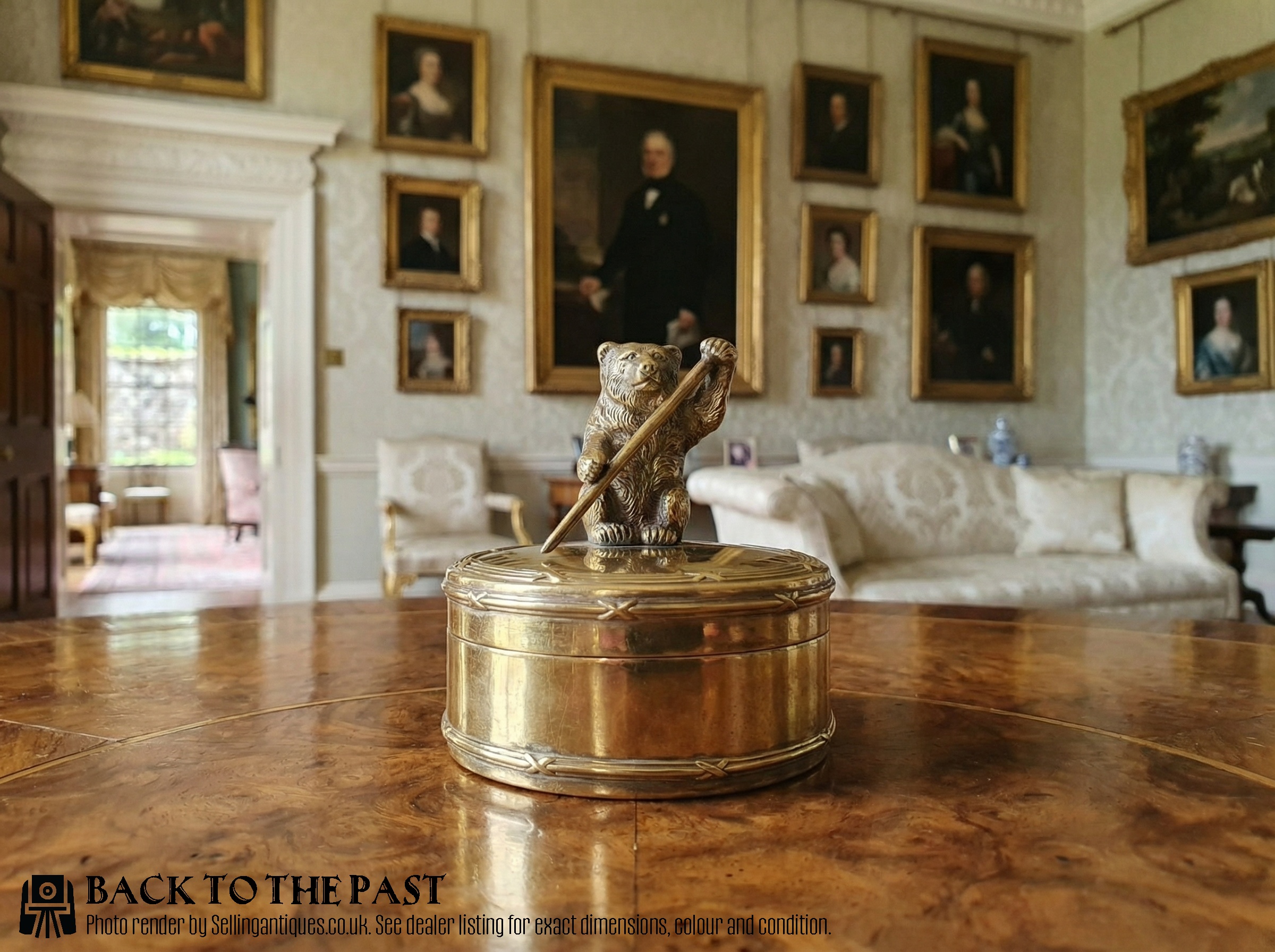
One unexpected little box comes topped with a metal bear acting as a finial.
What varies in quality
Quality rests in the crispness of the hand engraving and the depth of the chased or carved details. Pieces with sharp, deliberate toolwork and substantial weight stand apart from lighter, more superficial stampings.
The integration of specific artistic traditions, such as Jeypore School of Art production or detailed Meiji period casting, marks out finer examples. Heavier gauge metal and well-cast additions like bear finials or applied crests elevate a piece.
The Engraved Brass Pot Glossary
- Cachepot
- An ornamental pot used to hold a flowerpot and catch water runoff. It lacks drainage holes in the base.
- Jardinière
- A large ornamental pot or stand for plants and flowers. These often sit on the floor or upon dedicated tables.
- Chasing
- A metalsmithing technique where the artisan pushes metal down with a hammer and punch to raise a design from the front. It creates surface relief without removing material.
- Meiji Period
- A Japanese historical era lasting from 1868 to 1912. Metalwork from this time often displays exceptional bronze casting and patination.
- Kamandal
- A spherical water pot used by Hindu ascetics or holy figures. Examples can be cast in brass and decorated with religious motifs.
Engraved Brass Pot: Frequently Asked Questions
What is an engraved brass pot used for?
These vessels served various domestic and ceremonial functions, from holding household plants to storing tobacco or holy water.
Today, you can use larger jardinières as cachepots for houseplants or display smaller vases and boxes on shelves and desks.
How do I date an engraved brass pot?
Dating relies on stylistic clues, manufacturing marks, and the specific decorative vocabulary of periods like the Victorian era or Meiji period.
Hand engraving methods and regional motifs, such as Anglo-Indian Raj designs, also help narrow down the decade of production.
How do I clean an engraved brass pot?
Dust the surface gently with a soft cloth to protect the dark patination accumulated over the decades.
Avoid harsh chemical dips that strip the aged character from the recessed engraved lines.
Are these pots waterproof?
Many metal vessels hold water well, but older constructed or soldered seams can develop slight weeping over time.
It is safest to use a plastic liner inside vintage planters to protect surfaces from moisture.