
Oriental Metal Vase
When you search for an oriental metal vase, you are looking at centuries of cast and worked metalwork from China and Japan.
Oriental Metal Vase
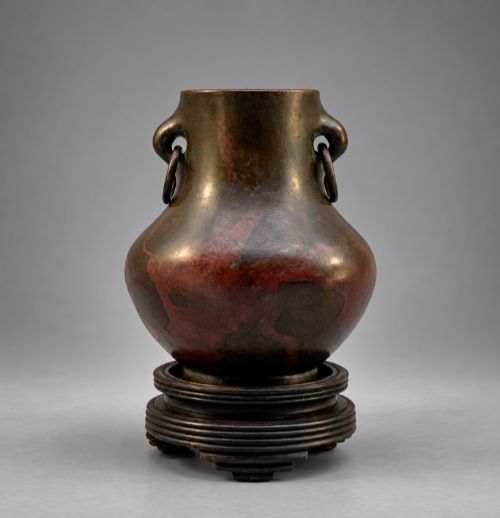
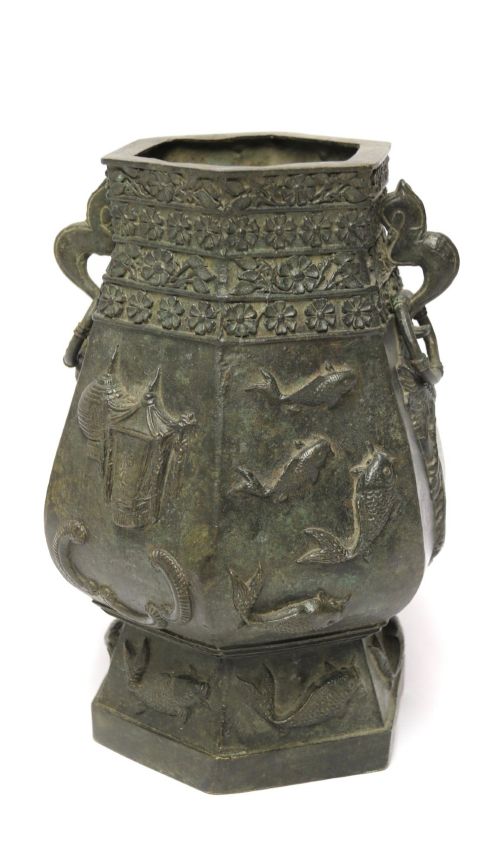
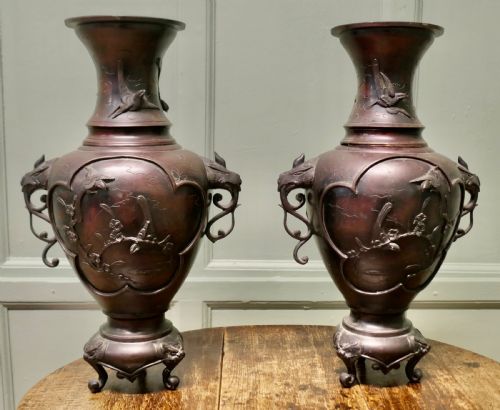
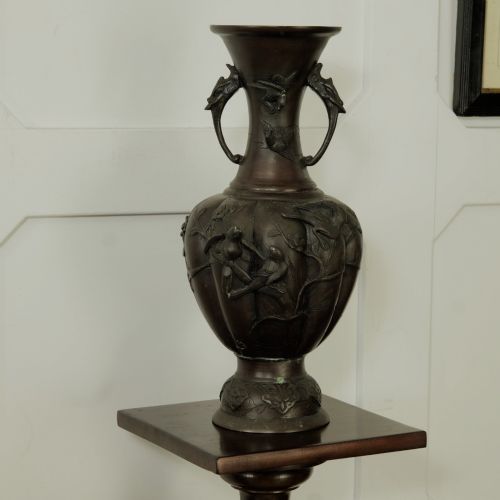
An oriental metal vase covers a wide span of vessels originating from China and Japan, taking forms such as baluster urns, ginger jars, and ritual vessel shapes like the hu and gu. These pieces date predominantly from the nineteenth and early twentieth centuries, encompassing the Victorian era, the Meiji period, and the late Qing dynasty.
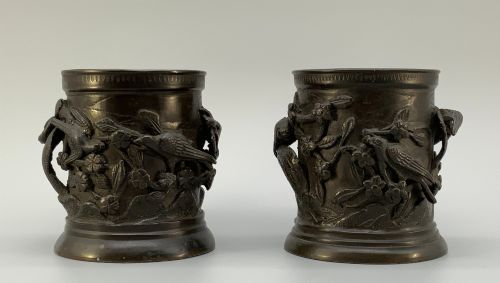
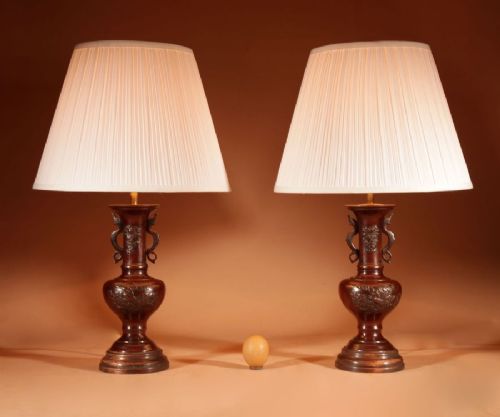
Buyers will most frequently encounter bronze and copper-alloy vessels decorated with high-relief casting, inlays, or enamel work. The selection ranges from modest pairs of stem vases to large garden urns and converted table lamps.
How they were made
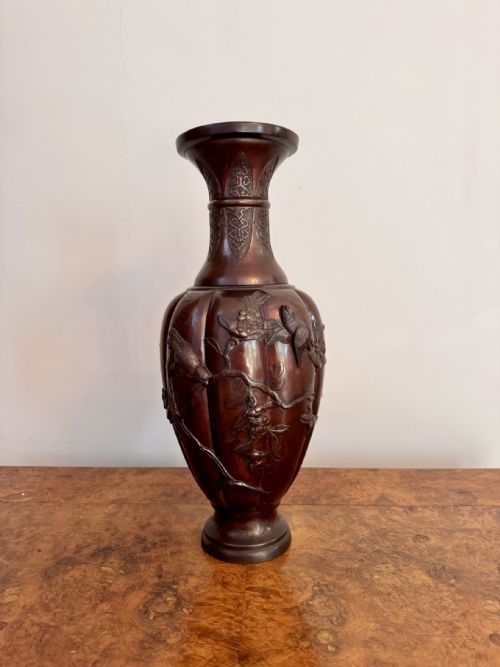
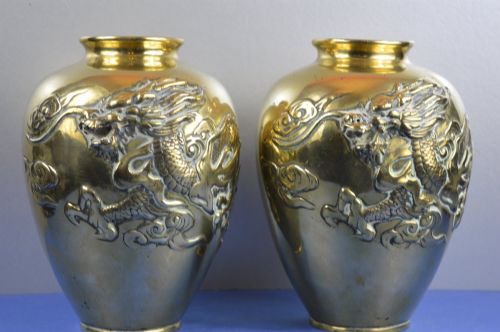
Metalwork masters utilised bronze, brass, and copper alloy, often casting vessels by the lost-wax method or forming them as heavy baluster shapes. Surfaces were then enriched through patination, gilding, or the application of mixed metals.
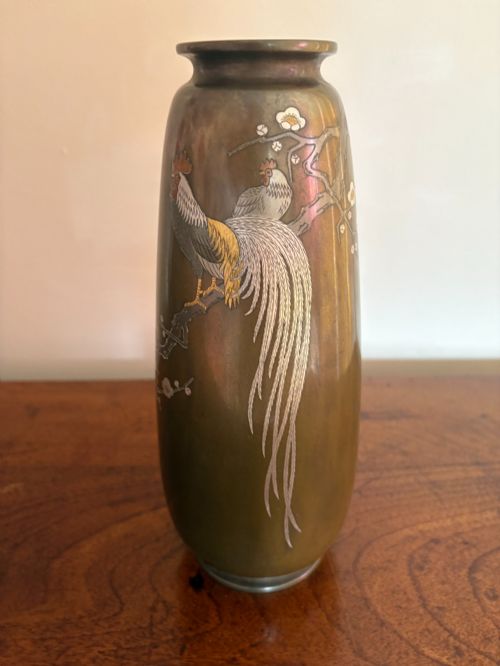
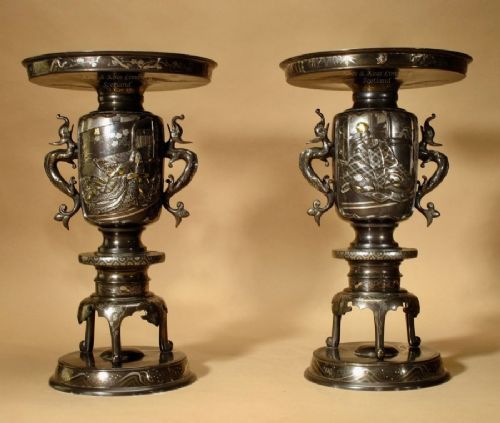
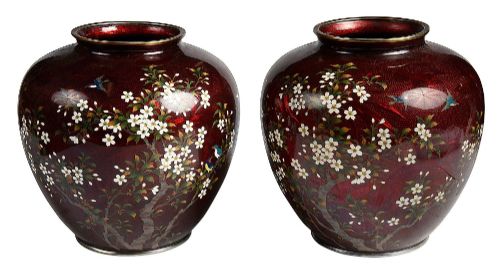
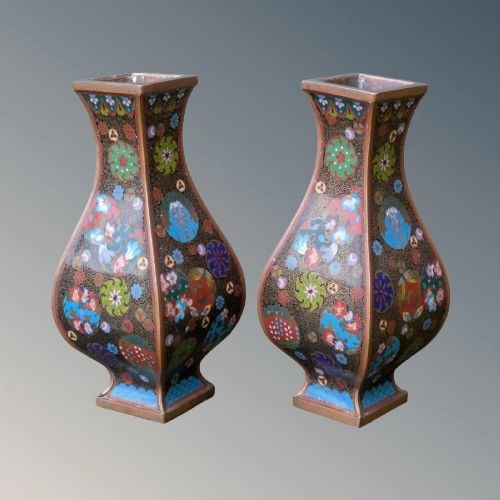
Cloisonne and champleve techniques introduce coloured enamel within wire cells or excavated troughs on the metal body. Silver wire cloisonne and ginbari enamel work further demonstrate intricate layering and translucent red grounds.
Listings feature vessels spanning the Victorian era through the early twentieth century, incorporating materials from solid bronze to translucent enamel.
What varies in quality
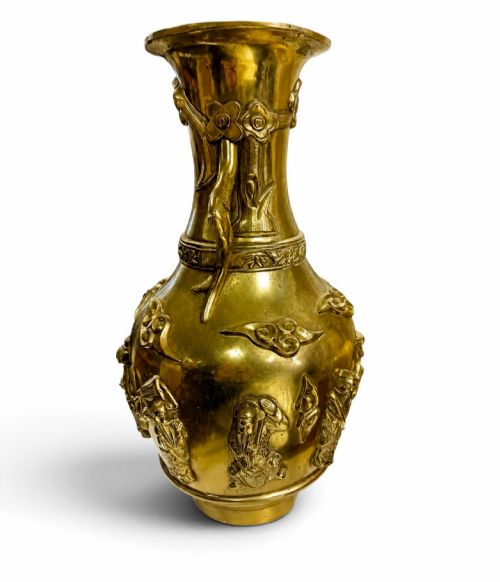
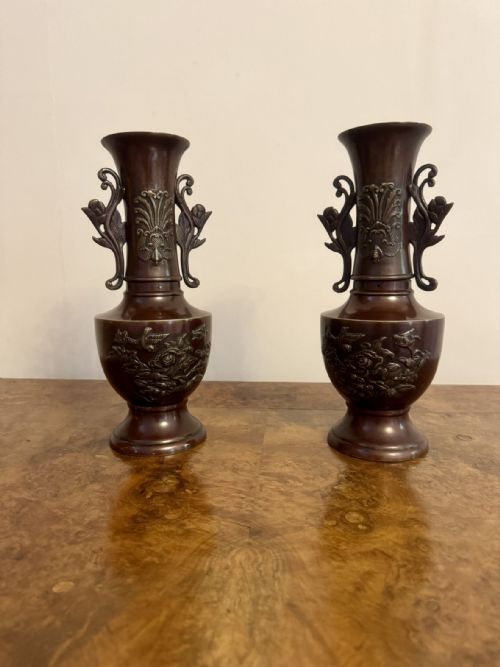
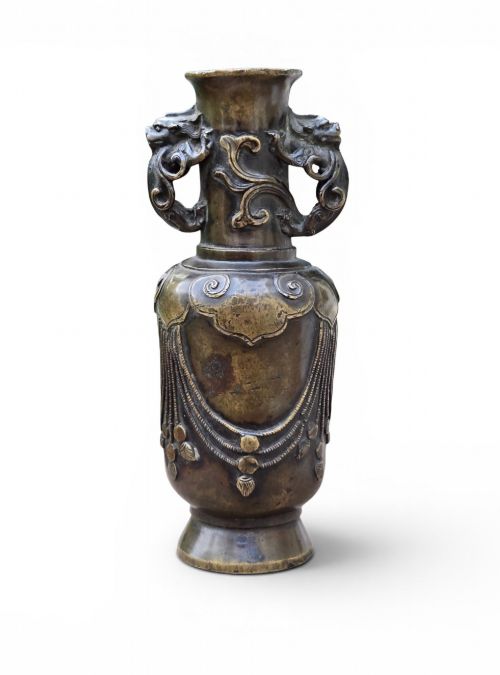
The distinction between ordinary production and superior work rests on the crispness of the casting and the depth of the relief work. Vessels depicting Daoist immortals, dragons, or birds with sharp, undercut details demand greater skill than shallow, mass-produced stampings.
The precision of inlaid metalwork and the flawless fusion of enamel in cloisonne pieces separate standard decorative objects from workshop masterpieces. Signed pieces and those retaining original patination command closer attention from collectors.
KANASAWA·Ando Jubei
The Oriental Metal Vase Glossary
- Meiji Period
- The era of Japanese history lasting from 1868 to 1912, noted for a surge in metalwork craftsmanship destined for export. Many bronze and cloisonne vases on the market originate from this timeframe.
- Cloisonne
- An enamelwork technique where thin metal wires are soldered to a metal base to create compartments filled with paste and fired. This method produced intricate floral and avian patterns.
- Champleve
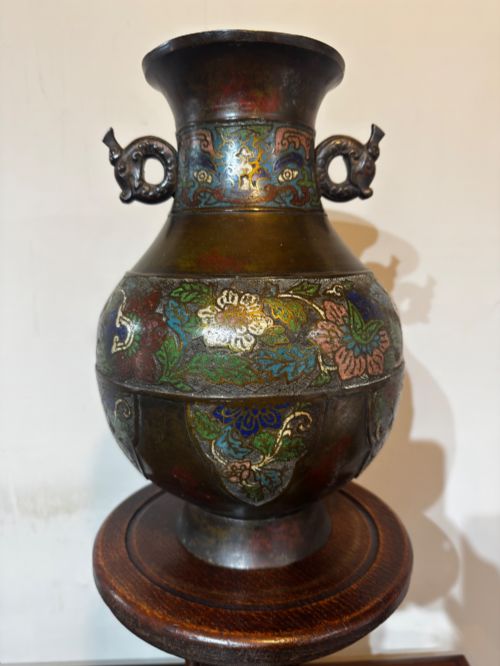
- A technique where troughs or cells are hollowed out of the metal surface and filled with enamel before firing. It yields bolder outlines than wire-based cloisonne.
- Usubata
- A specific form of Japanese bronze vessel traditionally used for flower arrangement, often featuring a broad basin top and a columnar stand. Garden examples can be substantial in weight.
- Hu
- An ancient Chinese ritual wine vessel form adapted in later centuries as a decorative flower vase. These vessels typically feature a pear-shaped body and loop handles.
Oriental Metal Vase: Frequently Asked Questions
How do I clean an antique bronze vase?
Dust the surface gently with a dry, soft brush to protect the historic patination and any delicate inlays. Avoid chemical polishes or water, which can strip the aged finish and damage enamel elements.
For stubborn grime, consult a professional conservator rather than attempting vigorous scrubbing. Preserving the original bronze skin maintains both the aesthetic and historical integrity of the piece.
Are these vases watertight?
Many antique metal vessels were created primarily for display or ceremonial use rather than holding water. Over decades or centuries, interior seams or applied bottoms may develop minor weepage.
If you plan to use a vase for fresh flowers, insert a discreet glass or plastic liner inside the cavity. This prevents moisture from reacting with old bronze, copper, or enamel surfaces.
How do I tell Chinese from Japanese vases?
Chinese vessels frequently draw on archaic ritual forms like the gu or hu, employing heavy bronze casting with taotie masks or Daoist iconography. Qing dynasty pieces often feature deep relief work and distinct reign marks.
Japanese Meiji period metalwork often showcases naturalistic motifs such as birds, blossoms, and egrets rendered in mixed metals or fine silver-wire cloisonne. Signature plaques and workshop stamps also point toward specific Japanese origins.
What does patinated bronze mean?
Patination is the natural or induced oxidation layer that forms on the surface of bronze over time. Makers often enhanced this process chemically to achieve rich brown, green, or black tones.
An original patina serves as a hallmark of age and authenticity. Removing it exposes raw, bright metal underneath and diminishes the character of the object.