




Glazed Wall Cupboard
A glazed wall cupboard saves floor space while framing your collections behind glass panels.
Glazed Wall Cupboard
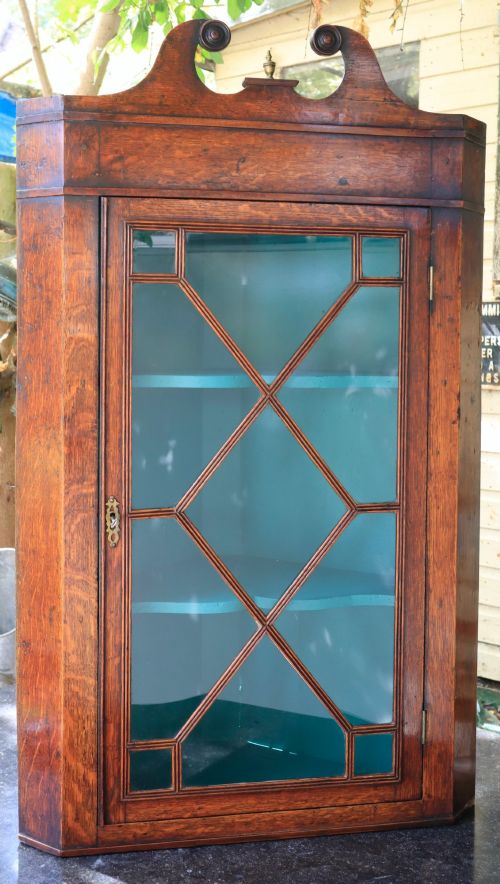
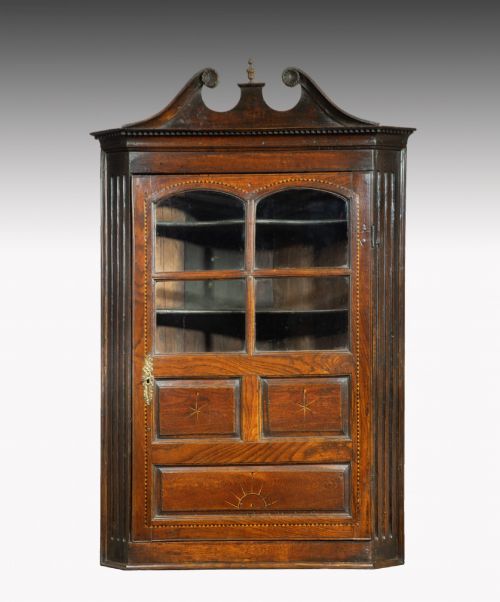
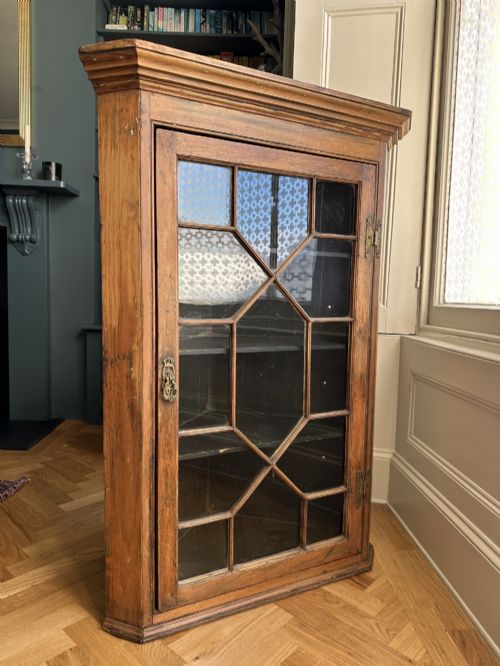
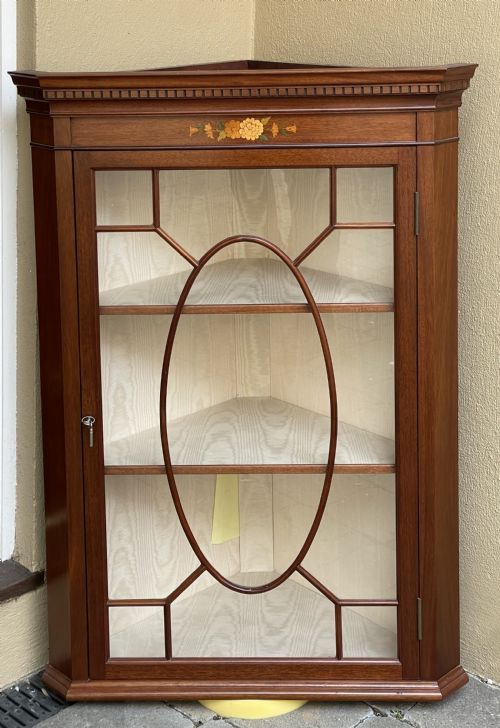
A glazed wall cupboard mounts directly to room surfaces to hold display items or everyday objects. You will frequently encounter corner configurations designed to utilise awkward angles in older properties.
The form spans centuries of cabinet-making, appearing in domestic interiors from the Georgian era through to the Edwardian period and the early twentieth century. Makers constructed these units primarily for dining rooms, halls, and reception spaces where visibility and security mattered.
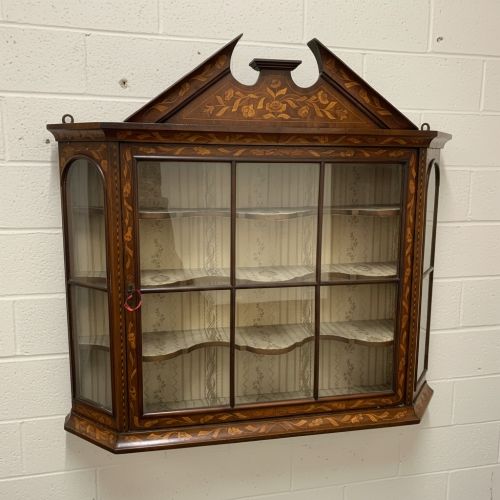
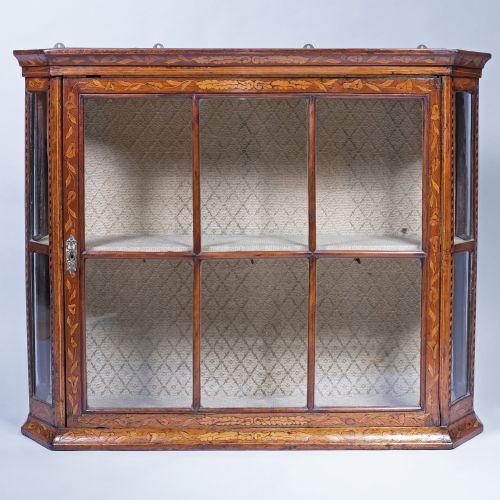
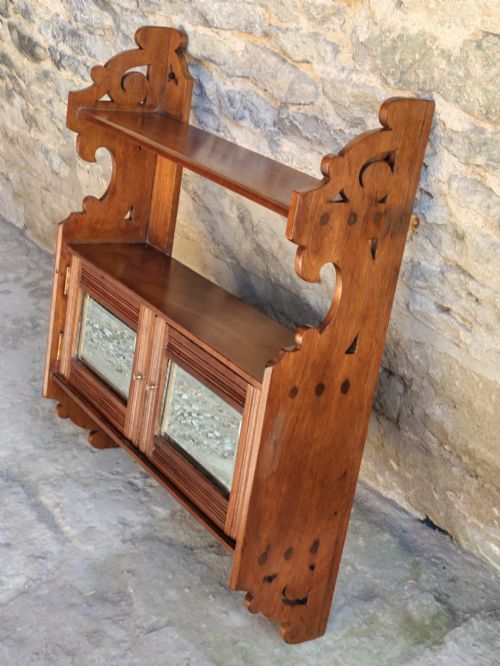
Most examples feature a single or double glazed door, sometimes accompanied by small internal shelving or a base drawer. The evidence shows styles ranging from simple pine farmhouse pieces to elaborate Dutch marquetry and Gothic Revival designs.
Materials and construction methods
Cabinet makers relied on hardwoods like mahogany, oak, and walnut for durable carcases, frequently employing pine for secondary timbers and backs. Finer pieces incorporate satinwood inlay, brass hardware, and specialised fabric linings behind the shelving.
Glazing typically involves timber glazing bars, such as astragal mouldings, holding individual panes of glass securely within the door frame. Construction often utilises traditional joinery techniques, creating sturdy hanging structures intended to bear the weight of stored ceramics or glassware.
Listings feature oak, mahogany, walnut, and pine, demonstrating how cabinet makers selected timber for both utility and display.
Assessing quality in construction and design
Quality rests heavily on the selection of timber veneers and the precision of the joinery within the carcase. Finer examples display meticulous attention to inlay work, balanced grain patterns, and well-fitted doors that maintain their alignment over time.
The complexity of the glazing bars and the originality of the glass panes also distinguish standard storage units from high-status display pieces. Details such as original brass fittings, working locks with keys, and untouched painted interiors elevate the standing of an individual cabinet.
The Glazed Wall Cupboard Glossary
- Astragal glazed
- A method where thin wooden mouldings divide the glass in a door into smaller panes. This technique is typical of finer Georgian and Victorian display cabinetry.
- Bow front
- A convex curved cabinet front that projects outward. This shape softens room angles and demands advanced woodworking skill.
- Marquetry
- Decorative veneer patterns formed by fitting together thin pieces of wood and other materials. Dutch makers frequently applied this technique to floral wall cabinets.
- Breakfront
- A piece of furniture where the central section projects forward from the flanking sides. It adds architectural depth to larger wall-mounted bookcases and display units.
- Gothic Revival
- An architectural and decorative style drawing on medieval forms. Look for pointed arches and characteristic tracery within the glazing bars.
Glazed Wall Cupboard: Frequently Asked Questions
How do I hang a heavy wall cabinet safely?
These cabinets were built with structural stability in mind, but mounting them securely requires locating solid wall studs or using appropriate heavy-duty fixings suited to your wall type. Because older timbers add considerable weight, professional installation is recommended.
Ensure the weight distributes evenly across the hanging brackets or internal fixing points provided in the backboards. Checking the level before final tightening prevents the glazed door from binding in its frame.
How do I care for antique glass and wood?
Maintain the timber by dusting regularly with a dry, soft cloth and occasionally applying a quality beeswax to nourish dry surfaces. Avoid modern silicone polishes that can build up and damage historic finishes over time.
Clean the glass panes gently using a mild, non-ammonia cleaner applied to a cloth rather than sprayed directly onto the surface. This protects surrounding wooden mouldings and historic glazing bars from moisture damage.
Can I use these cabinets in a modern kitchen?
These pieces integrate well into contemporary kitchens for storing glassware, cups, or dry goods while adding traditional character to the room. The glass doors keep dust away from everyday items.
Consider the depth of the cabinet relative to your countertops or walkways, particularly with corner models that project further into the room. Ensure the internal shelving suits the height of your modern dinnerware.