
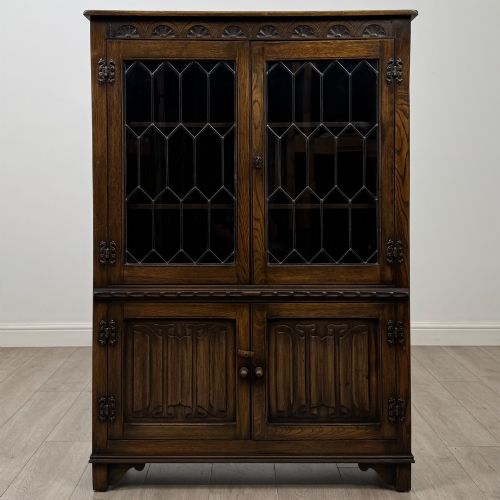
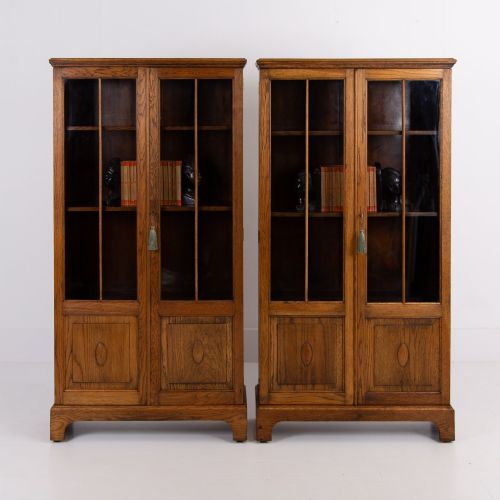
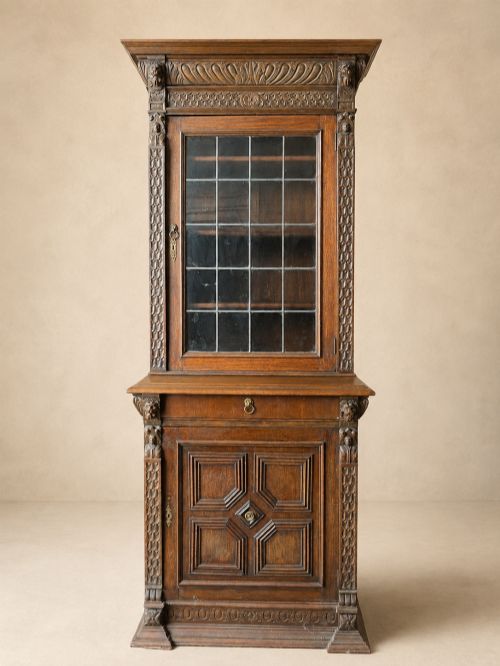
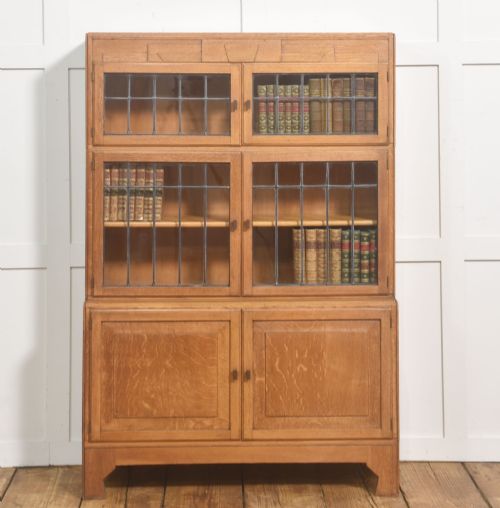
Oak Glass Cabinet
When you search for an oak glass cabinet, you are looking at timber frames built to hold books, china or retail goods behind transparent panels.
Oak Glass Cabinet
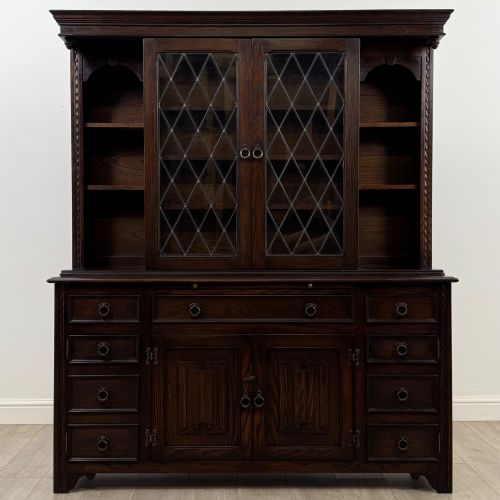
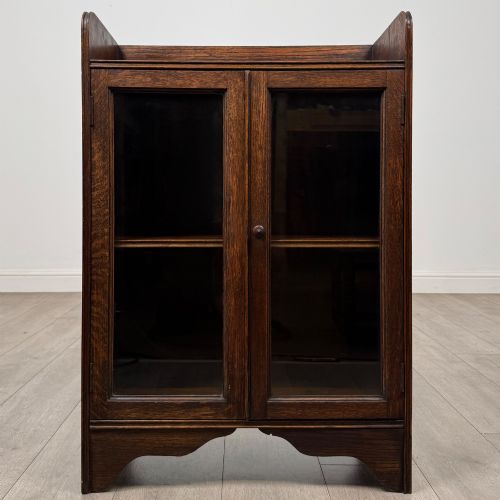
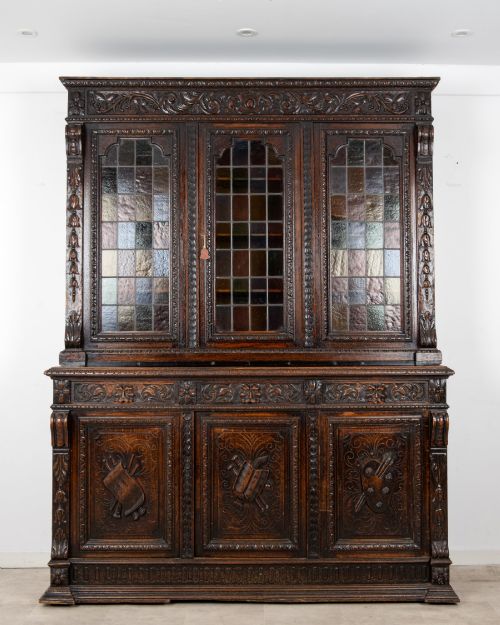
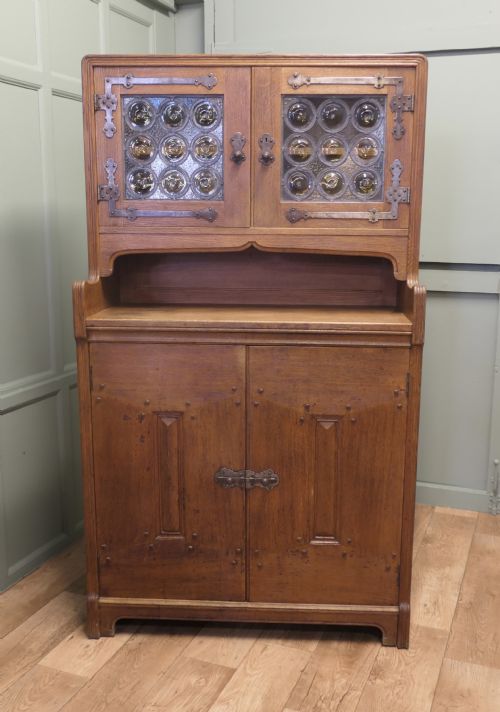
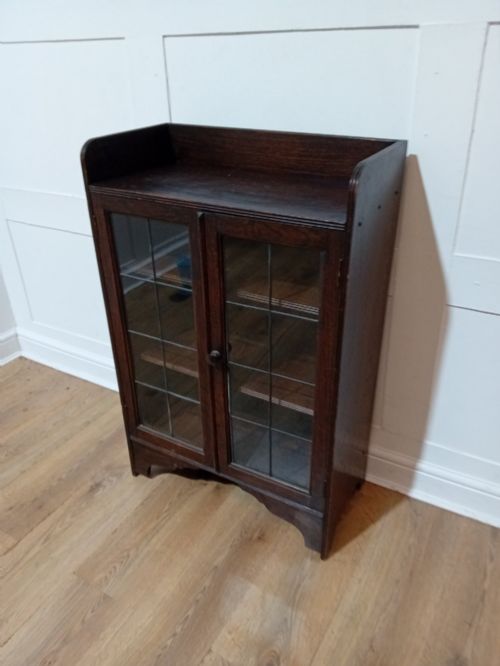
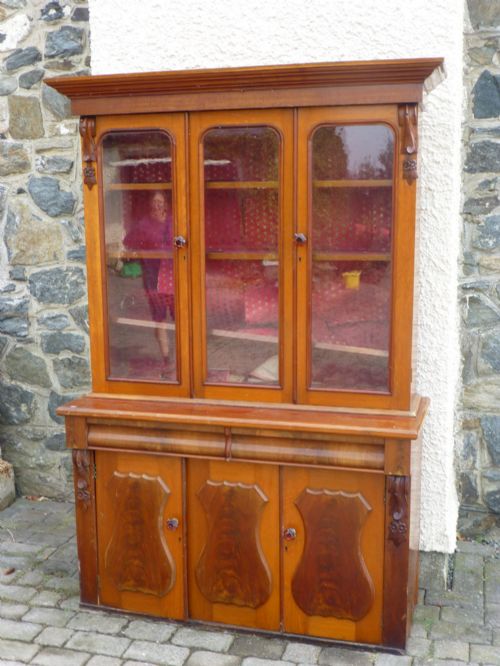
An oak glass cabinet brings together timber framing and transparent panels to display books, china or retail stock. You will see pieces spanning the Victorian era, the Edwardian period, and the 1920s and 1930s, reflecting both domestic use and shop display.
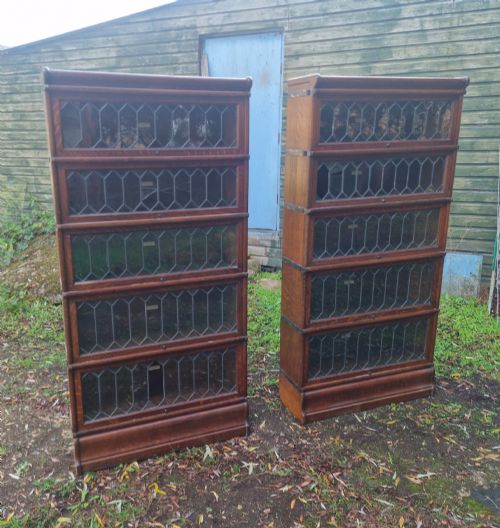
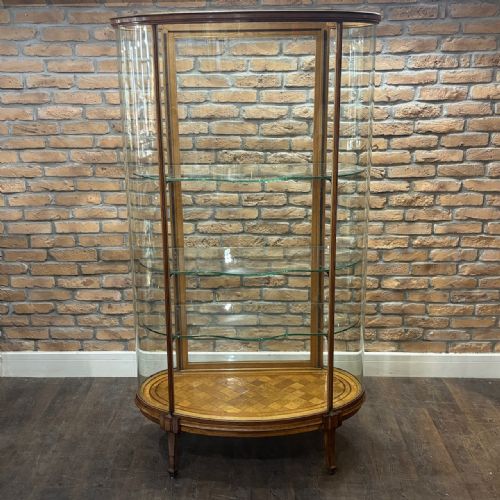
The selection ranges from tall Globe Wernicke stackable barrister bookcases to sideboards, bureau bookcases, and shop display counters. Edwardian and 20th-century examples dominate the offerings, built in forms from dwarf cabinets to tall triple units.
Origins stretch across English workshops, with specific nods to Arts and Crafts ideals and Jacobean or Tudor revivals. Whether domestic or commercial in original purpose, each piece uses glass to protect its contents while keeping them visible.
How they were made
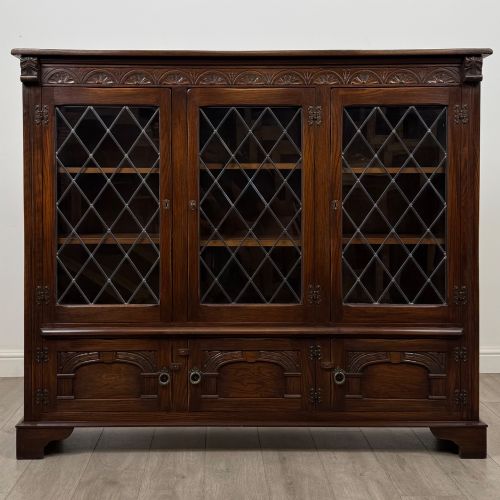
Makers relied primarily on solid oak, golden oak, or blonde oak, often pairing the timber with clear, leaded, stained, or safety glass panes. Brass and iron hardware provided structural joins and hinges, while internal mirrors occasionally enhanced the display depth.
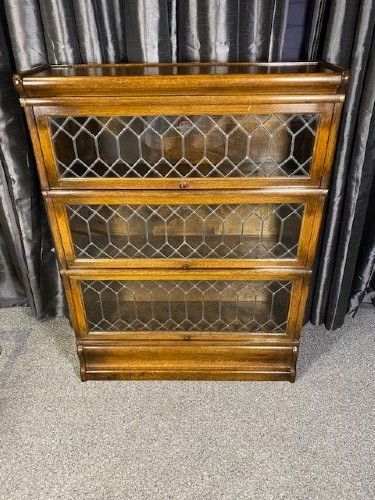
Construction techniques varied from traditional frame and panel methods to modular stacking systems found in barrister bookcases. Glazing was secured with lead cames or wooden glazing bars, and surfaces frequently received carved ornamentation or linenfold panelling.
Listings feature oak combined with glass, brass, lead, iron, and mirror across Edwardian, Victorian, and 1920s periods.
What varies in quality
Quality rests in the selection of the oak itself, distinguishing plain utility timber from finely figured golden or blonde oak. The integrity of the joinery and the precision of the carved details or linenfold panels set finer cabinet work apart from standard production.
The treatment of the glass also marks the tier of a piece, separating simple flat panes from leaded, stained, or curved circular glass. Hardware choices, such as substantial brass fittings and branded maker details, elevate the standing of a cabinet.
Globe Wernicke·F Sage And Co·Liberty And Co·Heal And Son·Dudley And Co
The Oak Glass Cabinet Glossary
- Globe Wernicke
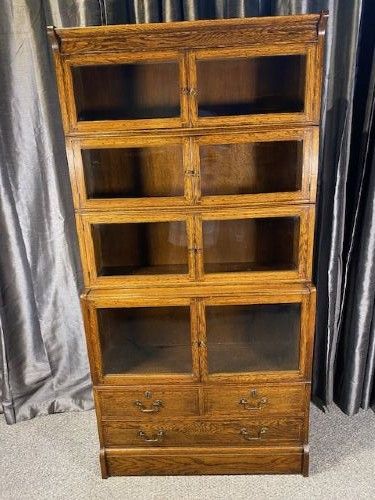
- A modular barrister bookcase system consisting of stacking shelf sections with upward-sliding glass doors. This design allowed libraries to expand by adding individual tiers.
- Linenfold
- A style of carved wooden panelling that resembles folded fabric, commonly seen on Tudor revival and Edwardian cabinet doors. It adds texture and decorative depth to flat wooden surfaces.
- Tantalus
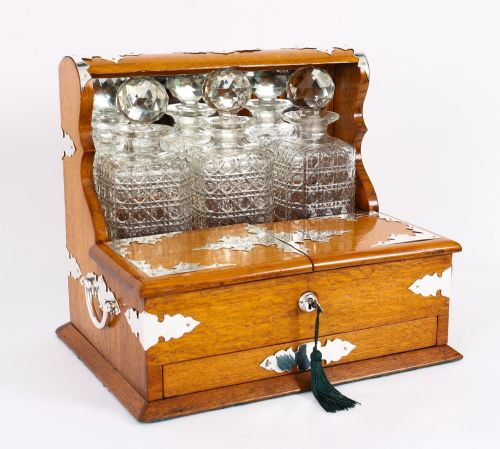
- A locking drinks cabinet that holds decanters visible behind a wooden and metal framework while preventing access without a key. They frequently incorporate games compendiums or storage compartments.
- Lead came
- The grooved lead strips used to hold small panes of glass together in leaded windows and cabinet doors. This technique allows for geometric or decorative glazing patterns.
Oak Glass Cabinet: Frequently Asked Questions
What is a barrister bookcase?
A barrister bookcase is a stackable wooden cabinet featuring individual glass-fronted shelves that lift and slide inward. They were designed for travelling professionals who needed to transport books safely.
In modern interiors, these sectional units work well in studies and living rooms where modular height and easy reconfiguration are useful.
How do I spot an Edwardian oak cabinet?
Edwardian cabinets typically display lighter golden oak tones, clean lines, and occasional Arts and Crafts influences or Sheraton-style inlay. They often feature brass hardware and clear or leaded glass doors.
These pieces emerged as homes moved away from heavy Victorian dark woods towards brighter, more functional furniture designs.
Were these cabinets used in shops?
Many examples on the market originated as commercial display counters, haberdashery units, or shop showcases rather than domestic furniture. Retailers utilised heavy glass panels and mirrored backs to present goods securely to customers.
Commercial pieces often feature robust oak frames, safety glass, and specialised drawer configurations built to withstand daily trade use.
How should I care for antique oak?
Antique oak benefits from stable room humidity and protection from direct sunlight to prevent the timber from drying out or splitting. Dusting with a dry or slightly damp cloth maintains the finish without chemical buildup.
Checking brass hinges and glass seating periodically ensures the structural integrity of older doors remains sound.