

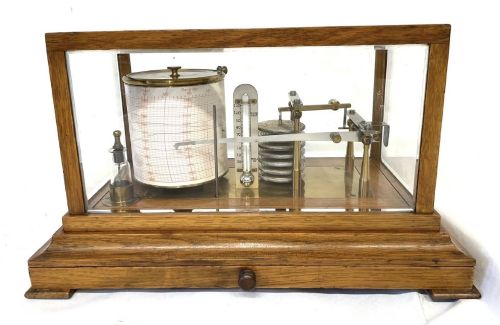
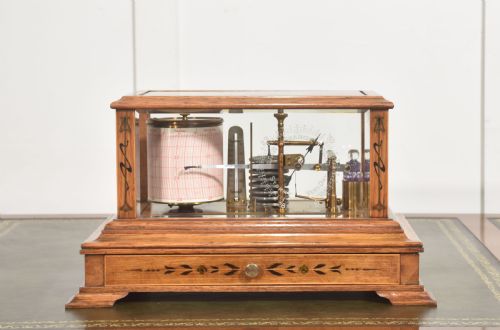


Glazed Oak Barometer
These glazed oak barometers and barographs record atmospheric pressure behind glass, bringing both mechanical interest and rich timber grain into a room.
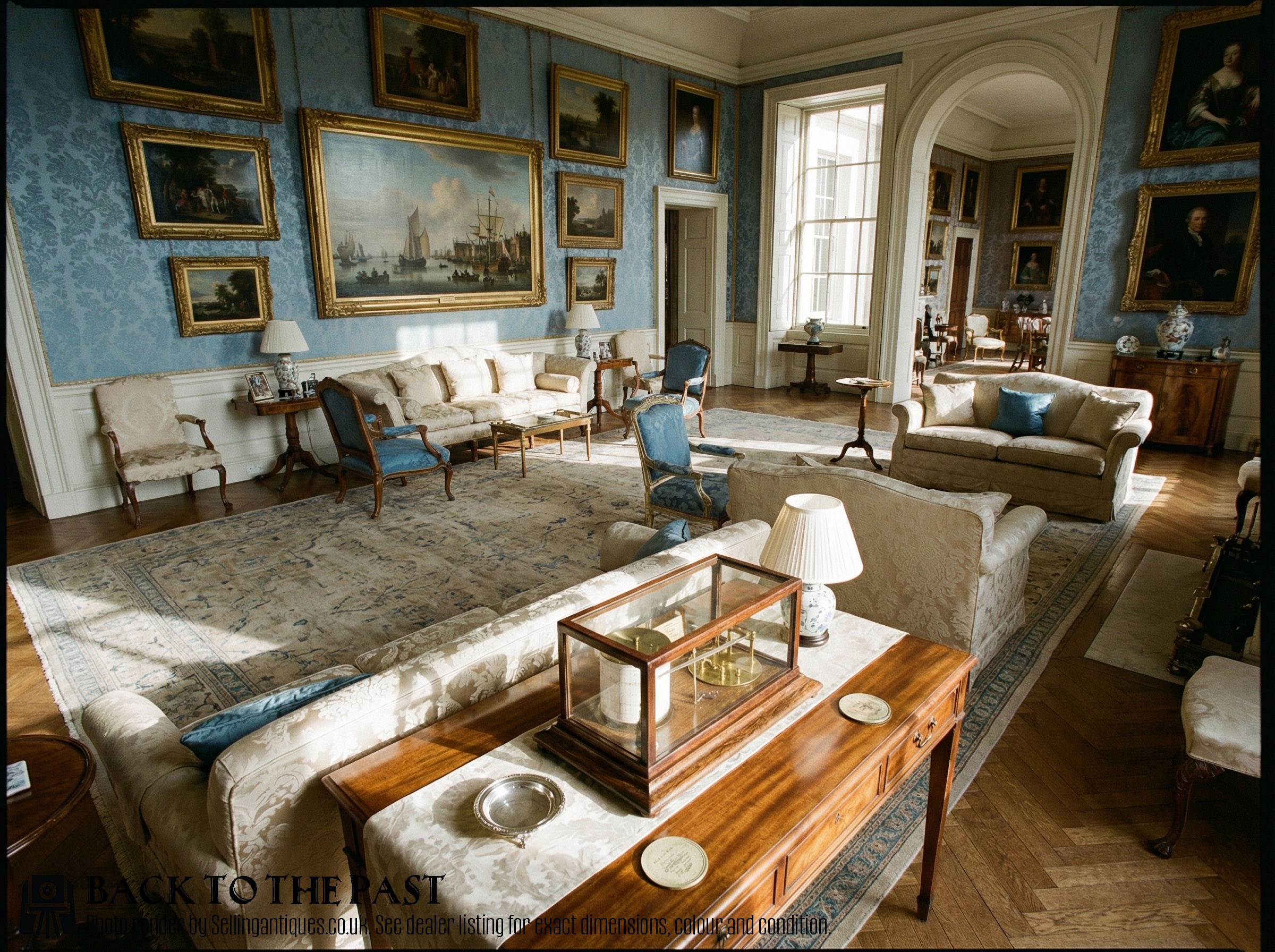
Glazed Oak Barometer
When you search for a glazed oak barometer, you are looking at scientific instruments housed in wooden cases designed to monitor weather changes. The examples found here span the Victorian, Edwardian, and later periods up to the nineteen forties, capturing an era when domestic weather recording was both practical and decorative.
The selection on this page relies heavily on oak-cased barographs alongside wall and shop display barometers. These instruments often incorporate brass fittings, thermometer attachments, and chart drawers beneath the main dial or drum.
Most items stem from the early twentieth century and the late Victorian era, showing how functional meteorological equipment was given domestic presence through polished timber and glass panels.
How they were made
The construction of these pieces centres on solid or veneered oak cases built to house delicate recording mechanisms. Makers utilised brass for dials, levers, and hinges, while heavy bevelled glass protects the inner workings while allowing a clear view of the recording drum or needle.
Later pieces incorporate refined details such as Art Nouveau inlay work on the timber case. The integration of steel components inside the aneroid mechanisms and barographs ensures precise movement alongside the substantial oak housing.
Glazed Oak Barometer Retail Price Guide 2026
Typical asking prices for glazed oak barometer among the pieces listed under this phrase on Sellingantiques today, from the lower quarter to the upper quarter. They describe what is for sale here now, not the wider market.
Listings span the Victorian period through to nineteen forty, predominantly featuring oak timber and brass fittings.
What varies in quality
Quality in these instruments is found in the crispness of the maker's signature on the brass bedplate and the weight of the oak case. Finer examples display superior timber selection with consistent grain, alongside intricate inlay work rather than plain flat panels.
The clarity and thickness of the glass panels, particularly bevelled five-glass cases, separate standard utility instruments from those made for prominent display. Superior mechanical assemblies show careful calibration and robust brass linkages.
Short and Mason·Negretti and Zambra·Jules Richard·Aitchison·Dobbie Son and Hutton
The Glazed Oak Barometer Glossary
- Barograph
- A recording barometer that plots atmospheric pressure onto a rotating paper chart over a week. This mechanical device uses a stack of vacuum chambers to drive an inked pen.
- Aneroid barometer
- An instrument measuring air pressure without liquid, using a flexible metal box that expands or contracts. Changes in pressure move a pointer across a graduated dial.
- Bevelled glass
- Glass with edges cut at an angle to create a framed, decorative effect. It adds depth and finish to the inspection windows of instrument cases.
- Thermometer
- A temperature-sensing instrument frequently mounted alongside the barometer scale. It provides a complete atmospheric reading on the same wooden backboard.
Glazed Oak Barometer: Frequently Asked Questions
How do I read a barograph?
A barograph tracks pressure trends rather than just current weather, using an inked arm that moves up and down on a rotating drum.
Rising lines indicate improving weather, while falling lines suggest approaching rain or storms.
Where should I place a heavy oak barometer?
These instruments need a stable interior wall away from direct heat sources and heavy vibrations to maintain accuracy.
Placing them at eye level in a hallway or study allows easy daily reading of both the dial and the thermometer.
How do I date an oak instrument case?
Dating relies on the overall style of the woodwork, such as Edwardian inlay or Victorian proportions, combined with maker signatures.
Internal mechanical labels and the presence of specific hardware like chart drawers also help narrow down the decade of production.
Do these barometers still work?
Many surviving instruments retain their internal mechanisms and can be calibrated to local pressure using a reliable reference.
Even when used primarily for display, the intricate brass linkages and ticking movements offer a direct link to historical meteorology.