
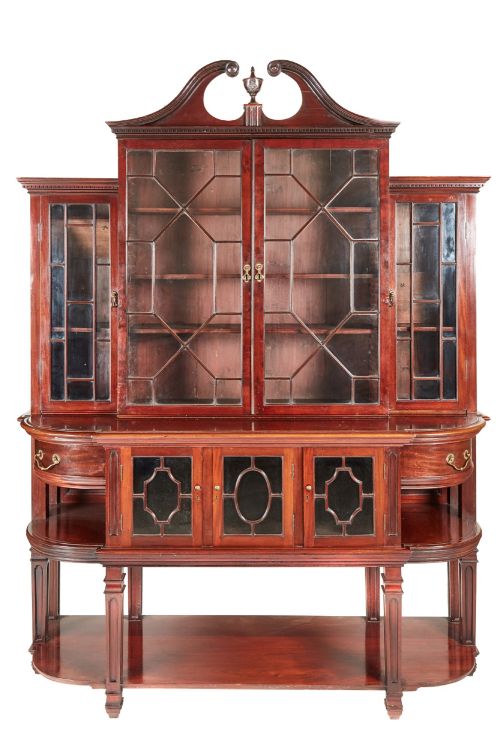
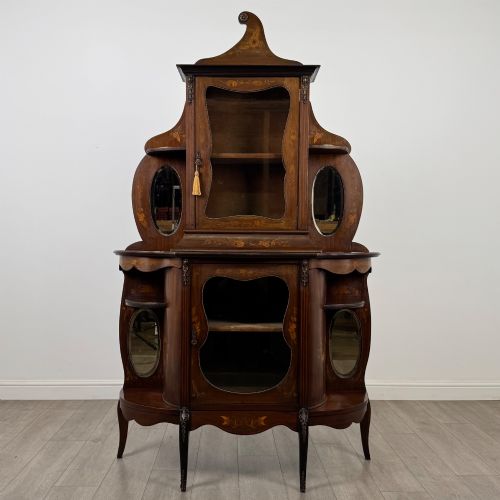
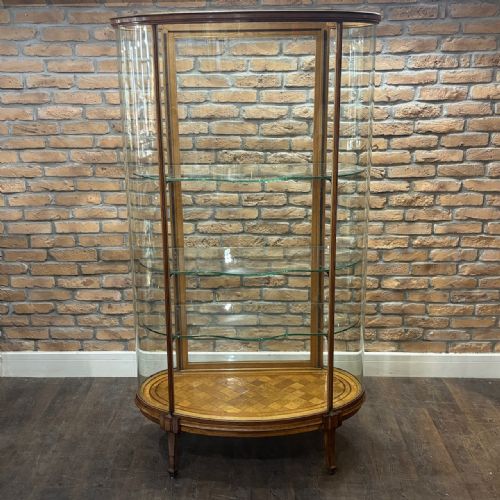
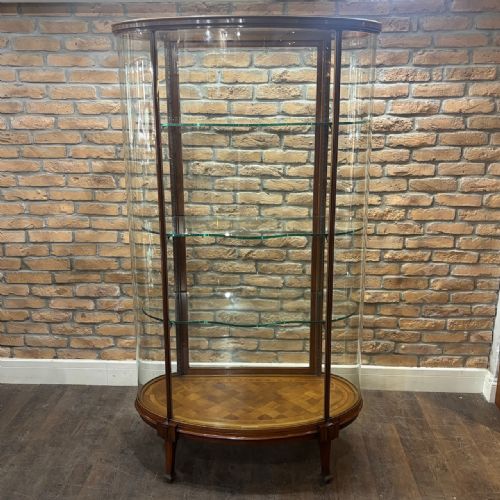

Glass Display Vitrine
A glass display vitrine holds and protects prized possessions behind clear panels, bringing elegance and visibility to collections of porcelain, silver and small antiques.
Glass Display Vitrine
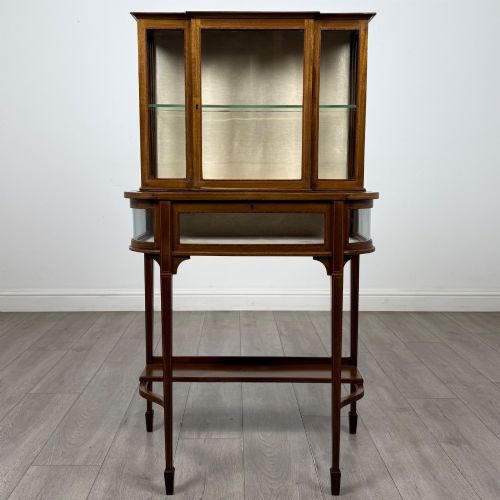
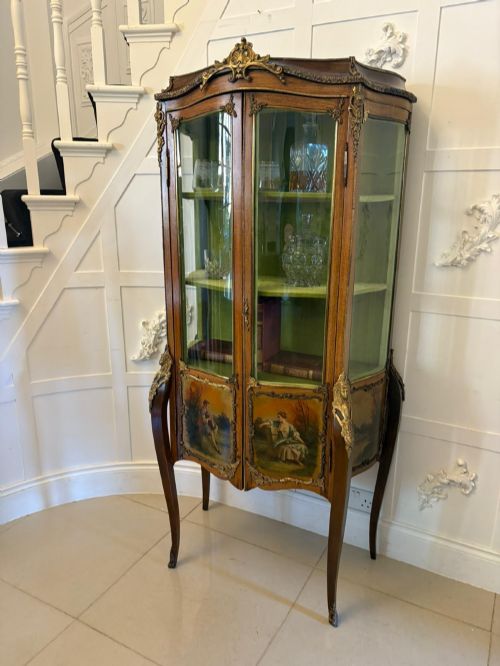
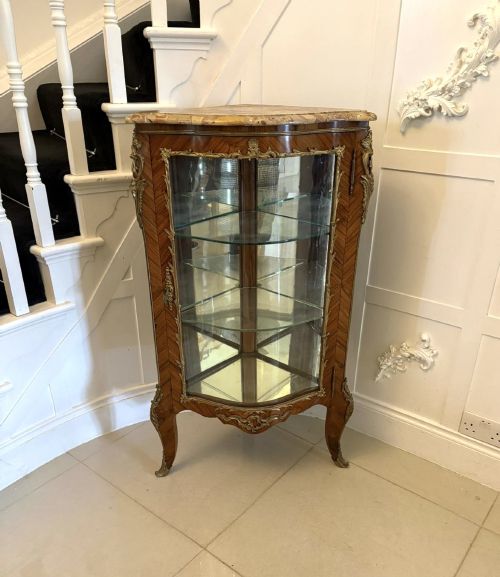
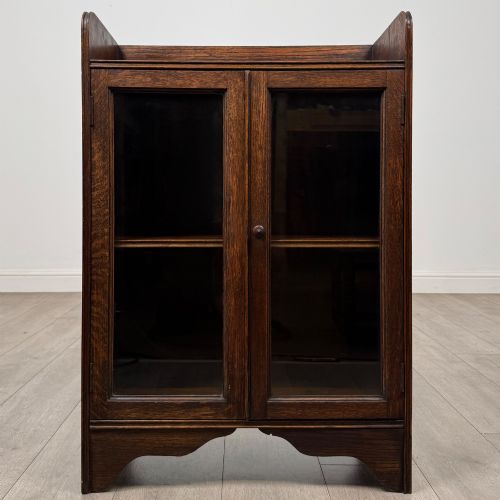
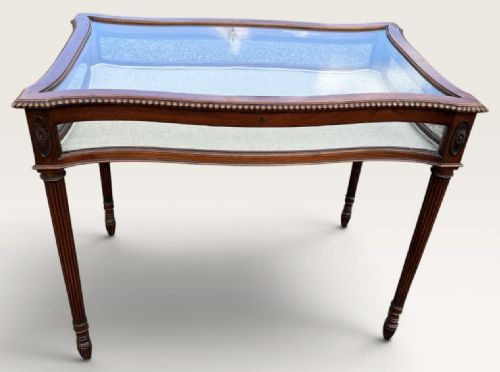
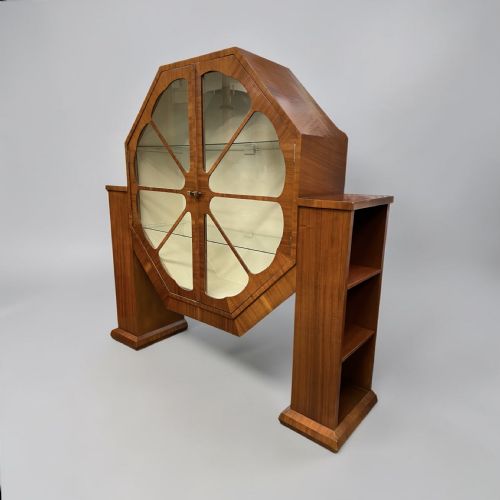
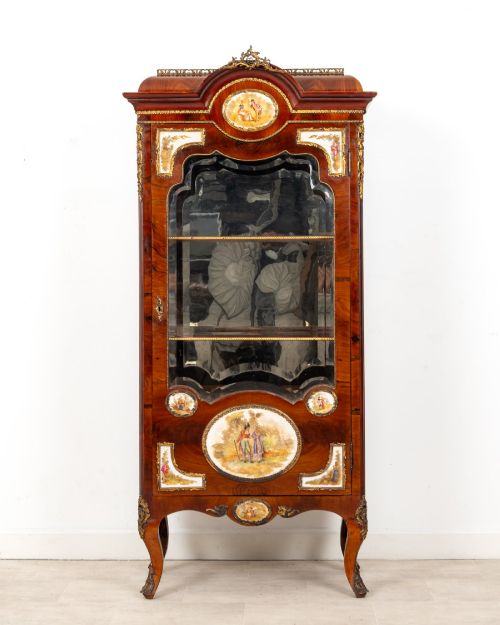
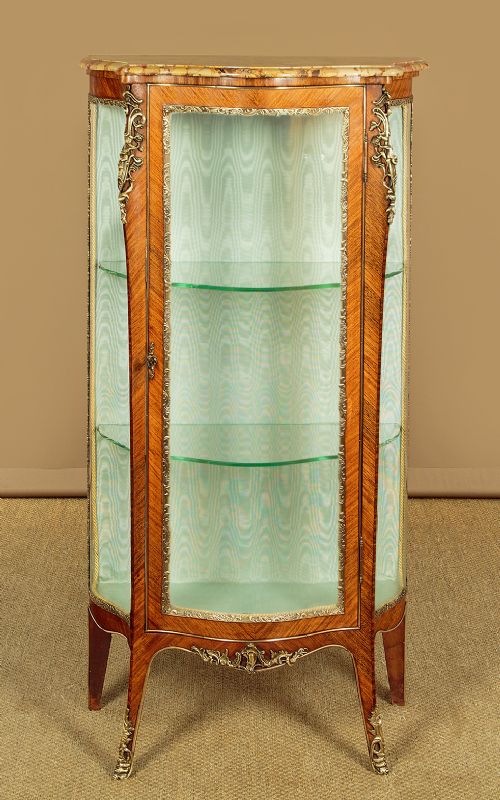
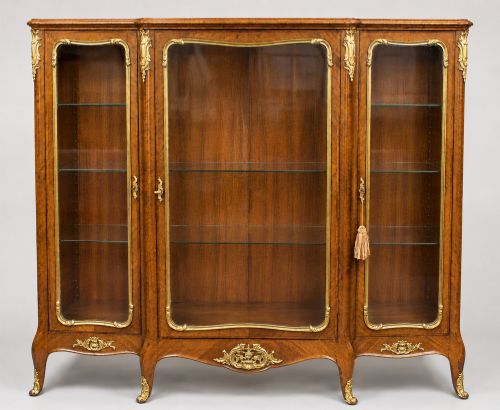
Makers such as Jas Shoolbred, Edwards & Roberts, Hampton & Sons, and F. Sage & Co contributed to the range, alongside French interpretations featuring kingwood, ormolu and Vernis Martin panels. Styles span from Sheraton Revival and Louis XV influence to Art Deco and plain Edwardian utilitarian forms.
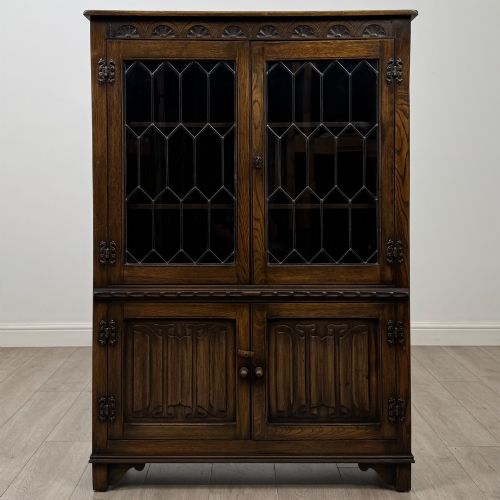
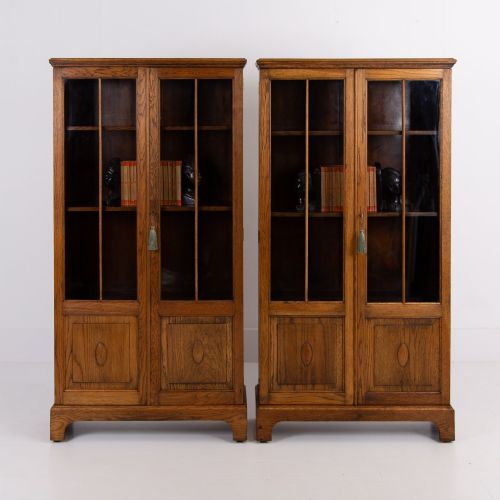
Cabinets range from small countertop display units to large breakfront bookcases and double-door vitrines. Many incorporate internal shelving, glazed sides, fabric-lined interiors or inlaid wood decoration.
Materials and Construction
Cabinetmakers built these pieces using solid timbers and veneers of mahogany, satinwood, walnut, kingwood and oak. Carved details, marquetry and inlaid banding provided surface enrichment on finer items.
Glazing typically involved individual panes held by wooden glazing bars or astragals, while French and revival models relied heavily on cast ormolu mounts, gilt bronze and curved glass to soften architectural lines.
Some countertop models bear the distressed paint of old shop counters, having spent their working lives guarding small wares.
Craftsmanship and Proportion
The distinction between standard commercial items and masterwork pieces lies in the precision of the cabinetmaking, the thickness and selection of veneer, and the quality of the timber framing. Finer examples display meticulous marquetry, hand-carved mouldings and substantial brass or ormolu mounts.
Structural integrity and original glass panels also dictate standing, as replacements alter the character of a vitrine. Maker attribution to known firms like Edwards & Roberts or Hampton & Sons generally denotes superior workshop standards.
Jas Shoolbred·Edwards & Roberts·Hampton & Sons·F. Sage & Co·François Linke
The Glass Display Vitrine Glossary
- Vitrine
- A glass-fronted cabinet designed for displaying fine objects or porcelain. These pieces often feature glass on the sides as well as the doors to maximise light penetration.
- Bijouterie table
- A low display table with a glazed top and sometimes glazed sides, originally intended for showing jewellery, medals and small ornaments. They frequently stand on slender legs.
- Astragal
- A moulding profile used to divide glass panes within a door or window frame. In fine cabinets, narrow astragals create delicate geometric patterns.
- Ormolu
- Gilt bronze mounts applied to furniture, popular in French and revival styles during the nineteenth century. These decorative elements are cast and chased by hand.
- Vernis Martin
- A simulated Japanese lacquer technique developed in France, often utilised on panels of decorative cabinets. It employs multiple layers of varnish to achieve a translucent finish.
Glass Display Vitrine: Frequently Asked Questions
How do I care for antique wood and glass?
Keep wooden cabinets away from direct sunlight and heat sources to prevent the timber from drying, splitting or warping over time. Dust the glass and polished surfaces gently with a dry microfibre cloth, avoiding harsh chemical sprays.
Wax polished finishes benefit from occasional application of pure beeswax to nourish the grain and maintain a soft sheen.
Where should I place a glass display vitrine?
Position your cabinet against a stable, flat interior wall away from damp zones and heavy foot traffic to protect the glass panels. Consider the natural light in the room, as side windows will illuminate your displayed objects effectively.
Ensure the floor is level so that the doors hang squarely and latch correctly without straining the frame.
How do I identify Edwardian revival styles?
Edwardian revival pieces often draw inspiration from eighteenth-century Sheraton designs, featuring light satinwood timbers, delicate stringing, and classical painted or inlaid motifs. Makers during this period around nineteen hundred combined traditional forms with lighter, more slender proportions.
Examine the interior construction, backboards and fixings, as turn-of-the-century methods differ subtly from original Georgian production.