
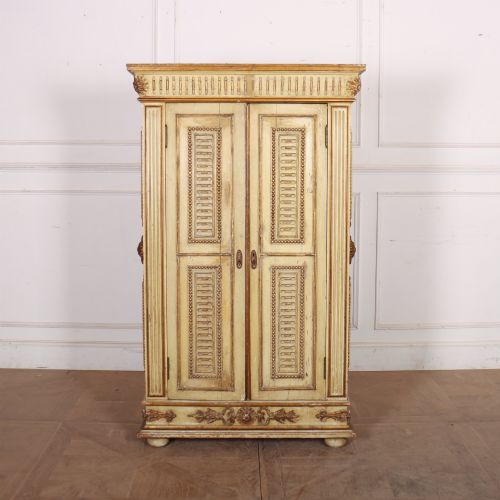
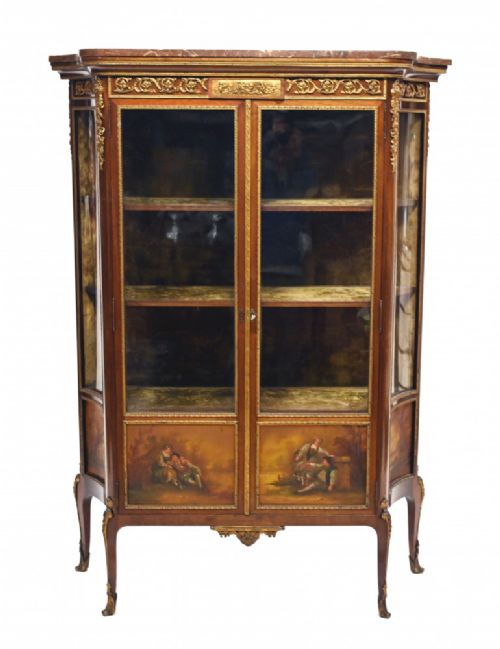

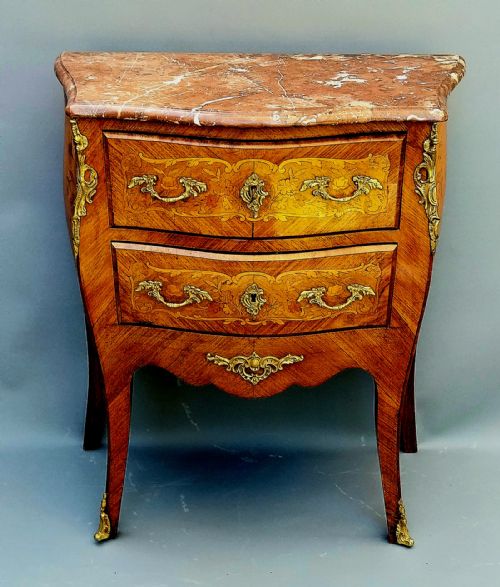
Gilt Wood Cabinet
When you search for a gilt wood cabinet, you enter a world of reflective surfaces, rich timbers and Continental polish.
Gilt Wood Cabinet
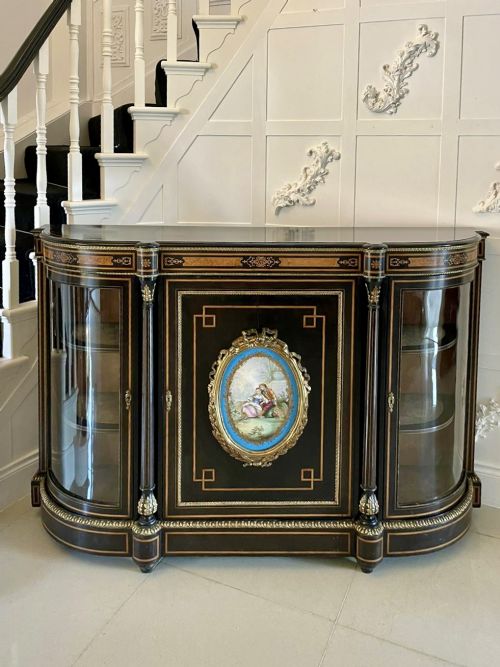
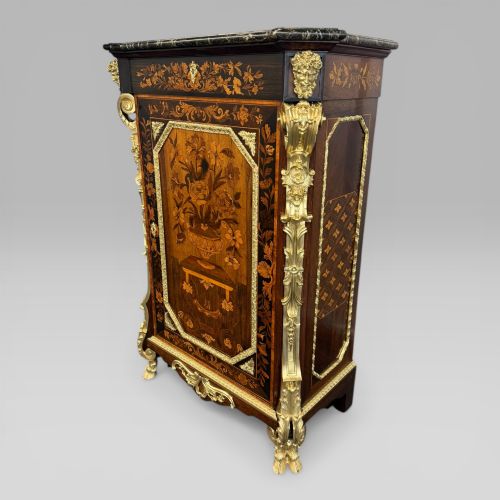
A gilt wood cabinet brings together timber carcases and reflective metallic finishes, appearing across nineteenth-century revival styles and earlier Regency periods on this page.
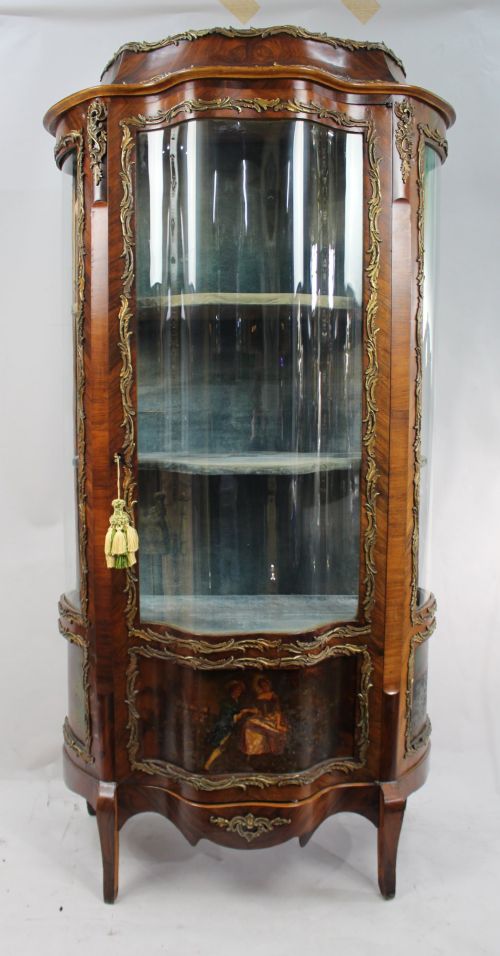
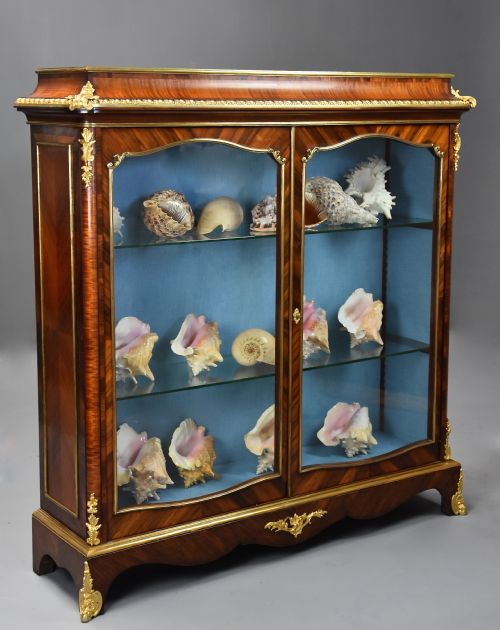
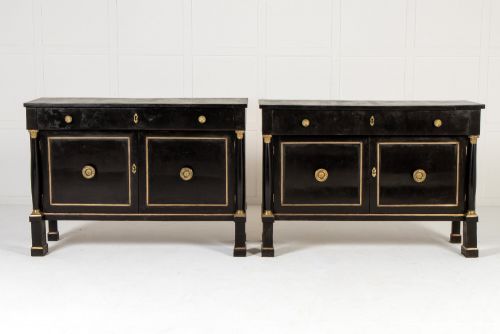
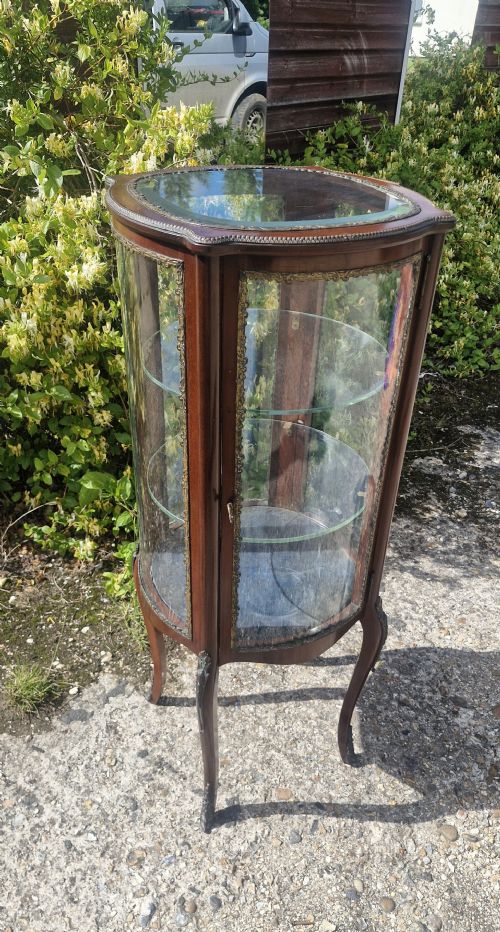
The selections span grand display pieces with glazed sides, side cabinets, corner cupboards, and smaller vitrines designed to showcase collections.
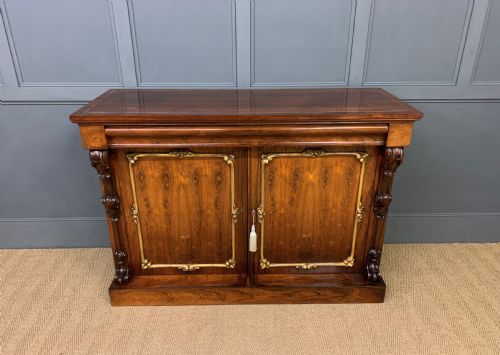
Makers and workshops from France, Italy and England utilised rich veneers like kingwood, rosewood, and amboyna alongside parcel-gilt and fully gilded frames.
How they were made
Craftsmen built structural carcases from native and exotic timbers, applying delicate veneers such as satinwood, kingwood, and walnut to create patterned surfaces.
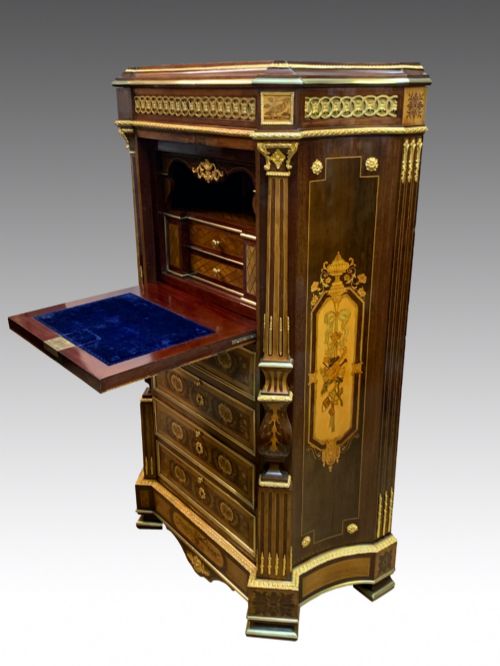
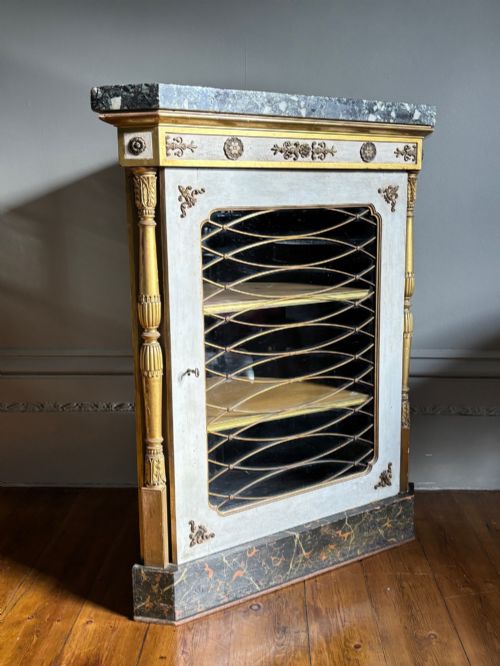
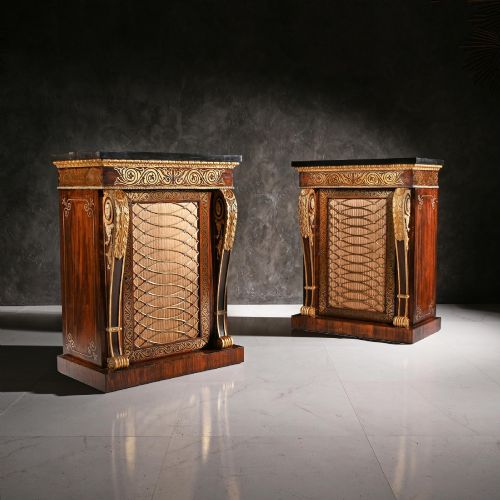
Ormolu mounts, brass inlays, and gilt bronze details were cast and chased before being fixed to the timber structures alongside marble tops.
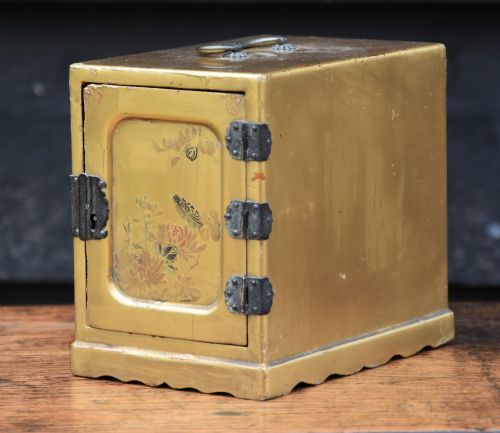
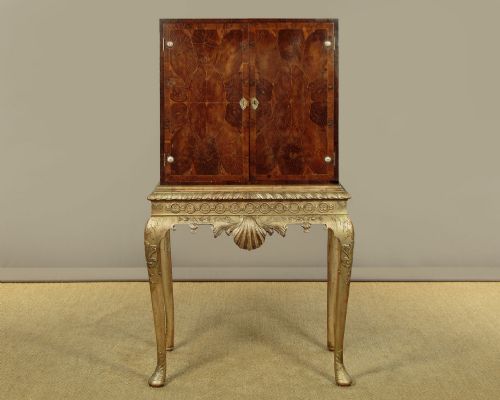
Gilding techniques involved applying thin layers of gold leaf to carved wooden mouldings, often complemented by painted panels or lacquer work.
The inventory records vernacular corner cupboards alongside grand breakfront bookcases from the Regency era.
What varies in quality
The crispness of the carved giltwood details and the precision of the marquetry inlay distinguish standard production from exceptional workshop output.
The selection of timber veneers, such as figured kingwood, burr elm, or amboyna, dictates the visual depth of the primary surfaces.
The integration of heavy mounts, such as fire-gilt bronze or ormolu, reflects the original cost and ambition of the maker.
Louis Constantin Le Gaigneur·Edward Holmes Baldock·Paul Sormani·Maison Krieger·Maison Soubrier·Henry Ward London
The Gilt Wood Cabinet Glossary
- Giltwood
- Wood that has been coated with thin gold leaf or powder. This finish catches the light and highlights carved mouldings.
- Ormolu
- Gilded bronze used for decorative mounts and furniture fittings. It provides metallic contrast against dark exotic timbers.
- Marquetry
- The art of applying pieces of veneer to a structure to form decorative patterns. Floral and geometric designs appear frequently on these pieces.
- Vitrine
- A glass-fronted cabinet used for displaying fine objects and porcelain. Many examples feature glazed sides to maximise light.
- Parquetry
- Geometric mosaic woodwork used for cabinet surfaces. It creates structured patterns across table tops and doors.
Gilt Wood Cabinet: Frequently Asked Questions
Where should I place a gilt wood cabinet?
These pieces suit reception rooms and drawing rooms where natural light can strike the metallic surfaces and highlights.
Position them away from direct heat sources to protect delicate veneers and gilded finishes from drying out.
What is the difference between a vitrine and a side cabinet?
A vitrine relies on glass doors and sometimes glazed sides specifically for displaying objects of curiosity or porcelain collections.
Side cabinets generally offer enclosed timber storage behind doors, occasionally featuring open shelving or marble tops.
Are marble tops original to these cabinets?
Many nineteenth-century pieces, particularly French and Italian examples, were designed specifically with fitted marble tops for durability and elegance.
Inspect the seating of the stone within the wooden rebate to understand how it integrates with the overall carcase.