
Painted Oriental Cabinet
A painted oriental cabinet brings rich colour, intricate lacquer, and centuries of global trade history directly into a modern room.
Painted Oriental Cabinet
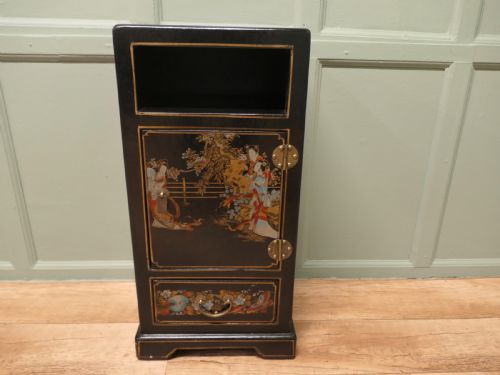
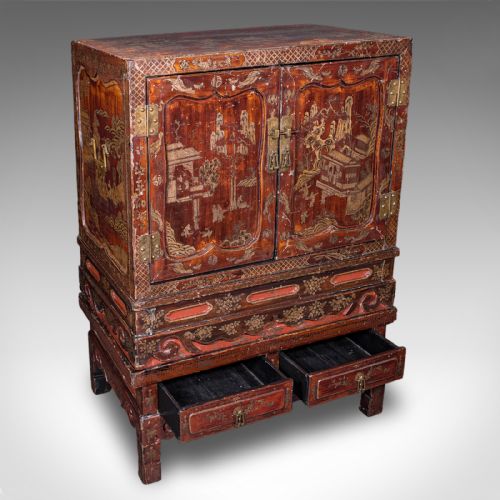
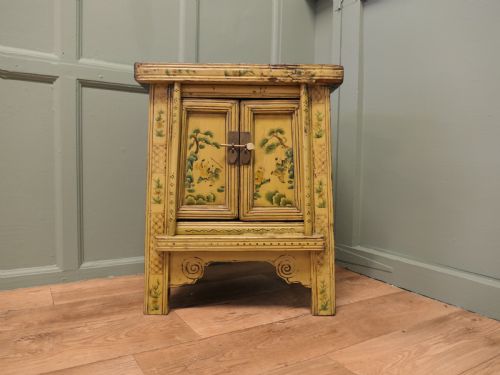
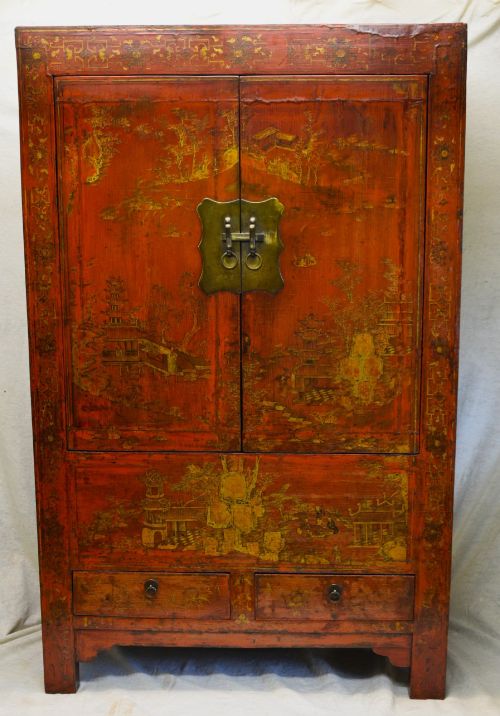
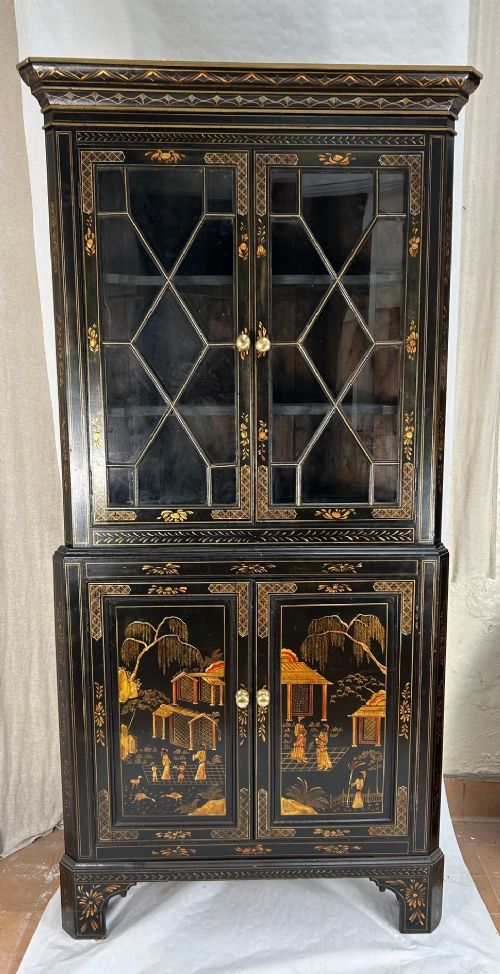
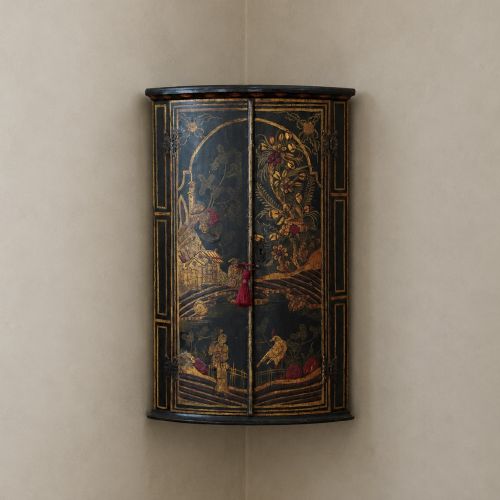
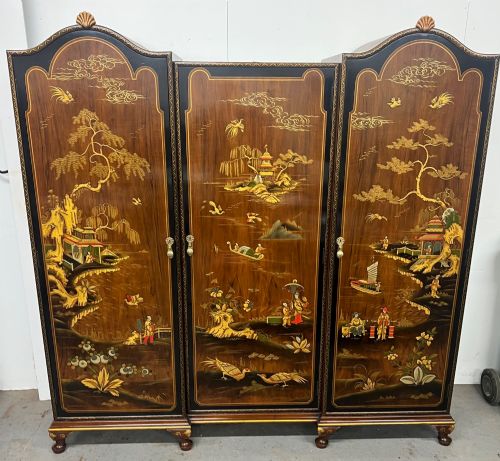
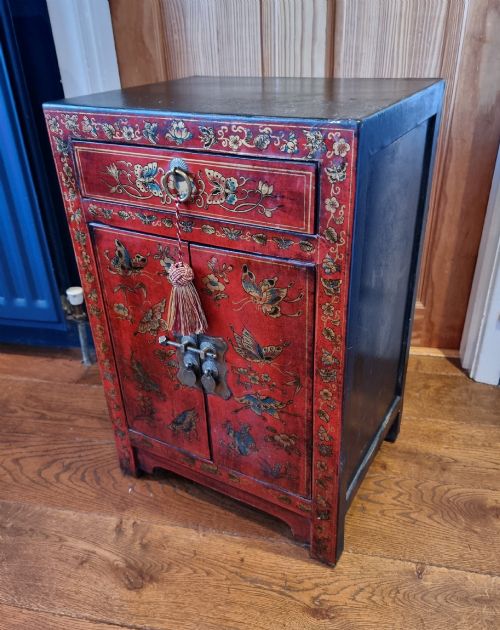
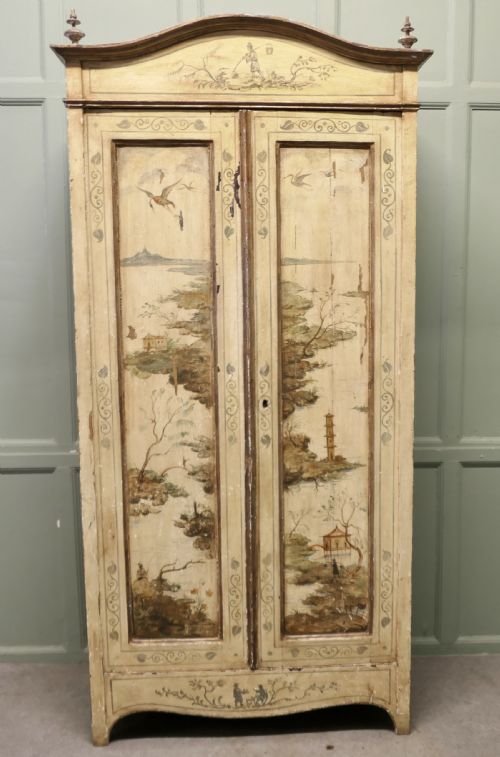
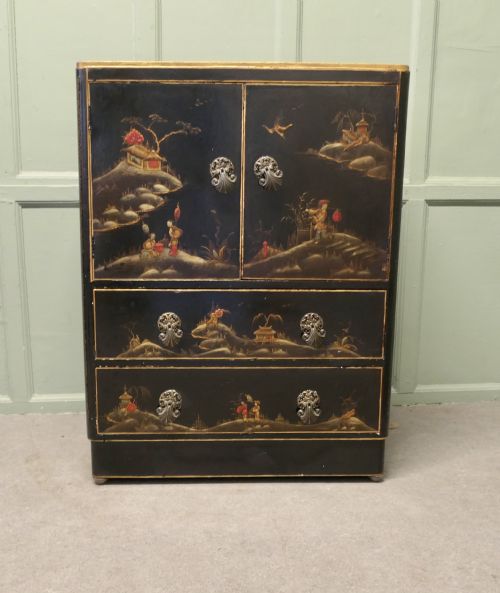
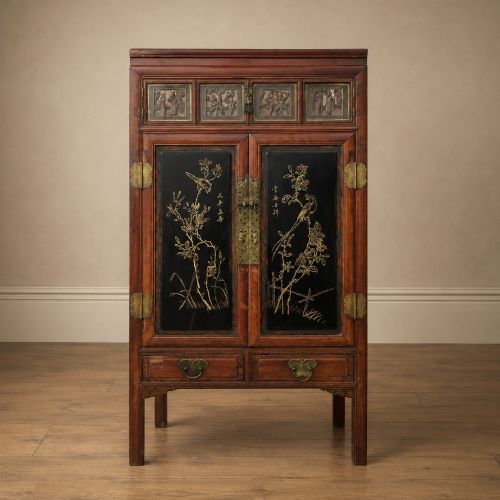
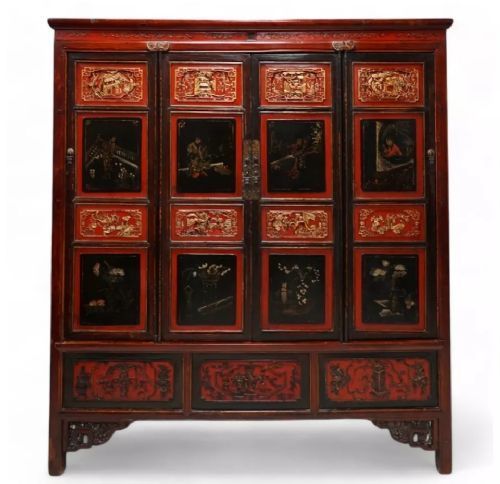
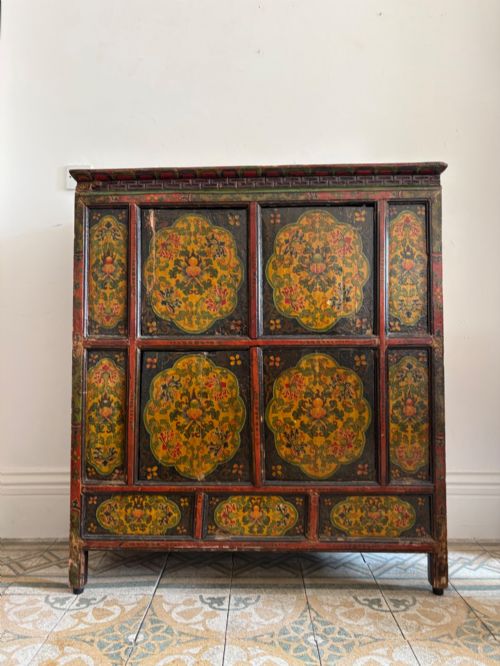
A painted oriental cabinet encompasses storage furniture finished with lacquer, paint, and gilt, drawing on Chinese, Japanese, and Tibetan traditions alongside European interpretations like Chinoiserie. Buyers searching this phrase will find a diverse range of forms, from large marriage cupboards and wedding chests to compact side cabinets and corner cupboards.
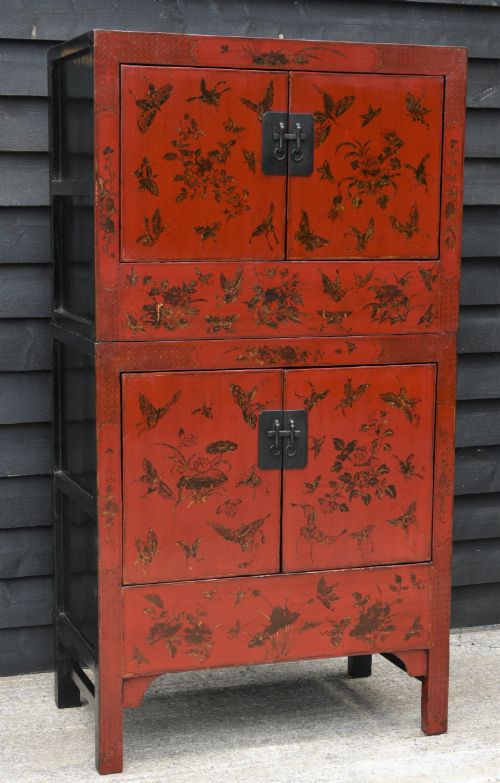
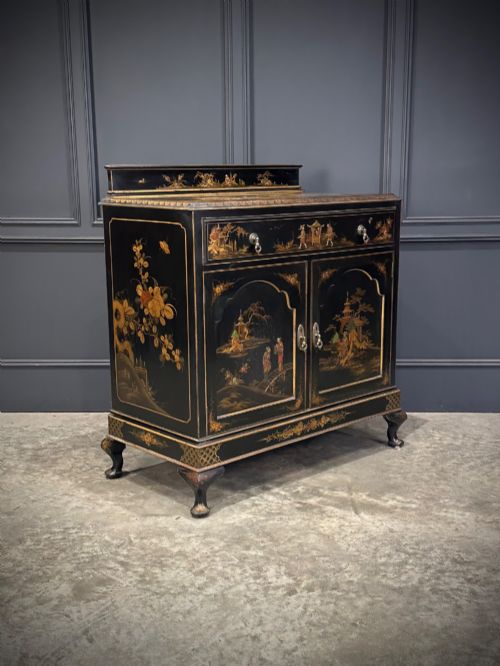
Origin details vary from traditional workshops in Fujian and Kyoto to British department stores applying japanned decoration during the Edwardian period. Whether selecting a red elm marriage chest or a black lacquered corner cupboard, each piece provides functional storage combined with pictorial outdoor scenes or floral motifs.
How they were made
Construction relies primarily on seasoned timber bases such as Chinese elm or ebonised wood, providing a stable foundation for complex surface decoration. Artisans applied multiple layers of lacquer, sometimes supplemented by carved soapstone or hand-painted details depicting outdoor scenes and birds.
Gilding techniques utilising gold leaf and brass hardware frequently highlight the edges, hinges, and keyplates of these cabinets and cupboards. Surface enrichment often extends to enamel and porcelain elements integrated into the overall painted scheme.
Several wedding cabinets were originally packed with quilted bedding and textiles, destined to start a new household with good fortune.
What varies in quality
Quality rests upon the depth of the lacquer work, the finesse of the hand-painted motifs, and the preservation of the original surface finish. Superior examples display crisp detailing in figures and foliage, where pigments remain vibrant and stable across the timber panels.
Structural integrity and the retention of original stands, brass mounts, and hardware distinguish finer items from later adaptations. The precision of the joinery in marriage cabinets and corner cupboards further marks the distinction between standard production and exceptional workshop output.
Maples and Co.·Harrods·Chosei
The Painted Oriental Cabinet Glossary
- Chinoiserie
- European artistic style reflecting Chinese motifs and decorative techniques, popular across Georgian and later periods. It appears frequently on japanned cabinets and corner cupboards.
- Japanned
- European imitation of East Asian lacquerwork, created by applying layers of varnish and metallic powder to wood. This finish is common on eighteenth and nineteenth-century side cabinets.
- Imari
- Japanese porcelain decorated in underglaze blue and iron red, often enhanced with gold. Items frequently seen include plates and chargers matching the oriental aesthetic.
- Marriage Cabinet
- Large storage piece traditionally given to newlywed couples in China, constructed from elm or other local hardwoods. They usually feature prominent red lacquer and brass hardware.
- Kodansu
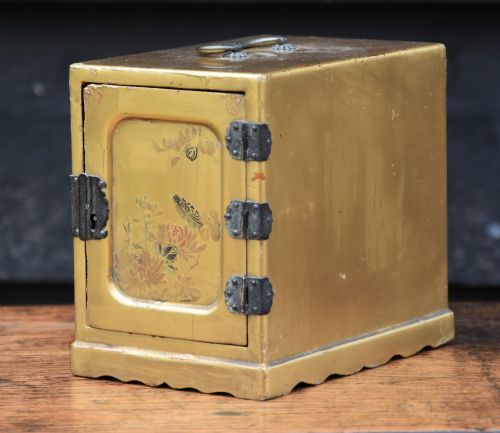
- Small traditional Japanese cabinet or box with multiple internal drawers for storing valuables. These miniature pieces often feature intricate gilt lacquer decoration.
Painted Oriental Cabinet: Frequently Asked Questions
Where should I place a painted oriental cabinet?
These cabinets serve as focal points in living rooms, hallways, or dining spaces where their colourful lacquer work can be appreciated fully. Freestanding wedding chests and side cabinets work well against neutral walls that allow the detailed pictorial scenes to stand out.
Corner cupboards utilise awkward angles effectively, turning dead space into a display area for decorative objects or glassware. Taller items on stands benefit from stable flooring away from direct sunlight to protect the painted surfaces over time.
How do I care for a lacquered wooden cabinet?
Maintenance requires gentle dusting with a soft, dry cloth rather than commercial cleaning sprays or polishes that might damage fragile lacquer layers. Keeping the furniture away from radiators and sudden temperature fluctuations prevents the underlying timber from expanding and contracting.
Checking brass hinges and stands periodically ensures that moving parts remain properly aligned without placing undue stress on the antique wood. Professional restoration should be consulted if any surface lifting occurs on the lacquer or gold leaf.
What is the difference between Chinoiserie and genuine Asian pieces?
Genuine Asian pieces were made in workshops across China, Japan, or Tibet for domestic use or export, utilising local building traditions and regional motifs. Chinese marriage cabinets and Tibetan painted cupboards carry distinct cultural histories and native construction methods.
Chinoiserie represents European interpretation, where British and continental makers applied imagined oriental scenes onto domestic furniture forms like corner cupboards and wardrobes. Both traditions share a love for decorated surfaces, but their geographic origins and stylistic conventions differ distinctly.
Can I use an antique cabinet as a drinks cabinet?
Many cupboards and storage chests adapt readily to holding glassware, bottles, and bar accessories thanks to their deep internal shelving and enclosed doors. Certain twentieth-century examples were constructed specifically as cocktail cabinets with fitted interior compartments for entertaining.
Adding custom glass or protective trays to the interior surfaces helps guard against spills while preserving the historic timber and painted base. The secure doors keep contents neatly concealed when not in use, combining practical hosting utility with decorative presence.