




Oriental Open Shelving
Oriental open shelving gathers intricate display cabinets and shodonas designed to showcase prized possessions with architectural flair.
Oriental Open Shelving
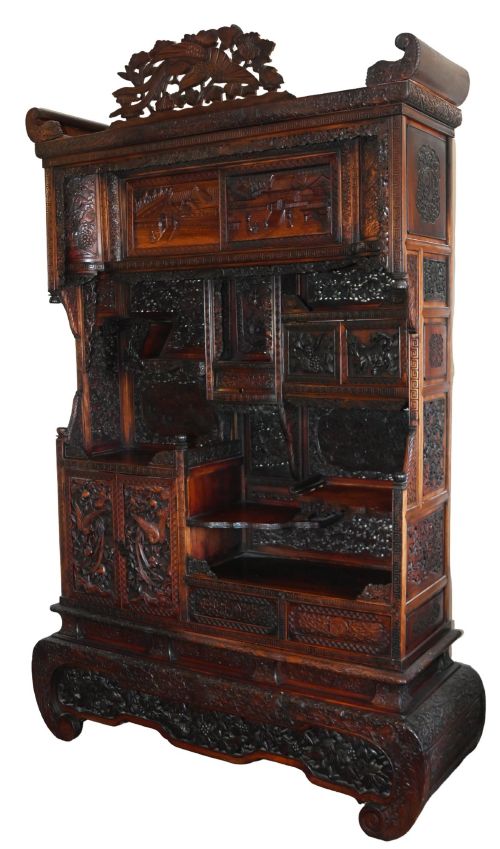
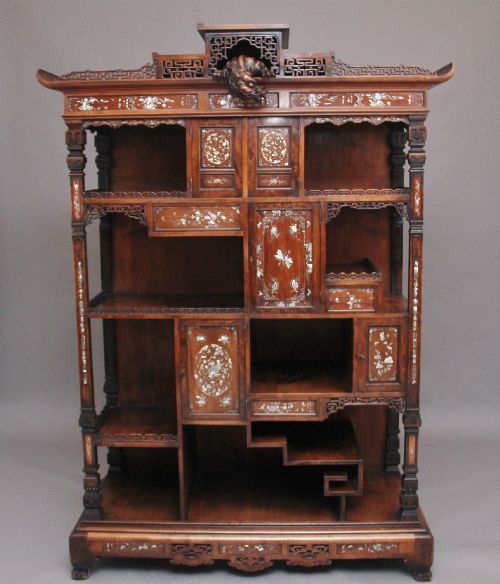
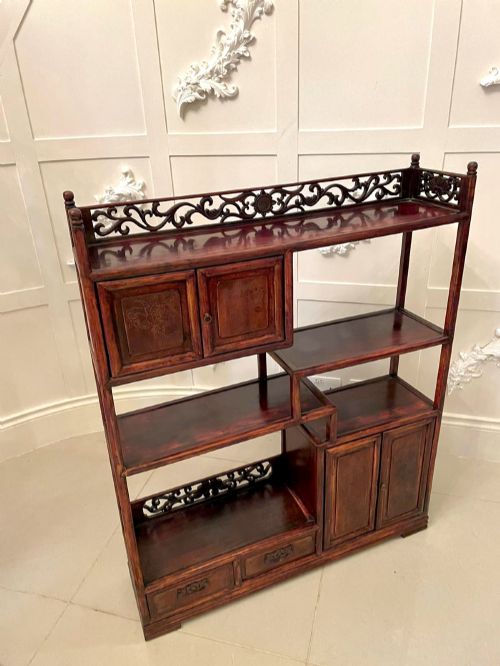
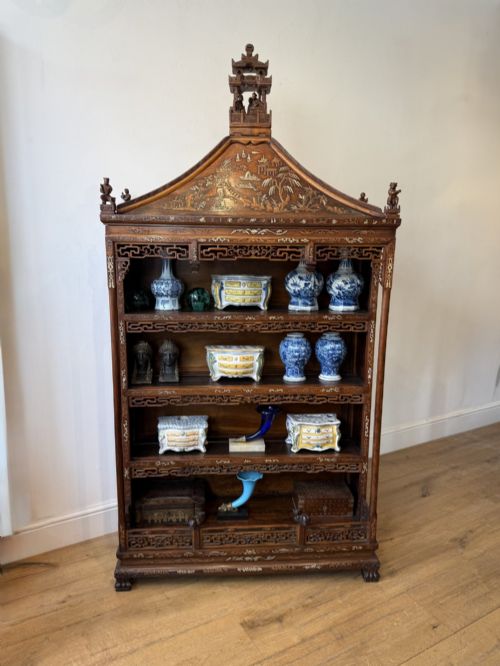
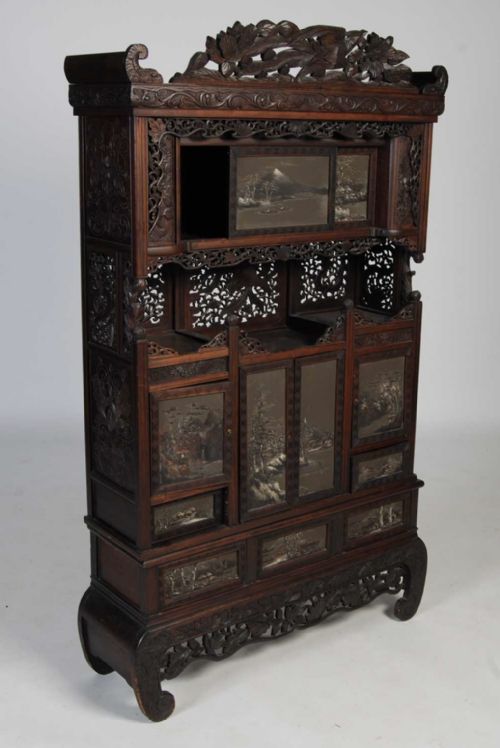
Oriental open shelving comprises display cabinets and display shelves originating from the nineteenth and early twentieth centuries, drawing on Chinese Qing Dynasty traditions and Japanese Meiji period aesthetics. These pieces provide asymmetrical compartments and staggered tiers intended for the exhibition of ceramics, bronzes, and curios.
The versions most frequently met on this page include Chinese hardwood cabinets, red lacquered examples, and Japanese shodonas. Makers combined open stages with enclosed cupboards and drawers to balance display space with storage.
Originating from diverse cultural intersections, these items incorporate styles such as Chinese Export, Victorian Chinoiserie, and European Japonisme. They reflect a nineteenth-century fascination with Eastern design principles adapted for Western and Asian interiors.
Materials and construction
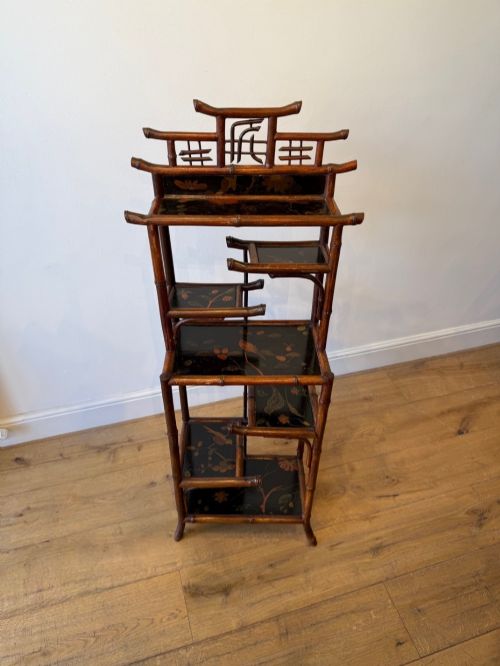
Construction relies upon dense hardwoods such as rosewood and hongmu, alongside bamboo and various general timbers. Artisans utilised traditional joinery to support complex, multi-tiered frameworks without excessive metal fasteners.
Surface decoration involves red lacquer, bone inlay, and brass hardware, complemented by detailed mother of pearl embellishments. Certain examples incorporate profusely carved woodwork depicting pagodas and traditional motifs.
Many shodonas feature secret little doors that hide minuscule drawers, designed to delight guests with miniature compartments.
Judging quality
Quality rests upon the crispness of the carving and the depth of the lacquer work. Superior examples exhibit tightly fitted joinery and harmonious proportions across staggered shelving tiers.
The choice of primary material dictates much of the standing, with dense rosewood and finely finished hardwoods commanding greater attention than simpler bamboo frameworks. Intricate detailing in bone inlay and brass mountings further separates standard production from exceptional pieces.
The Oriental Open Shelving Glossary
- Shodana
- A Japanese cabinet featuring asymmetrical shelving and small cupboards, designed for displaying small art objects. These pieces often originate from the Meiji period.
- Hongmu
- A category of dense, heavy Chinese hardwoods prized for dark colour and durability. Artisans utilised this timber for fine furniture and display cabinets.
- Chinoiserie
- A European artistic style reflecting Chinese motifs and decorative techniques, popular during the Victorian era. It appears on cabinets and screens adapted for Western tastes.
- Meiji Period
- The era in Japanese history spanning from 1868 to 1912, known for opening trade with the West and producing intricate crafts. Shodanas from this time frequently demonstrate advanced lacquer and woodwork skills.
Oriental Open Shelving: Frequently Asked Questions
What is oriental open shelving?
Oriental open shelving encompasses nineteenth and early twentieth-century display cabinets and shodonas originating from China and Japan. These pieces feature staggered shelves and compartments designed to exhibit decorative objects.
They bridge functional storage and artistic display, drawing on traditions from the Qing Dynasty and the Meiji period.
How were these cabinets used?
Owners utilised these cabinets to showcase collections of porcelain, jade, and small bronzes within domestic interiors. The staggered tiers allowed varied objects to be viewed from multiple angles.
Enclosed sections provided practical storage for smaller items not currently on display.
How do I date an oriental cabinet?
Dating relies upon examining the timber species, construction techniques, and stylistic markers associated with specific periods like the nineteenth century. Japanese pieces often align with the Meiji period through specific decorative motifs.
Materials such as red lacquer, bamboo, and bone inlay also reflect the prevailing manufacturing methods of their decade of origin.
How do I live with these pieces?
These cabinets suit modern interiors by providing vertical display space that draws the eye upward. Placing them away from direct sunlight protects delicate lacquered surfaces and rosewood finishes.
Styling them with ceramics or books continues their original purpose as focal points within a room.