






Hand Painted Chinese Cabinet
These hand painted chinese cabinet pieces bring vibrant lacquer and intricate Chinoiserie decoration directly into a room.
Hand Painted Chinese Cabinet
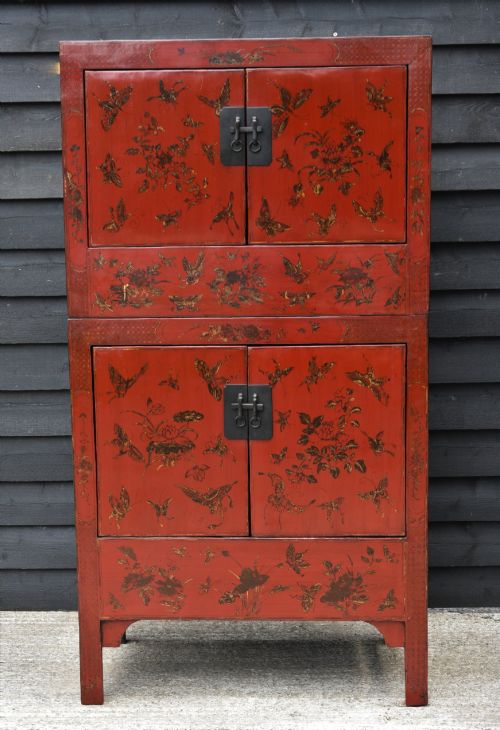
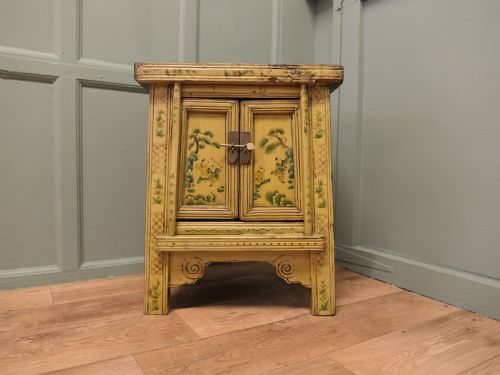
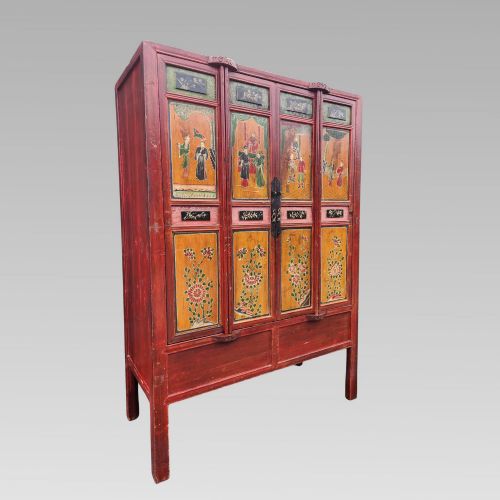
A hand painted chinese cabinet is typically found as a marriage cabinet, side cupboard, or desk cabinet originating from the nineteenth and early twentieth centuries. These storage forms serve as focal points in a room while providing functional space.
The pieces on this page span the nineteenth century, nineteen hundred, and nineteen thirty, displaying styles such as Chinoiserie, Qing Dynasty, and Chinese Export. Red lacquered wedding cabinets and black lacquered side cabinets dominate the selection.
Alongside the primary storage cabinets, buyers will occasionally encounter decorative ceramics including Famille Rose and Chinese Imari plates. These smaller items share the ornamental palette and cultural origins of the larger wooden pieces.
Materials and construction methods
Construction relies upon wood finished with layers of lacquer, creating a durable and smooth surface for subsequent decoration. Brass hardware often provides functional contrast to the dark or brightly coloured body.
Decoration incorporates painted pigments, gold leaf, and occasionally applied porcelain or enamel elements. Artisans build up the Chinoiserie and traditional motifs by hand across the wooden panels and carved stands.
Hand Painted Chinese Cabinet Retail Price Guide 2026
Typical asking prices for hand painted chinese cabinet among the pieces listed under this phrase on Sellingantiques today, from the lower quarter to the upper quarter. They describe what is for sale here now, not the wider market.
Listings feature items from the eighteenth, nineteenth, and early twentieth centuries, constructed from lacquered wood, brass, and painted panels.
Distinctions in quality
The refinement of the hand painting and the depth of the lacquer finish distinguish individual examples. Cabinets featuring intricate gold leaf detailing and well-preserved polychrome pigments stand apart from simpler surfaces.
Structural integrity, including the condition of the carved stands and brass mounts, influences the overall character of the piece. The historical consistency of the nineteenth century or early twentieth century period elements remains central to the integrity of each item.
The Hand Painted Chinese Cabinet Glossary
- Chinoiserie
- European interpretation and imitation of Chinese artistic traditions and motifs. This style heavily influences the decoration found on many twentieth century cupboards.
- Lacquer
- A durable resin finish applied in multiple layers to wood before being painted or polished. It provides the signature glossy surface seen on red and black storage cabinets.
- Famille Rose
- A palette of opaque rose-pink enamel colours used in Chinese porcelain decoration. Pieces featuring this palette date back to the eighteenth and nineteenth centuries.
- Marriage Cabinet
- A traditional large Chinese storage piece historically given as a wedding gift. These items often feature striking red finishes and substantial brass hardware.
- Qianlong Dynasty
- A historical period of imperial rule associated with fine decorative arts and porcelain production. Items from this era reflect high standards of craft.
Hand Painted Chinese Cabinet: Frequently Asked Questions
Where should I place a hand painted chinese cabinet?
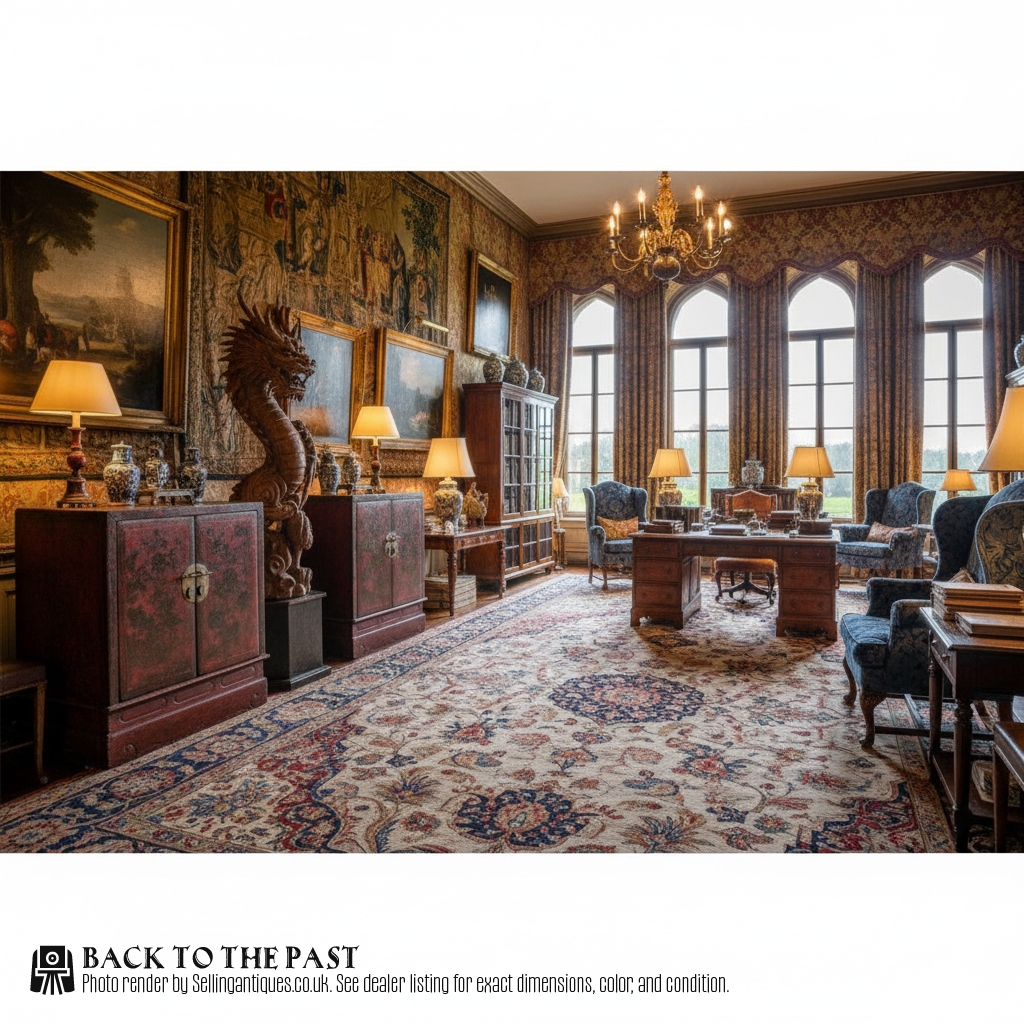
These cabinets work well as standalone focal points in a living room, hallway, or dining space where their colourful lacquer can be appreciated. They offer practical enclosed storage while adding historical character to modern interiors.
Ensure the piece is positioned away from direct sunlight to protect the painted surfaces and gold leaf details over time.
How do I care for a lacquered wooden cabinet?
Dust the surface regularly with a soft, dry cloth to prevent particulate buildup on the delicate painted areas. Avoid using harsh chemical cleaners or polishes that might damage the historical lacquer finish.
Maintain a stable room temperature and humidity level to prevent the underlying wood from expanding or contracting.
What is the difference between a side cabinet and a marriage cabinet?
Marriage cabinets are typically taller, two-door storage pieces originally designed for household linens and garments. Side cabinets tend to be smaller proportions intended for general living spaces.
Both forms utilise traditional joinery and hand painted decoration, but their scale determines their placement in a room.
How can I tell the period of a Chinese lacquer cabinet?
Dating relies upon examining the type of wood, the composition of the lacquer layers, and the style of the painted Chinoiserie motifs. Nineteenth-century examples often display distinct wear patterns and regional construction methods.
Comparing the brass mounts and decorative hardware to documented historical examples also helps establish the era.