


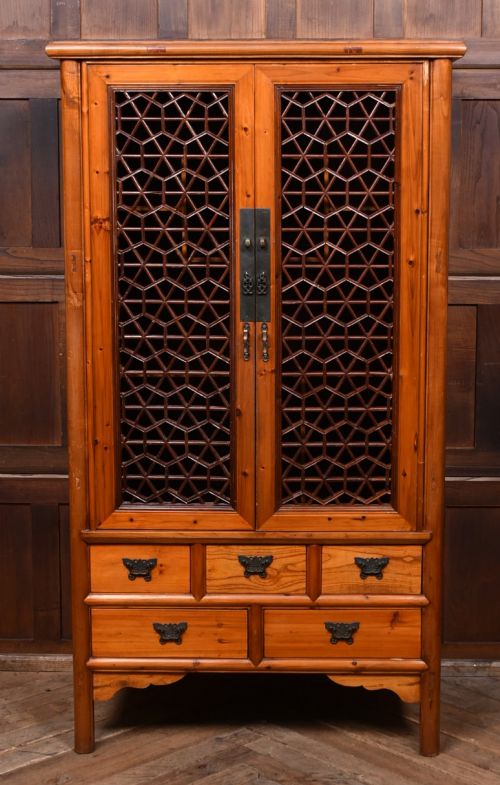


Antique Asian Armoire
An antique asian armoire brings presence to a room, offering deep storage through panels of elm, lacquer, and hardwood.
Antique Asian Armoire
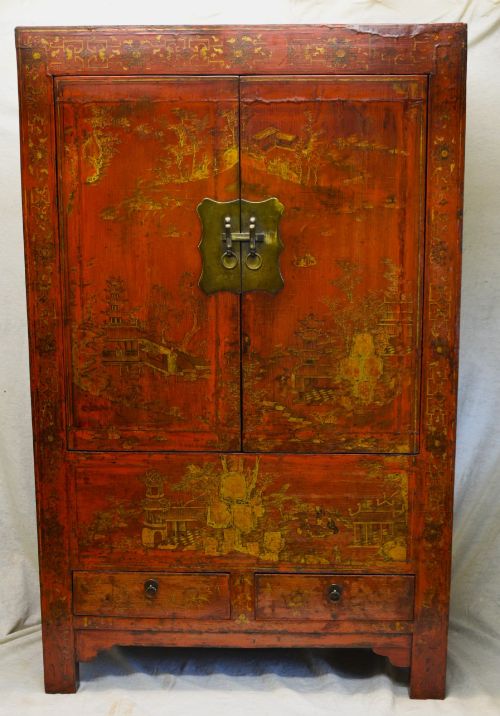
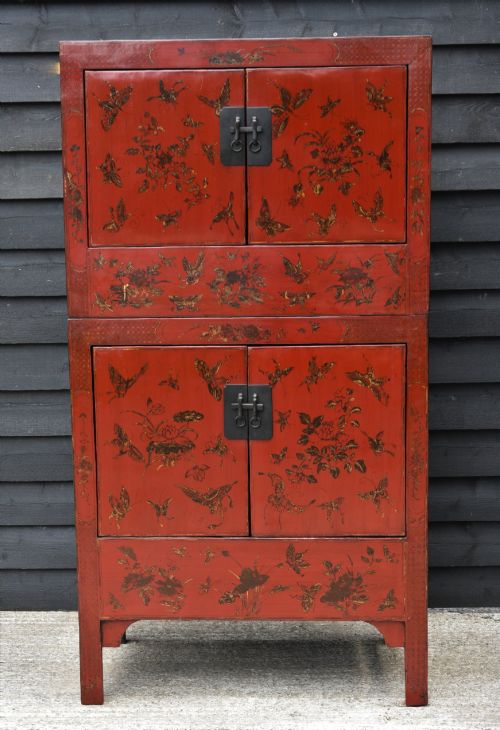
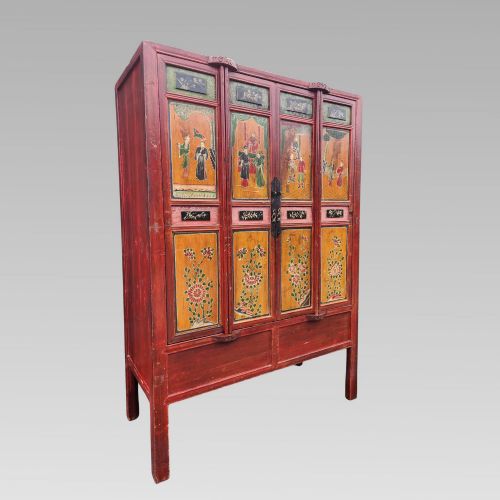
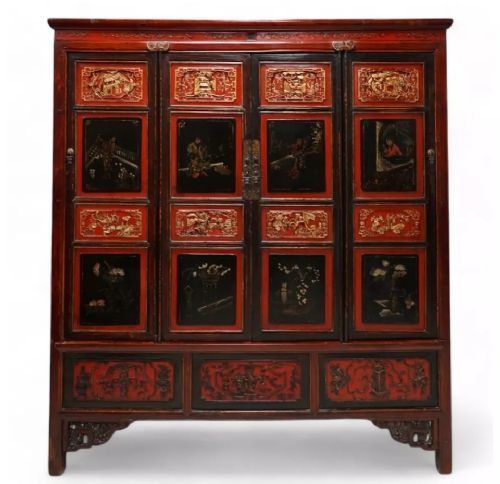
When you search for an antique asian armoire, you are looking at large storage furniture originating from eastern workshops, spanning wedding cabinets, compound cupboards, and larder chests. The examples you are most likely to meet on this page date from the nineteenth century, including pieces finished in striking red and black lacquers.
Forms range from tall marriage cabinets with bold brass hardware to dual-compartment compound cabinets and compact wardrobes. Regional influences shape these pieces, showing styles from the Qing Dynasty and Japanese Meiji periods alongside traditional Chinese and Chinoiserie interpretations.
Makers utilised native timbers such as elm, teak, camphor wood, and dense zitan, applying layers of lacquer and gold leaf for decorative impact. These cabinets served practical domestic storage needs before becoming focal points in modern interiors.
Materials and construction methods
Joinery relied on traditional framing and panel techniques that allowed timber to expand and contract with humidity changes without splitting. Woods like elm and camphor provided stable foundational structures, while rarer hardwoods permitted intricate carved details.
Surfaces received multiple coats of natural lacquer, sometimes inlaid or finished with gold leaf accents to create rich, reflective planes. Heavy brass and iron hinges, lock plates, and circular faceplates reinforced the doors while providing functional ornamentation.
Antique Asian Armoire Retail Price Guide 2026
Typical asking prices for asian armoire among the pieces listed under this phrase on Sellingantiques today, from the lower quarter to the upper quarter. They describe what is for sale here now, not the wider market.
Many wedding cabinets feature secret interior drawers hidden beneath false bottoms, designed to keep family treasures safe from wandering hands.
Distinctions in construction and finish
The finest examples display crispness in carved dragon motifs and smooth application of lacquer without bubbling or excessive modern intervention. Superior pieces retain their original metalwork and locking pins, which contribute significantly to their character and integrity.
Construction depth and timber selection separate robust primary furniture from lighter decorative adaptations, with dense hardwoods and heavy elm framing marking the higher tier of production. The preservation of surface patination over decades of use determines the visual depth of the finish.
The Antique Asian Armoire Glossary
- Armoire
- A tall cupboard or wardrobe used primarily for clothing storage. In the context of Asian antiques, the term often encompasses large wedding cabinets and compound storage units.
- Compound cabinet
- A two-part storage unit consisting of a larger lower cupboard with a smaller matching cabinet stacked securely on top. This form maximises vertical storage space in traditional homes.
- Lacquer
- A durable finish applied in thin coats from tree sap and polished to a hard sheen. It protects the underlying timber while providing a smooth canvas for colour and gilding.
- Zitan
- A dense, heavy exotic hardwood prized in traditional furniture making. Its dark colour and fine grain allow for exceptionally sharp and detailed carved relief work.
- Chinoiserie
- European decorative style reflecting Chinese artistic motifs and techniques. It appears on cabinets produced both for export and within Western imitation traditions.
Antique Asian Armoire: Frequently Asked Questions
How were wedding cabinets used?
Traditional wedding cabinets served as functional dowry furniture commissioned for a bride's household. They held textiles, robes, and valuables, often featuring auspicious carvings symbolising harmony and fortune.
Over time, these substantial pieces transitioned from private quarters into main living spaces, where their height and vibrant finishes created a strong visual anchor.
Where should I place an armoire?
These large storage pieces require a sturdy wall and sufficient floor space to let their proportions breathe. Bedrooms and spacious hallways suit their original function, while living rooms accommodate their decorative presence.
Keep them away from direct heat sources and strong sunlight to protect the timber structure and sensitive lacquer surfaces from drying out.
How do I identify nineteenth-century pieces?
Nineteenth-century construction is revealed through hand-cut joinery, forged iron or brass hardware, and timber patination developed over long use. Tool marks and natural wear patterns indicate age rather than uniform machine fabrication.
Stylistic markers such as Qing Dynasty forms and traditional regional joinery help anchor the date alongside material analysis.
What is camphor wood?
Camphor wood is a fragrant timber native to parts of Asia, valued for its natural insect-repellent properties. It was frequently selected for interior panels and storage chests to protect garments.
The distinctive aromatic scent often lingers gently, making these cabinets particularly practical for storing woollens and linens.