






Gilt Satsuma Earthenware
Gilt satsuma earthenware brings together intricate Japanese ceramic forms, dense enamels and lavish gold leaf from the Meiji period and beyond.
Gilt Satsuma Earthenware
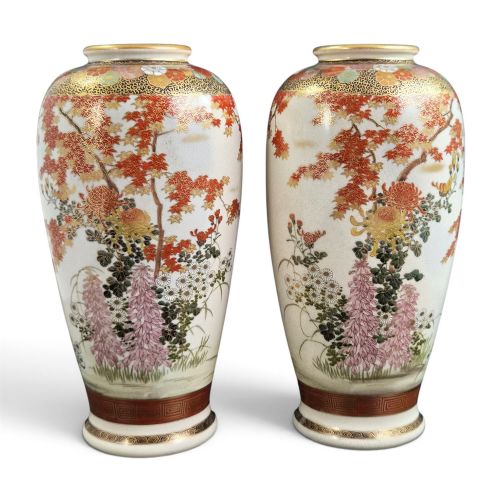
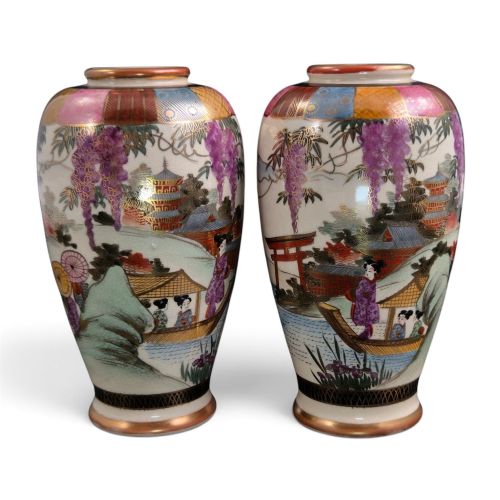
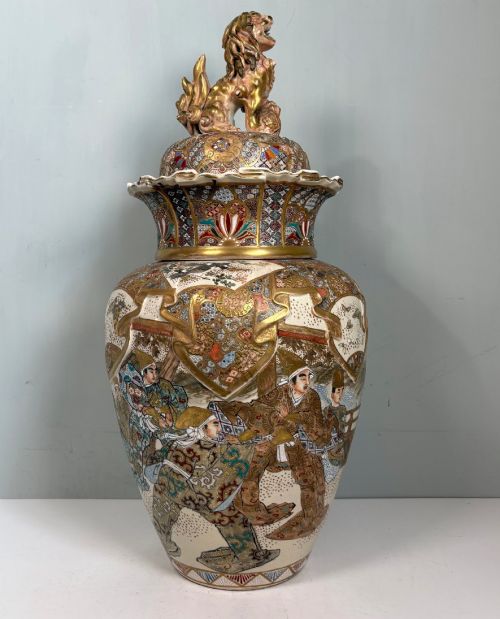
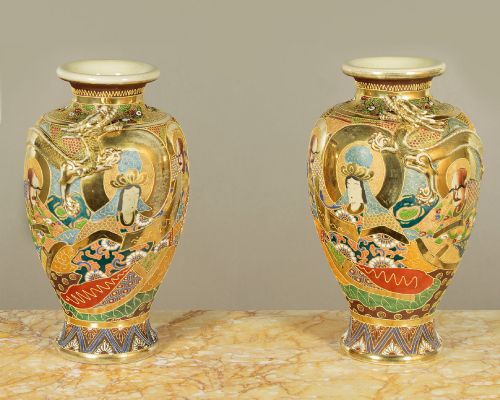
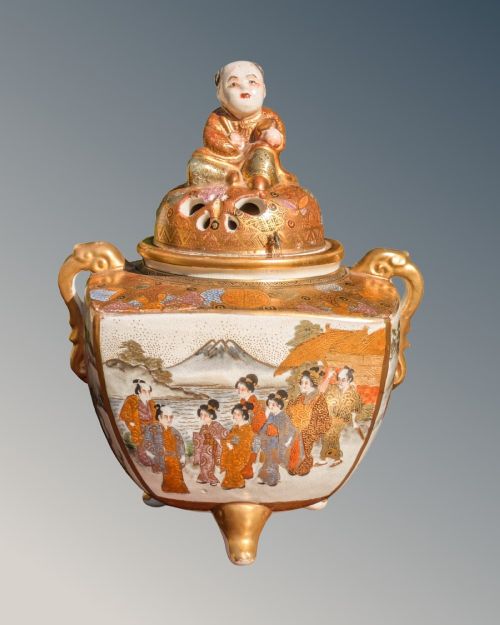
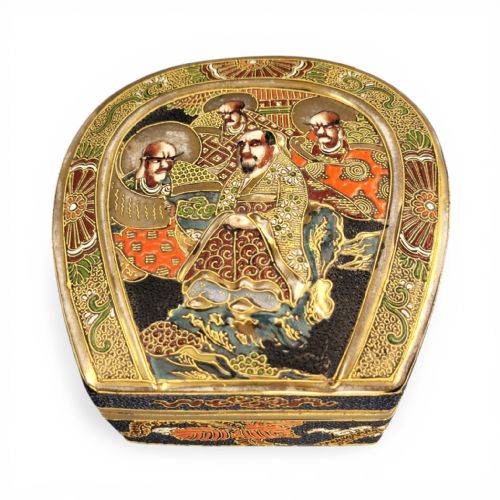
When you examine gilt satsuma earthenware, you are looking at Japanese ceramic objects produced primarily during the 19th century and the Meiji period. These items span a variety of domestic and decorative forms including vases, incense burners known as koros, tea caddies, decorative bowls and small trinket boxes.
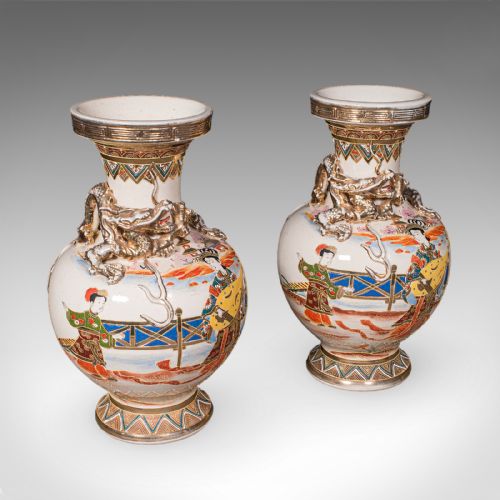
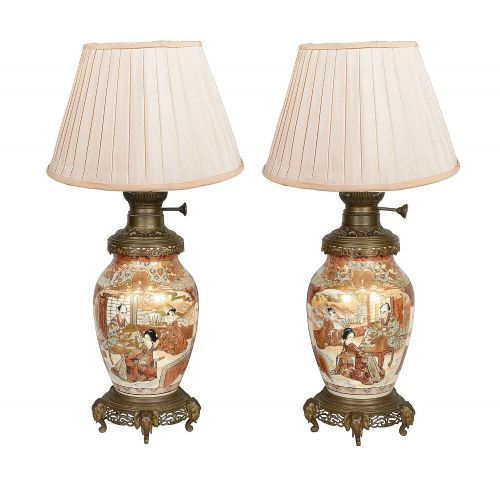
The objects you will most frequently encounter on this page are baluster vases and pairs of decorative vessels created in Kyoto workshops. These pieces typically display detailed narrative scenes, floral motifs or landscapes enriched with extensive enamel work and gold leaf.
Originating as a regional style of pottery, Satsuma evolved into a globally exported art form during the late Victorian and Edwardian eras. The examples collected today range from monumental display pieces to miniature vessels signed by prominent studio artists.
How they were made
Makers of gilt satsuma earthenware shaped local clay into fine-pored ceramic bodies before applying a distinctive cream-coloured crackle glaze. This absorbent earthenware foundation provided an ideal canvas for subsequent hand-painting and surface enrichment.
Artisans applied polychrome enamels alongside heavy gold leaf and gilding to build up complex pictorial panels and borders. Raised relief work, known as moriage, was frequently utilised to give depth to robes, flowers and architectural elements.
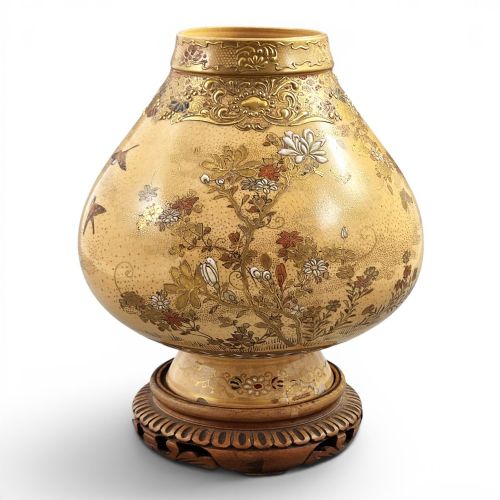
Many of the finer works received additional structural elements such as wooden stands, while lidded vessels like koros incorporated pierced metal or ceramic covers. The meticulous combination of painting and gilding required multiple firings in the kiln to secure the delicate pigments.
Several miniature vases stand under ten centimetres tall yet manage to pack dozens of meticulously painted court figures onto their surfaces.
What varies in quality
The distinction between standard commercial output and the top of the range rests primarily on the density and precision of the brushwork. Master workshops employed skilled painters whose miniature figures, facial expressions and botanical details remain crisp and legible under close inspection.
Application of gold leaf and enamel also separates finer pieces from ordinary examples, with premier items featuring thick, layered gilding that catches the light without appearing muddy. The fineness of the underlying crackle glaze and the balanced composition of the panels further determine a piece's standing.
Kinkōzan·Kizan·Chosei·Nanzan·Shozan·Shizan·Meizan·Toshozan·Hakusan·Nikko
The Gilt Satsuma Earthenware Glossary
- Moriage
- A decorative technique where slip or enamel is piped onto the ceramic surface in raised dots or lines, creating a tangible relief effect. This method is frequently highlighted with gold leaf on high-end pieces.
- Koro
- A traditional Japanese incense burner, usually fitted with a pierced lid to allow scented smoke to escape. These vessels often stand on three or more feet and frequently feature guardian lion handles.
- Natsume
- A small tea caddy traditionally used in Japanese tea ceremonies, named after its resemblance to a jujube fruit. In Satsuma ware, these small containers are densely decorated with painted scenes.
- Shimazu Mon
- The family crest of the Shimazu clan, who ruled the Satsuma domain and fostered the local pottery industry. It typically appears as a circle enclosing a cross.
- Meiji Period
- The era of Japanese history spanning from 1868 to 1912, marked by the opening of trade with the West and a surge in the production of export art.
Gilt Satsuma Earthenware: Frequently Asked Questions
What is satsuma ware made of?
Satsuma ware is constructed from an earthenware body covered in a characteristic ivory-coloured glaze that develops a fine network of microscopic cracks. This porous ceramic base requires careful handling to preserve the integrity of the material.
Over this crackled surface, artisans layered detailed mineral enamels and extensive gold leaf to build up complex narrative and floral designs. The combination of earthenware and rich gilding defines the visual identity of these objects.
How do I identify Meiji period pieces?
Meiji period pieces can often be identified through historical context, workshop signatures and stylistic traits associated with the late 19th and early 20th centuries. Many finer vessels bear painted or impressed artist signatures alongside the Shimazu family crest.
The complexity of the decoration also points to this era, as export demand spurred studios in Kyoto and elsewhere to produce increasingly elaborate pictorial panels. Subjects from this period frequently balance traditional Japanese motifs with Western decorative preferences.
Were these vases used for display?
Most surviving satsuma vases were created specifically for export to Western markets during the late Victorian and Edwardian periods as ornamental display items. Their intricate enamel work and heavy gilding were intended for interior decoration in drawing rooms and parlours rather than everyday practical use.
Smaller forms like incense burners and tea caddies had functional roots in Japanese culture but were frequently adapted for ornamental export as well. Their detailed figural scenes invite close viewing on mantelpieces and cabinets.
How should I clean gilt earthenware?
Cleaning gilt earthenware requires minimal intervention, relying solely on a soft, dry duster or microfibre cloth to remove settling dust. Moisture and chemical cleaning agents can damage the delicate gold leaf and crackle glaze over time.
Keep these objects away from direct sunlight and fluctuating humidity to protect the pigments and wooden components where applicable. Gentle care ensures the surface remains stable and retains its original sheen.