

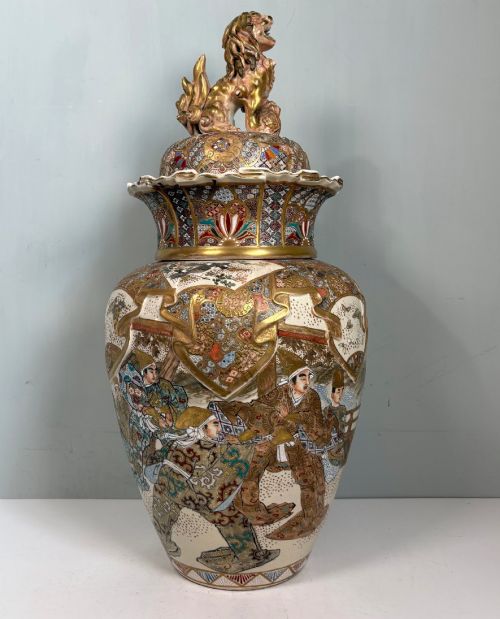


19th Century Satsuma
These 19th century satsuma pieces bring intricate Meiji period ceramic art and hand-painted scenes directly into your room.
19th Century Satsuma
When searching for 19th century satsuma, collectors encounter rich earthenware and porcelain ceramics shaped primarily as vases, lidded vessels, bowls, and decorative plates. These items originate predominantly from the Meiji period, spanning the late 19th century up to 1900, carrying distinct Japanese artistic traditions.
Vases dominate the available selection, appearing in forms such as large display vessels, garlic head shapes, and miniature cabinet pieces. Alongside these stand decorative bowls and sets of plates, often accompanied by historical details like the Shimazu crest, elephant handles, or figural processions.
How they were made
Makers shaped these items primarily from earthenware and porcelain, applying detailed enamel paintwork across the surfaces. Artisans incorporated gold leaf and gilt highlights to accentuate intricate figural scenes, samurai depictions, and landscape motifs.
Selected pieces also integrate materials like wood, silk, and gilt bronze mounts, particularly in examples adapted later into table lamps. The combination of fine ceramic bodies and meticulous polychrome painting defines the technical standard of the era.
19th Century Satsuma Retail Price Guide 2026
Typical asking prices for 19th century satsuma among the pieces listed under this phrase on Sellingantiques today, from the lower quarter to the upper quarter. They describe what is for sale here now, not the wider market.
Some nineteenth-century vases wear tiny elephants as ears.
What varies in quality
The sophistication of the hand-painted decoration determines the standing of an individual piece. Fine examples display precise brushwork in the figural processions, samurai scenes, and Mount Fuji backdrops, executed with clear control over the enamel and gold leaf.
The structural form and physical scale also distinguish standard production from exceptional work. Substantial vases with specialised elements like elephant handles, polygon bodies, or lidded covers demonstrate greater ambition from the period workshops.
Hayakawa·Dozan·Taizan
The 19th Century Satsuma Glossary
- Satsuma
- A type of Japanese pottery traditionally characterised by an ivory-coloured, craquelure glaze. It served as a primary canvas for elaborate polychrome and gilt enamel decoration during the 19th century.
- Meiji Period
- The era in Japanese history spanning from 1868 to 1912, corresponding with the reign of the Emperor Meiji. Most items associated with this style originate from these decades.
- Shimazu Crest
- The traditional family crest of the Shimazu clan, featuring a circle enclosing a cross. It frequently appears on high-quality ceramics produced in the Satsuma domain.
- Garlic Head Vase
- A ceramic vessel characterised by a constricted neck that swells into a bulbous, garlic-like mouth near the top. This distinctive silhouette appears regularly among 19th-century vase forms.
- Craquelure
- A network of fine cracks intentionally formed in the glaze of a ceramic piece during cooling. In authentic pieces, this texture provides an understated background for the surface enamel work.
19th Century Satsuma: Frequently Asked Questions
What is 19th century satsuma?
These pieces are Japanese ceramics, mostly earthenware or porcelain, decorated with detailed enamel and gold leaf. They date from the Meiji period and include vases, bowls, and plates.
Craftsmen painted them with elaborate scenes depicting samurai, processions, and landscapes. Many feature the distinct ivory craquelure glaze characteristic of the Satsuma domain.
How do I date a satsuma vase?
Dating relies on stylistic markers from the Meiji period, specific historical crests, and construction techniques. Most items on record connect to the late 19th century up to 1900.
Examining the base and the fineness of the enamelwork helps place the piece within this timeframe. Signed examples often point directly to specific late 19th-century makers or workshops.
Are these pieces made of porcelain?
While many examples utilise a traditional earthenware body, others are constructed from porcelain. Both materials received the characteristic glaze and detailed enamel decoration.
Earthenware pieces often show the fine craquelure network across the glaze. Porcelain variants provide a different weight and a whiter base beneath the painted surface.
How were these items used originally?
These vessels functioned primarily as decorative art objects for display within interiors. Large vases and lidded urns occupied prominent spaces in nineteenth-century homes.
Plates and bowls served both decorative and display purposes, showcasing the status and artistic taste of the owner. Some pieces have since been adapted into table lamps.
How should I clean my satsuma vase?
Dusting the surface gently with a soft, dry cloth is the safest method for routine maintenance. Avoid using water, abrasive cleaners, or chemical solvents on the piece.
The delicate enamel and gold leaf decorations can be sensitive to moisture and harsh friction. Preserving the painted finish requires minimal physical intervention.