



Gilt Porcelain Floor Vase
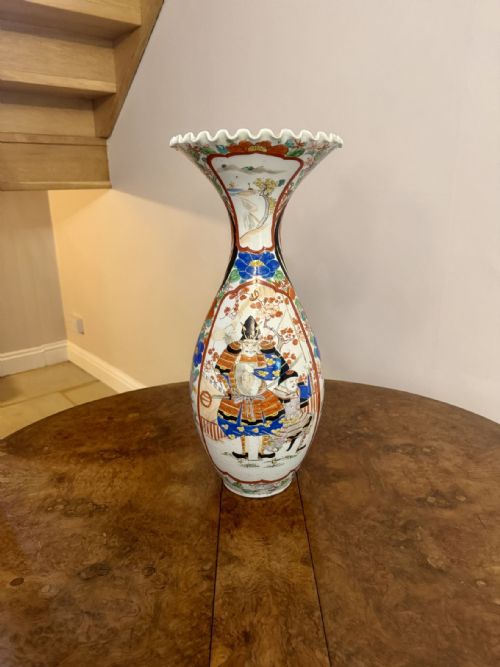
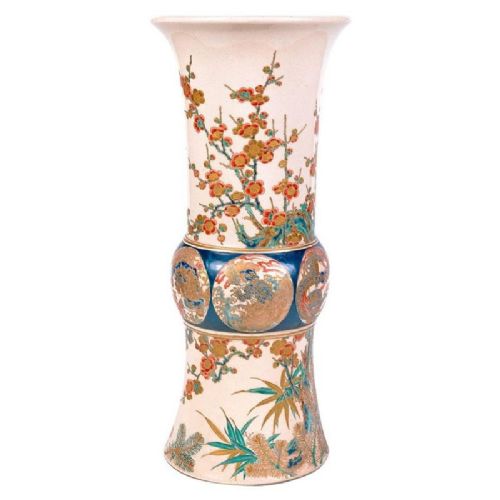
These gilt porcelain floor vases bring substantial scale and intricate hand-painted detail into a room.
Gilt Porcelain Floor Vase
A gilt porcelain floor vase is a large decorative vessel designed to stand directly on the floor rather than on furniture. When you search for a gilt porcelain floor vase, you encounter substantial baluster and lidded forms originating from nineteenth-century Japan and China, alongside early nineteenth-century British ironstone.
The pieces appearing here span the nineteenth century through the early twentieth century, including Japanese Meiji period examples and Chinese Qing dynasty export wares. These grand vessels command visual attention through height and elaborate surface decoration.
Materials and construction methods
These vessels utilise porcelain, earthenware, and ironstone as bodies, shaped into large floor-standing forms that demand considerable skill from the potter. Artisans applied enamel paints alongside gold leaf and gilding to enrich the ceramic surfaces.
Japanese pieces from the Meiji period employ intricate hand-painted enamel alongside occasional lacquer over black paint. Chinese export works, including Cantonese Rose Mandarin and Rose Medallion designs, feature dense polychrome enamels framed by rich gold detailing.
Several towering examples reach up to ninety-three centimetres in height, standing ready to command attention in any grand hallway.
Judging the quality of these vessels
Quality rests in the precision and density of the hand-painted enamels and the crispness of the gilding across the ceramic body. Finer examples display meticulous brushwork on complex figural or floral panels that remain sharp and vibrant.
The architectural balance of large floor-standing forms separates superior works from standard production. Heavier, well-balanced bodies with intact covers and matching stands demonstrate superior original craftsmanship.
The Gilt Porcelain Floor Vase Glossary
- Baluster
- A tall vase form with a rounded body that tapers toward the base and flares at the neck. This silhouette provides a stable foundation for large decorative schemes.
- Enamel
- Opaque glass fused to ceramic surfaces through firing to create colourful decoration. Artisans layer these pigments to achieve rich pictorial depth.
- Gilding
- The application of gold leaf or gold paint to highlight specific areas of the ceramic body. This technique adds reflective warmth to painted scenes.
- Imari
- A traditional style of Japanese export porcelain featuring underglaze blue and iron red, frequently enriched with gold. These wares achieved immense popularity in European interiors.
Gilt Porcelain Floor Vase: Frequently Asked Questions
Where should I place a floor vase?
These large vessels suit open hallways, large reception rooms, or corners that require vertical visual weight.
Because of their substantial height, placing them away from heavy foot traffic protects the ceramic body and surface gilding from accidental knocks.
How do I clean an antique vase?
Dust the surface gently with a soft, dry ostrich feather duster to remove everyday particles without disturbing the enamel.
Avoid using water, chemical cleaners, or abrasive cloths, as moisture can damage historical gilding and delicate painted details.
Can I display fresh flowers inside?
Antique floor vases are primarily decorative display pieces rather than functional vessels for water and stems.
Pouring water directly into these historical ceramic bodies risks damaging the interior glaze and the structural integrity of the base.
How do I identify a Meiji period piece?
Meiji period Japanese works often feature dense Satsuma earthenware or porcelain decorated with intricate figural scenes and heavy gilding.
Examining the painting style and baseline characteristics helps distinguish these late nineteenth-century objects from earlier export wares.