


Antique Chinese Temple Vases
Antique chinese temple vases bring monumental scale and intricate enamel work into a room, offering a striking anchor for traditional or eclectic interiors.
Antique Chinese Temple Vases
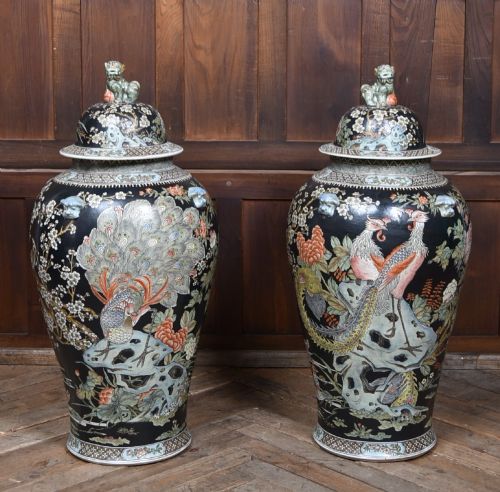
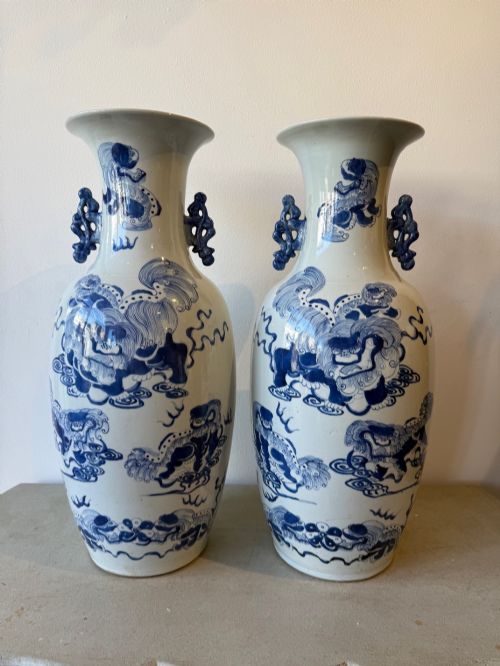
Antique chinese temple vases encompass large-scale jars, baluster vessels, and lidded urns created for display in domestic and ceremonial settings. Buyers frequently encounter nineteenth-century pieces alongside items referencing earlier Qing Dynasty designs.
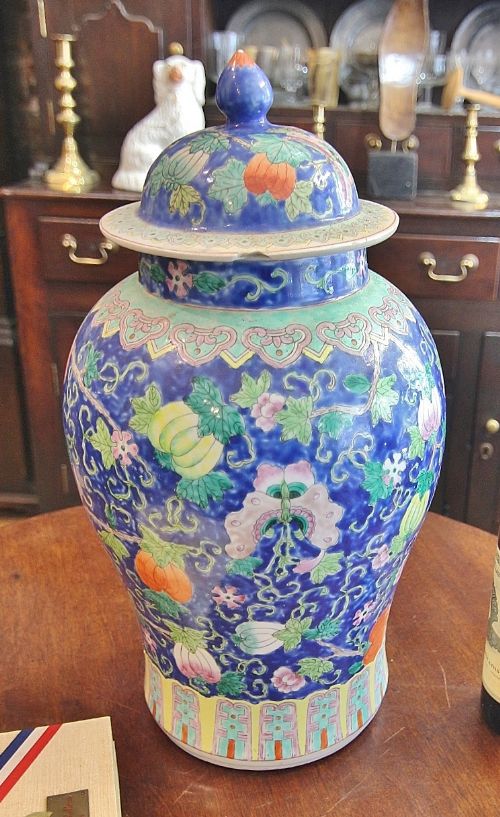
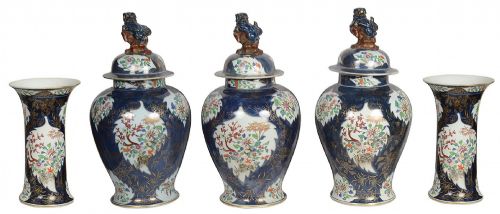
The forms span floor-standing proportions, ginger jars, and paired altar vessels originally fashioned in ceramic, porcelain, or bronze. Many examples arrive paired as garnitures or fitted later as table lamps while retaining their foundational shapes.
Materials and construction methods
Potters and artisans utilised porcelain and ceramic bodies finished with cobalt glaze, enamel pigments, or gold leaf detail. Bronze and cloisonné metalwork also feature prominently among the surviving heavy vessels.
Surface decoration relies on meticulous hand-painting, underglaze blue work, or soldered wire cloisonné cells filled with coloured paste. Lids and covers are shaped to match the contours of the primary baluster or jar body.
Some towering floor vessels measure up to eighty-six inches, requiring more vertical clearance than a standard doorway.
Assessing craftsmanship and visual depth
Quality rests in the precision of the hand-painted brushwork, the vibrancy and saturation of the enamel colours, and the crispness of the underlying ceramic or metal form. Superior examples display balanced symmetry across monumental heights and finely executed details within the motifs.
The weight of the material, the complexity of multi-layered glazes, and the integrity of paired sets distinguish finer decorative output from standard production pieces. Finer work reveals a disciplined execution in every panel and border.
The Antique Chinese Temple Vases Glossary
- Baluster vase
- A tall vessel characterised by a rounded body that tapers toward the base and flares at the neck. This silhouette provides a stable canvas for expansive pictorial scenes.
- Famille rose
- A porcelain palette dominated by opaque pink enamel introduced during the Qing Dynasty. The style allows for subtle tonal shading in floral and figural compositions.
- Cloisonne
- A metalworking technique where thin flat wires are soldered to a base to form compartments filled with enamel paste. The surface is then fired and polished smooth.
- Garniture
- A set of matching vases or jars designed to be displayed together on a mantelpiece or furniture surface. These sets often combine covered urns and open beaker shapes.
- Ginger jar
- A storage vessel featuring a broad shoulders and a domed cover, originally built for spices. Antique versions serve purely decorative display functions.
Antique Chinese Temple Vases: Frequently Asked Questions
How were temple vases used?
These large vessels served as ornamental focal points within temples, halls, and affluent homes, often displayed in symmetrical pairs or complete garnitures.
Their substantial scale allowed them to hold floral arrangements or simply stand alone as demonstrations of wealth and artistic patronage.
Are these vases waterproof?
Many antique ceramic and porcelain vessels can hold water safely, though structural age and historical hairline fractures require careful inspection before use.
For most tall floor pieces and wired lamp conversions, owners prefer dry display to protect the antique body from internal moisture damage.
How do I style a large floor vase?
Monumental pieces command attention when placed directly on the floor in empty corners, hallways, or flanking large hearths.
Pairing matching baluster jars on low pedestals balances their heavy proportions and integrates them securely into modern room layouts.
How do I distinguish nineteenth-century pieces?
Nineteenth-century pieces frequently display dense Canton or Rose Medallion enamel panels, vibrant cobalt underglazes, and robust porcelain bodies.
Stylistic nods to earlier Kangxi periods appear alongside distinct Victorian manufacturing traits and heavy bronze altar constructions.