
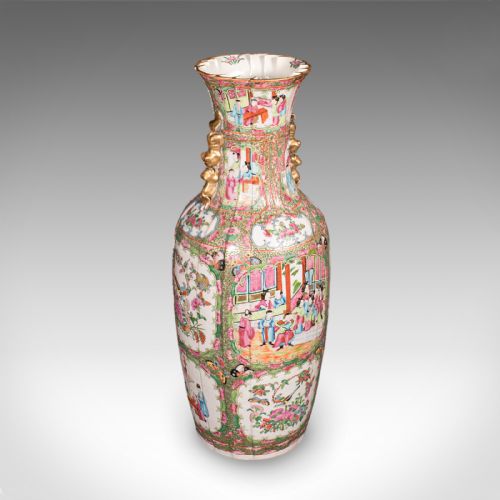


Large Rose Medallion Vases
Large rose medallion vases are showpieces of painted porcelain that bring rich enamel palettes and historic hand-work into a room.
Large Rose Medallion Vases
Large rose medallion vases are substantial decorative pieces originating from nineteenth-century China, predominantly associated with Cantonese and Qing dynasty production. Buyers seeking these items will find grand baluster forms and paired compositions designed to command attention in a large interior space.
The selections available here include both traditional ceramic vessels and pieces later converted into table lamps with gilt bronze mounts. These items bridge the gap between antique Asian export art and nineteenth-century Victorian domestic display.
How They Were Made
Makers shaped these large vessels from fine porcelain and ceramic before applying intricate enamel decoration by hand. Artisans frequently integrated gold leaf and gilding to highlight the detailed figurative and floral panels characteristic of the style.
Many examples incorporate secondary materials such as brass, ormolu, and giltwood for mounts, stands, and lamp conversions. These structural additions complement the vibrant ceramic bodies while providing stability for heavy baluster forms.
Many of these grand vessels spent decades quietly guarding Victorian sideboards before finding a new life as towering table lamps.
What Varies in Quality
Quality in large rose medallion vases rests on the precision and density of the hand-painted enamels across the surface. Finer examples display crisp delineation within the figural roundels and floral borders, whereas simpler work appears looser and more repetitive.
The integration of secondary elements, such as heavy gilt bronze mounts or original carved stands, also separates standard vessels from exceptional collector pieces. Well-executed lamp conversions and intact covers preserve the original sculptural intent of the maker.
The Large Rose Medallion Vases Glossary
- Baluster
- A tall vase form with a rounded body and a narrow neck resembling a traditional architectural column. This shape provides a broad canvas for extensive enamel storytelling.
- Ormolu
- Finely chased and gilt bronze mounted to decorative objects and furniture. It adds a weighty, metallic contrast to the painted ceramic surface.
- Chinoiserie
- European artistic style reflecting Chinese motifs and decorative techniques. This aesthetic influenced how nineteenth-century homes displayed imported wares.
- Qing Dynasty
- The final imperial dynasty of China, spanning from sixteen-forty-four to nineteen-twelve. Pieces from this era often feature the hallmark rose medallion palette.
Large Rose Medallion Vases: Frequently Asked Questions
How are these large vases usually displayed?
These pieces stand best as floor-level focal points or upon sturdy tables where their scale can be appreciated. Pairs function effectively on either side of a fireplace or anchoring a grand entrance.
Ensure the selected surface supports the substantial weight of the porcelain and any added bronze mounts. Keep them away from heavy foot traffic to protect the extended forms.
What defines the rose medallion style?
The style relies on segmented panels filled with court figures, birds, and butterflies surrounded by dense floral borders. Pinks and greens dominate the palette alongside generous applications of gold.
This distinct visual arrangement distinguishes the category from other nineteenth-century export wares. Every section contributes to a rich, narrative surface.
How do I care for antique enamel?
Dust the surface regularly with a soft, dry brush to prevent particulate buildup in the recessed areas. Avoid chemical cleaners that might degrade the delicate enamel pigments.
Handle the vessels with two hands, supporting the base rather than the rim or handles. Secure any paired stands to prevent shifting during routine maintenance.