
Gilt Painted Side Table
These gilt painted side table examples bring sculptural gold leaf and painted surfaces to a room, offering both practical ledges and decorative presence.
Gilt Painted Side Table
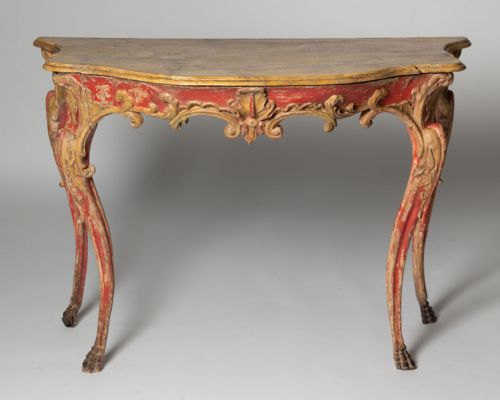
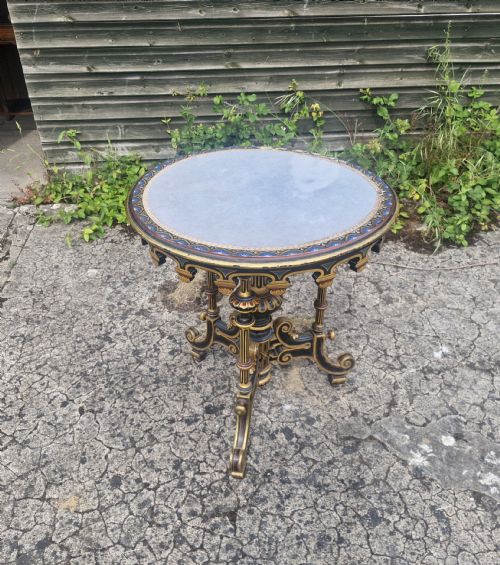
When you search for a gilt painted side table, you encounter a variety of forms including console tables, occasional tables, and coffee tables originating from periods such as the eighteenth century, the nineteenth century, and the early twentieth century. These furnishings function as supportive ledges or centrepieces in a room, combining painted timber surfaces with metallic highlights.
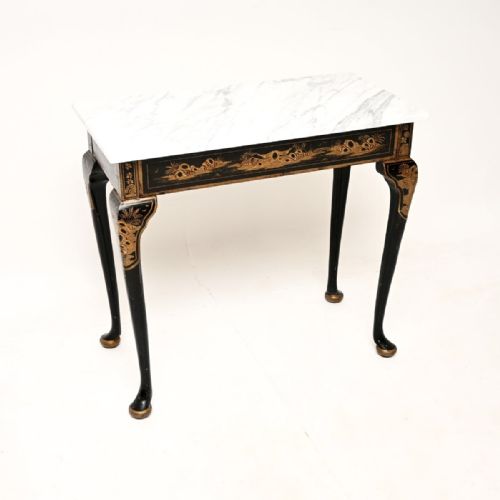
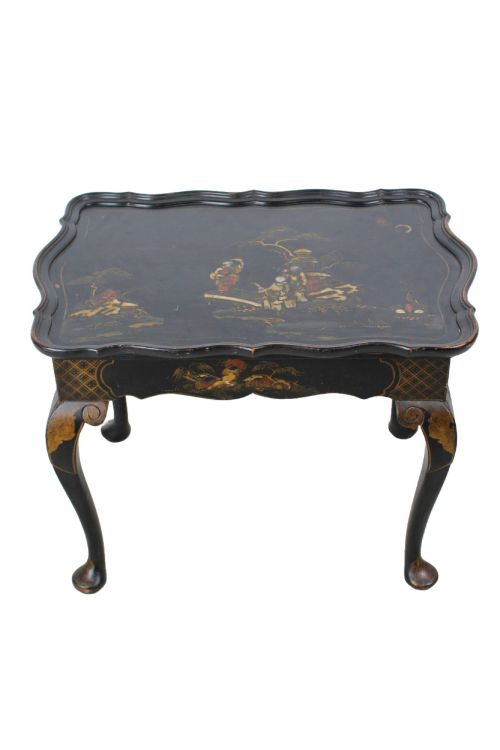
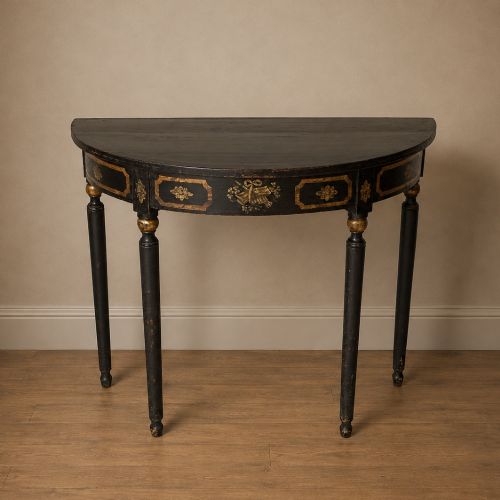
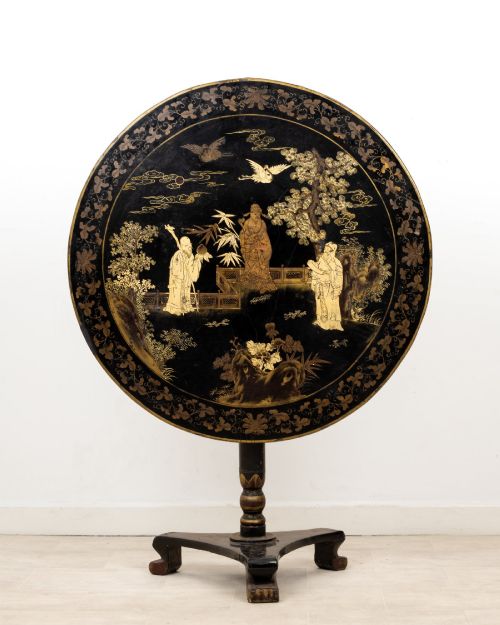
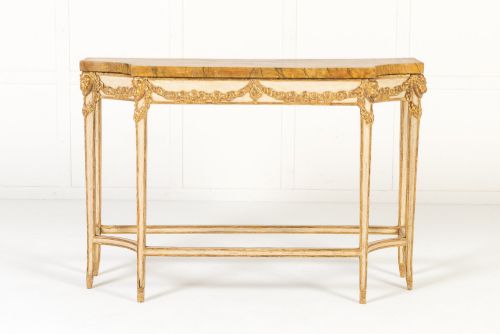
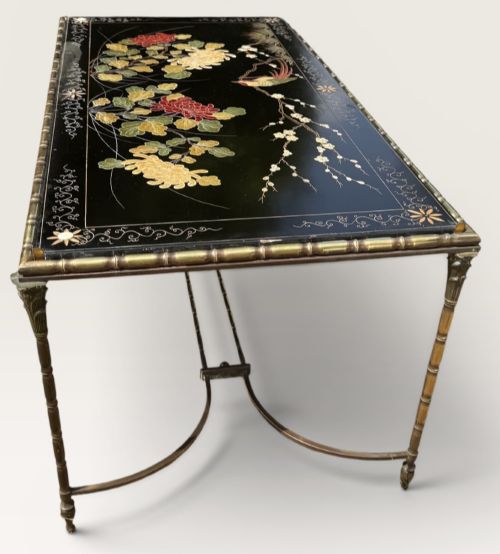
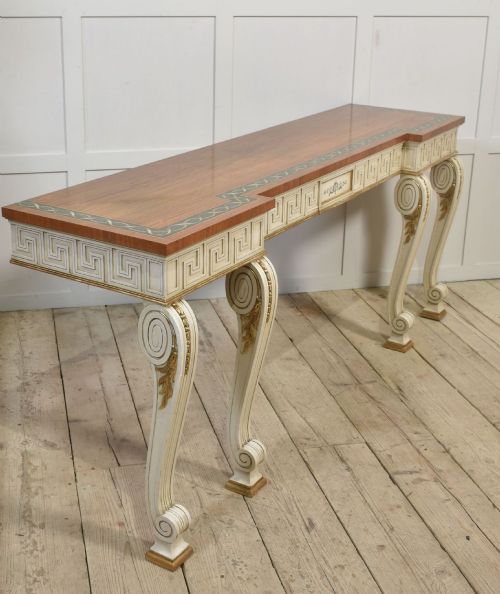
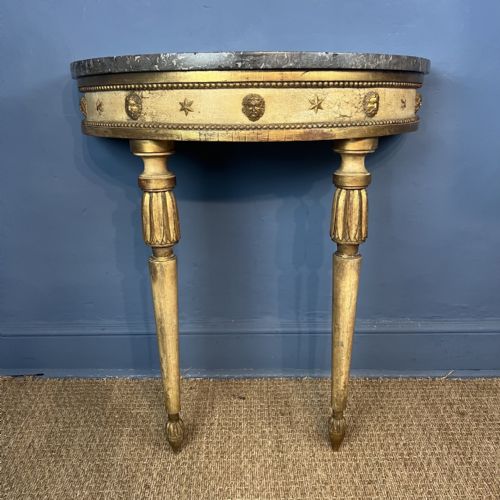
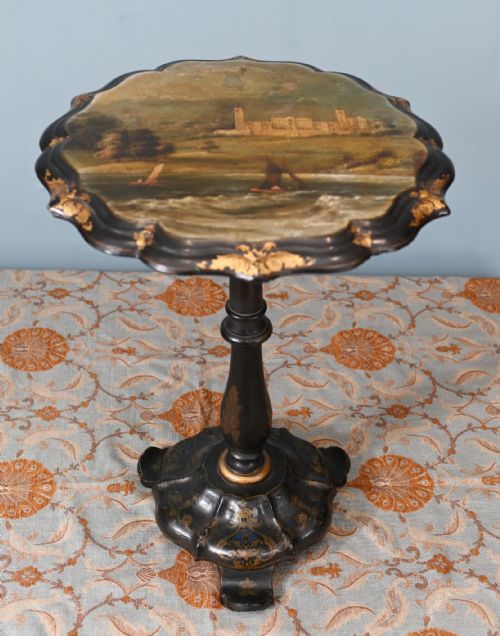
The pieces on this page lean heavily towards European regional traditions, most notably Italian Neoclassical and Venetian designs alongside French and English Chinoiserie interpretations. You will frequently find console tables with marble tops and occasional tables featuring lacquered finishes or tray tops designed for portability and display.
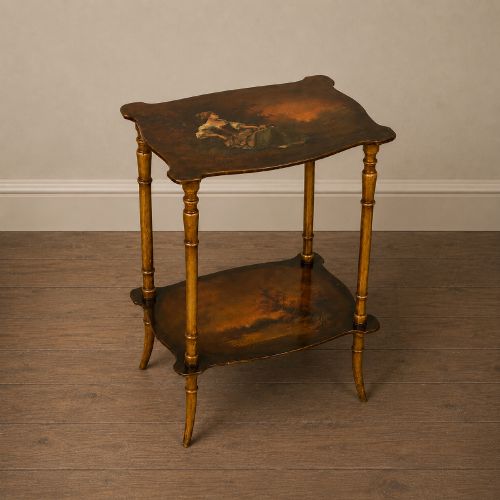
Makers and workshops across different decades adapted these decorative schemes to suit changing domestic interiors, resulting in diverse formats from two-tier étagères to demi-lune hall tables. Each object retains the characteristic union of a painted wooden body and gilded detailing that defines the category.
How they were made
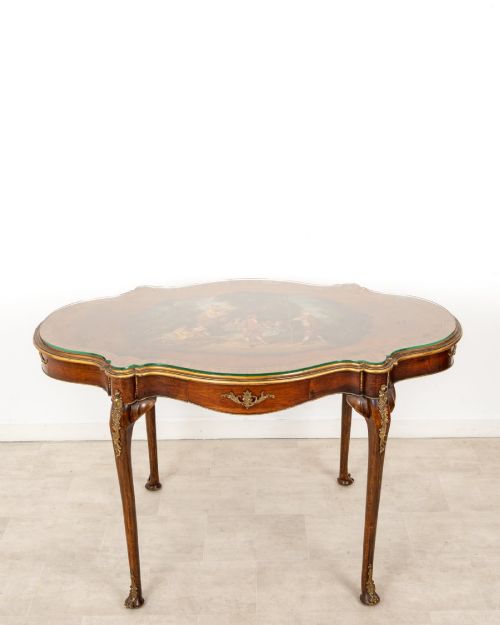
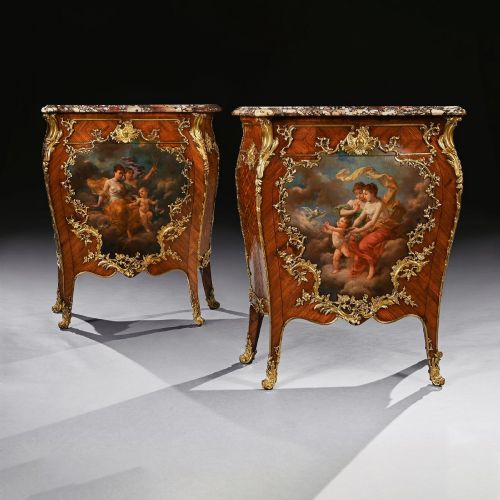
Craftsmen built the foundations of these tables using timber such as wood and kingwood, often applying a layer of gesso to prepare the surface for decoration. Paint and gold leaf were then layered upon the structure, sometimes incorporating lacquer or Vernis Martin techniques to achieve glossy, ornamental finishes.
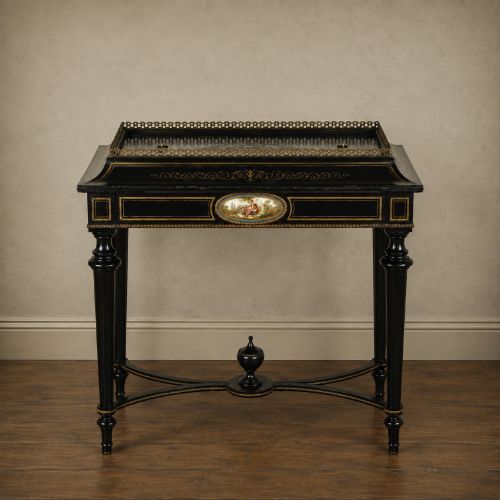
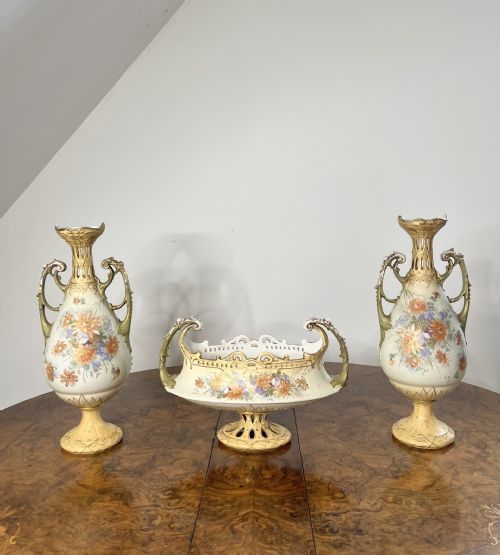
Many surfaces feature applied or inlaid elements, including marble slabs, porcelain plaques, or gilt bronze mounts fixed to the painted wooden frame. Carved wooden details, such as parcel gilt accents, were meticulously hand-finished to highlight the structural contours of console and occasional tables.
Listings span multiple eras from the eighteenth century to the 1930s, featuring materials such as marble, lacquer, gesso, and gold leaf.
What varies in quality
The sophistication of the painted decoration and the crispness of the gilt work separate simpler items from finer examples. Hand-painted floral motifs, intricate Chinoiserie scenes, and carefully applied gold leaf indicate a higher degree of artisan skill than mass-produced or purely decorative later interpretations.
The choice of supplementary materials significantly influences the standing of a piece, with heavy marble tops, fine porcelain plaques, and cast gilt bronze mounts denoting superior production standards. The integrity of the underlying woodwork and the preservation of the original painted surface finish remain central to the overall execution.
Maison Bagues·Royal Vienna·Osbourne House
The Gilt Painted Side Table Glossary
- Console table
- A table designed to stand against a wall, frequently secured to it and topped with marble or wood.
- Parcel gilt
- Woodwork or decoration where only specific raised details or carved areas are partially covered in gold leaf.
- Vernis Martin
- A simulated Japanese lacquer technique developed in eighteenth-century France, known for its translucent and polished finish.
- Chinoiserie
- European artistic style reflecting Chinese motifs and decorative techniques, popular in furniture and lacquerwork.
- Demilune
- A half-moon or semicircular shape commonly found in the design of console and side tables.
Gilt Painted Side Table: Frequently Asked Questions
Where should I place a console table?
Console tables sit naturally against hallway or living room walls, providing a surface for lamps, mirrors, or decorative objects without taking up excessive floor space.
Their shallow depth, particularly demi-lune variations, makes them well-suited for narrow thoroughfares and reception spaces where clearance matters.
How do I care for painted and gilded surfaces?
Dust these tables gently with a dry, soft cloth and keep them away from direct sunlight and moisture to protect the delicate paint and gold leaf.
Avoid using modern chemical cleaning sprays, as harsh solvents can strip the historic varnish and degrade the underlying gesso.
What is the difference between an occasional table and a side table?
Side tables generally serve a fixed function alongside seating or against walls, whereas occasional tables are lighter and more portable.
Many occasional tables feature tilt tops or tray designs intended for versatile use around different rooms of the house.
How can I identify a Neoclassical piece?
Neoclassical furniture typically displays restrained classical proportions, symmetrical layouts, and motifs inspired by ancient architectural forms.
These designs often combine painted cream or pastel finishes with precise parcel gilding and structured marble tops.