







Ebonised Tilt Top Table
An ebonised tilt top table offers a clever folding mechanism paired with a dark, dramatic finish that suits both traditional and modern rooms.
Ebonised Tilt Top Table
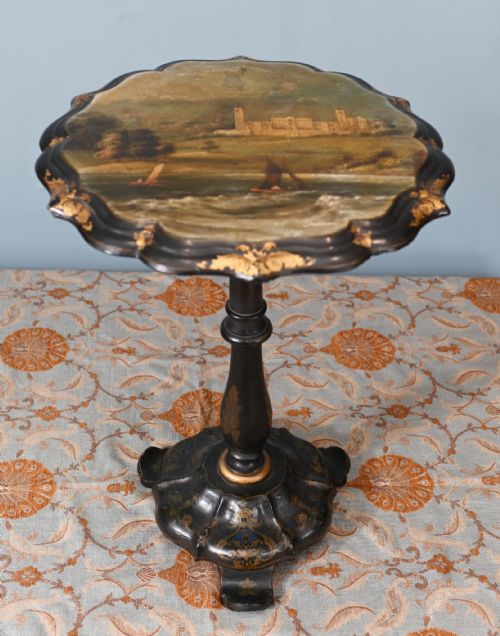
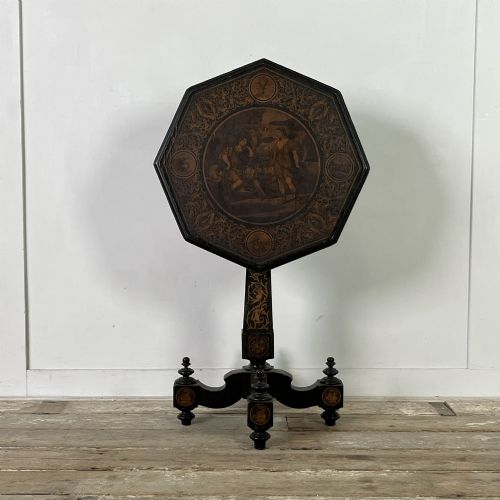
When you search for an ebonised tilt top table, you are looking for versatile occasional furniture designed to save space when folded vertical against a wall. The examples appearing on this page span the Victorian and Regency periods, stretching back to Georgian times, alongside continental pieces.
The forms range widely from compact wine tables and tripods to larger breakfast, centre, and games tables. Whatever the top shape, the defining action remains the hinge mechanism beneath the surface that allows the table top to pivot flat or upright.
Materials and construction
Cabinet makers utilised a variety of underlying timbers, including walnut, birch, and papier mâché, before applying dark ebonising treatments, paint, or ink work. This dark finish imitated expensive ebony wood, a popular technique during the nineteenth century.
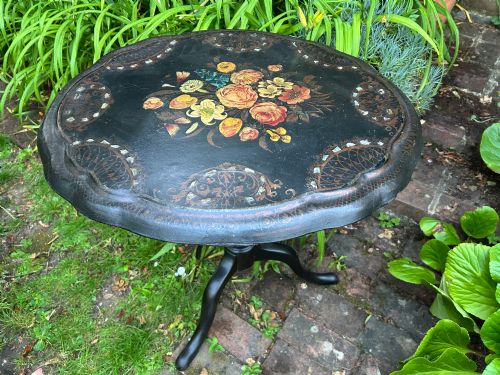
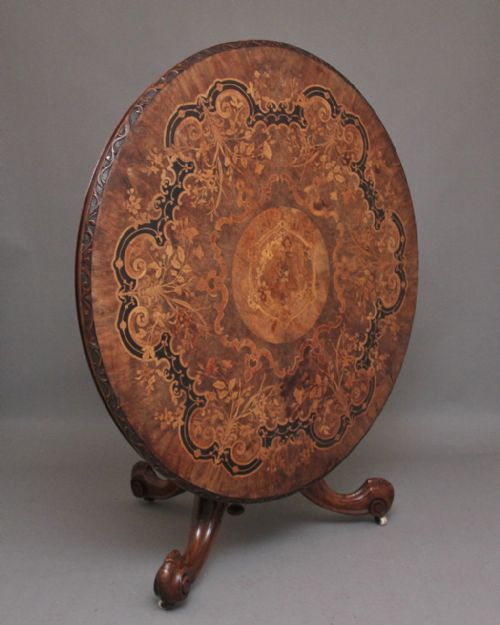
Many specimens incorporate intricate decorative elements such as penwork, japanning, marquetry, and brass fittings. The tilt top mechanism itself relies on a sturdy pillar and tripod base, requiring precise carpentry to ensure stability both when locked flat and when stored upright.
Ebonised Tilt Top Table Retail Price Guide 2026
Typical asking prices for ebonised tilt top table among the pieces listed under this phrase on Sellingantiques today, from the lower quarter to the upper quarter. They describe what is for sale here now, not the wider market.
Listings feature items from the Georgian, Regency, and Victorian eras, alongside Swedish Biedermeier and country styles.
Distinguishing quality in these tables
The grade of an ebonised tilt top table rests largely on the crispness of the original surface decoration, whether that is hand-painted ink work, gilt lacquer, or mother-of-pearl inlay. Finer pieces retain their depth of colour without excessive flaking or crude repainting.
Structural integrity of the pivoting mechanism and the firmness of the tripod base dictate daily usability. A superior table stands level on its feet and locks securely into position without wobble in the central catch.
Gillows
The Ebonised Tilt Top Table Glossary
- Ebonised wood
- Timber treated with stain, paint, or chemical processes to imitate solid ebony. This dark finish became especially fashionable during the Victorian era for furniture with classical pretensions.
- Tilt top
- A table top mounted on a catch and pivot allowing it to turn vertical. This clever device enabled furniture to stand flat against a perimeter wall when not in use.
- Japanning
- A European imitation of East Asian lacquer work using heat-dried varnish layers. Craftsmen often built up shiny black surfaces adorned with gilt motifs.
- Penwork
- Decorative surface illustration executed with fine ink lines rather than a brush. Regency and nineteenth-century examples often display intricate geometric or botanical motifs created this way.
- Tripod base
- A support column resting on three curving legs. This configuration prevents rocking on uneven historic floorboards.
Ebonised Tilt Top Table: Frequently Asked Questions
Why did they make tilt top tables?
These folding tables were designed to maximise floor space in principal rooms. Servants or owners could easily pivot the top vertical and wheel or carry the piece to the edge of the room when dining or dancing concluded.
Over time, they evolved from purely utilitarian furniture into decorative centrepieces and wine tables used for casual entertaining.
How do I care for ebonised wood?
Dust the surface regularly with a soft, dry cloth to prevent abrasive particles from accumulating. Avoid placing the table in direct sunlight or near heat sources, which can cause the dark finish and underlying timber to dry out.
Keep moisture away from the joints and top, and refrain from using modern silicone polishes that build up a greasy residue on historic surfaces.
How do I distinguish Regency from Victorian pieces?
Regency items often display restrained classical proportions influenced by archaeological discoveries, featuring crisp penwork, brass mounts, and rosewood or ebonised surfaces. They frequently date from the early nineteenth century.
Victorian examples tend to be bolder in scale, incorporating diverse materials like papier mâché, mother-of-pearl inlay, and amboyna wood, reflecting the eclectic tastes of the later nineteenth century.