





Black Lacquered Tilt Table
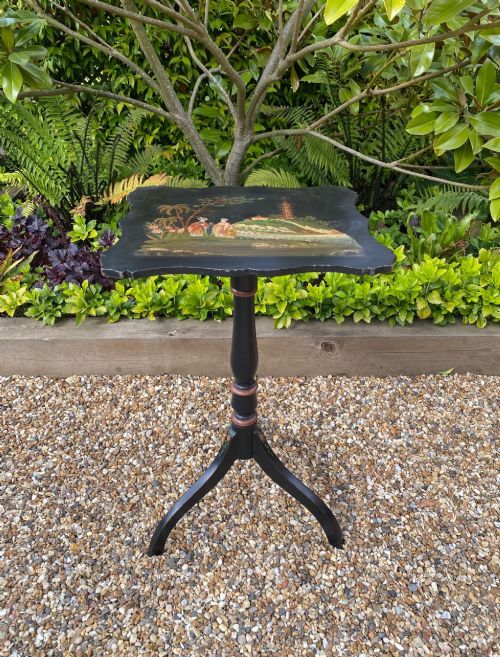
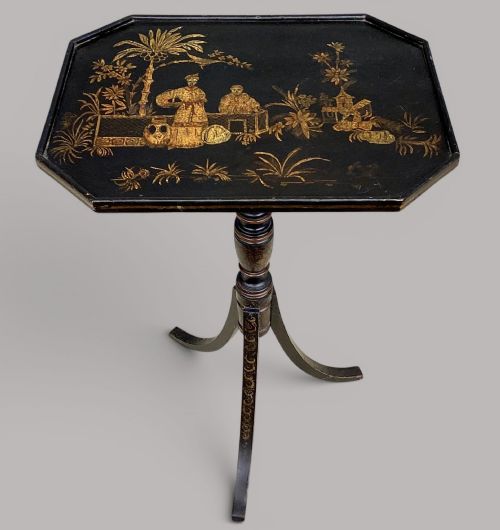
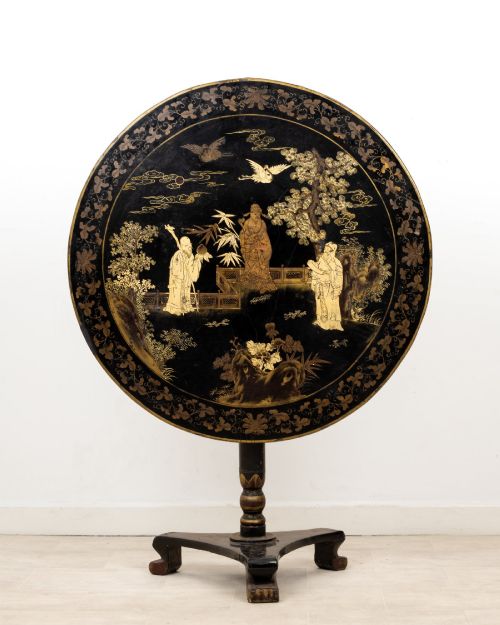
These black lacquered tilt tables bring hand-painted Chinoiserie scenes, gilt highlights and folding surfaces into a room as versatile occasional or wine tables.
Black Lacquered Tilt Table
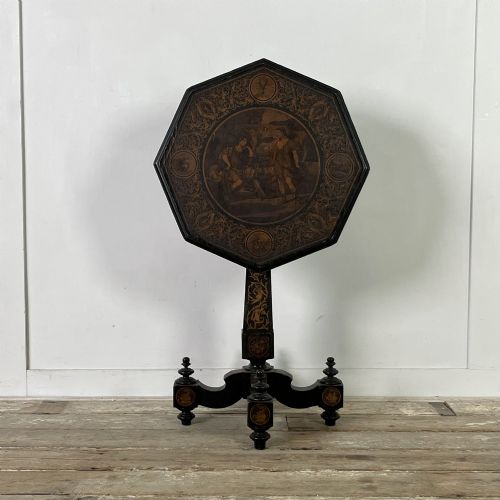
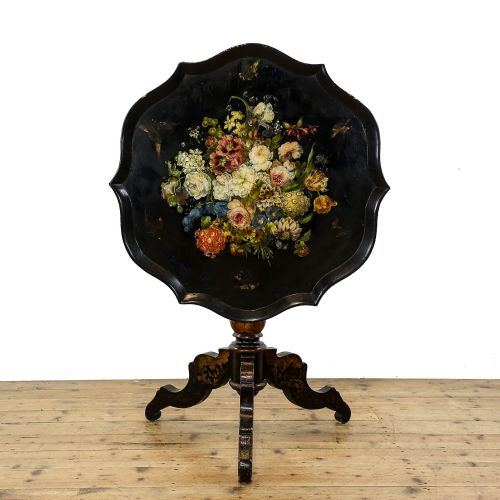
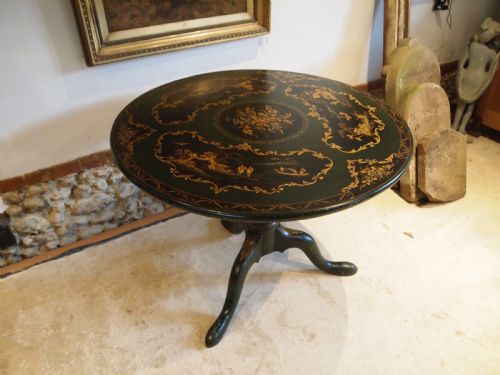
A black lacquered tilt table combines a pivoting circular or shaped top with a folding mechanism and a tripod base. These occasional and wine tables appear most frequently from the nineteenth century, alongside Regency, Victorian and Georgian examples.
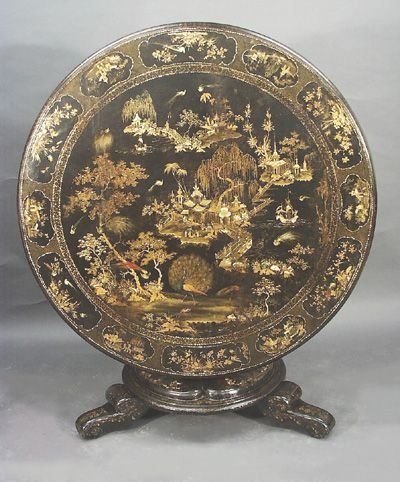
The surface decoration draws heavily on Chinoiserie motifs, executed in gold leaf, paint and ink work. Many examples utilise papier-mâché alongside traditional lacquered wood to create lightweight yet durable surfaces.
How they were made
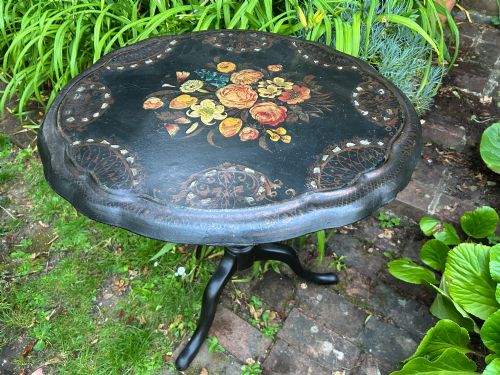
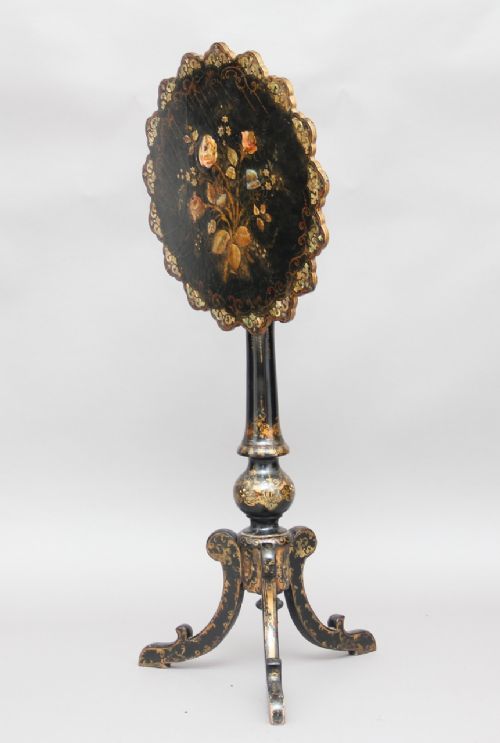
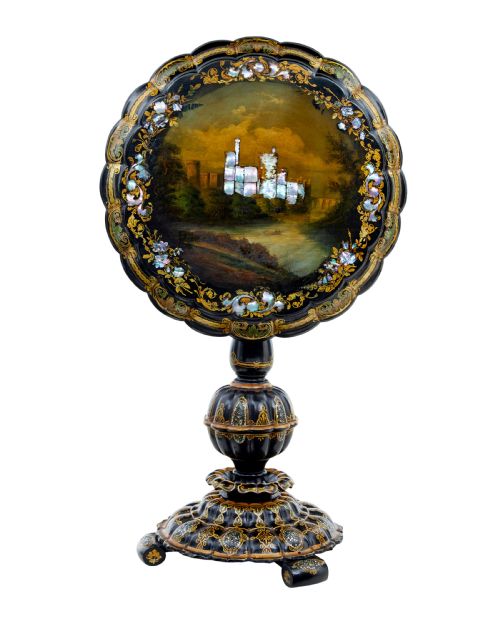
Cabinet makers built the tops from wood or pressed papier-mâché, applying multiple coats of black lacquer to achieve a deep, polished ground. Artisans then hand-painted intricate scenes directly onto the lacquer, often incorporating raised gilt and inlaid mother-of-pearl.
The tilting mechanism relies on a clever wooden or brass catch fitted beneath the top, allowing the table to stand flat for use or fold vertically against the tripod base when not in use.
Victorian makers occasionally added gleaming mother-of-pearl beetles to their lacquered foliage, ensuring the bugs stayed permanently put.
What varies in quality
The sophistication of the hand-painted Chinoiserie and the precision of the gilt work dictate the visual strength of each table. Finer pieces display detailed brushwork and subtle shading in the figures and landscapes, whereas simpler versions rely on repetitive stencilled motifs.
The integrity of the lacquered surface and the stability of the tilting mechanism separate standard examples from superior ones. Original turning on the tripod base and clean preservation of the underlying papier-mâché or timber add to the structural merit.
The Black Lacquered Tilt Table Glossary
- Tilt top table
- A table with a hinged surface that pivots upright on its base to save space when not in use. This mechanism appeared frequently on eighteenth and nineteenth-century occasional tables.
- Chinoiserie
- European interpretations of Chinese artistic styles, characteristically featuring figures, pagodas and landscapes rendered in gold or paint on a dark ground. It dominated decorative arts during the Georgian and Victorian periods.
- Papier-mâché
- A composite material made from paper pulp or layers of paper bound with glue, pressed into moulds and baked. It provided a smooth, stable base for lacquer and mother-of-pearl inlay.
- Japanned
- European lacquerwork produced in imitation of Asian imports. Artisans applied layers of varnish and heat-cured the finish before decorating the surface.
- Mother of pearl
- The iridescent inner layer of certain mollusc shells, cut into thin pieces and embedded into lacquer surfaces. It catches the light to create highlights within the painted scenes.
Black Lacquered Tilt Table: Frequently Asked Questions
How do you use a tilt top table?
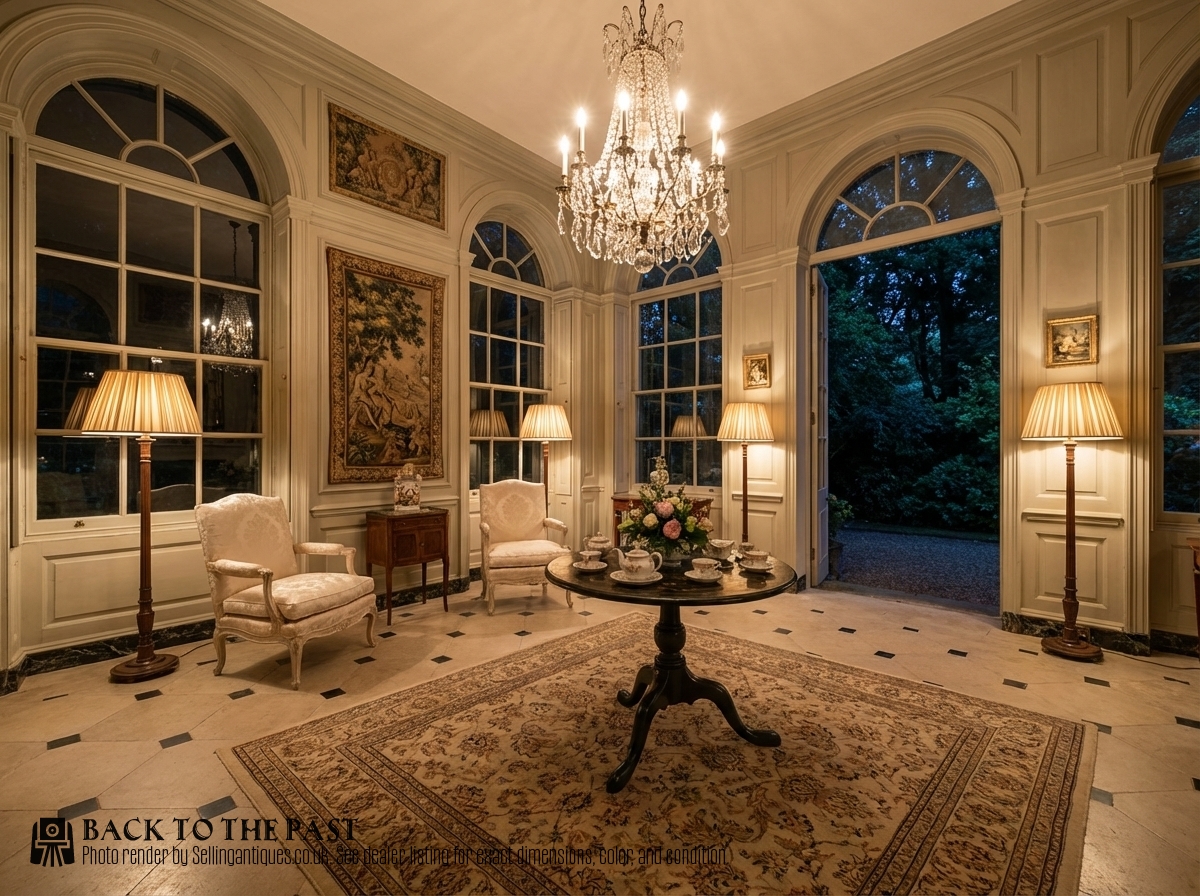
These tables function primarily as occasional, side or wine tables for holding small objects or drinks. When space is limited, the top pivots vertically to rest flat against the tripod base.
In daily life, they suit corners or beside seating where a compact surface is useful. The folding action also allows the painted top to remain visible as a decorative panel when stored.
What is the difference between lacquer and japanning?
True lacquer uses sap from Asian trees applied in numerous thin, cured layers to create a hard finish. Japanning is the European imitation technique using resin varnishes and heat.
Both methods produce a glossy black surface suitable for Chinoiserie decoration. English makers during the Georgian and Victorian periods relied mainly on japanning techniques.
How do I care for a black lacquered surface?
Keep these tables away from direct sunlight and excessive heat sources to prevent the lacquer from crazing. Dust gently with a dry, soft cloth and avoid chemical polishes.
Because the historic finish is sensitive to moisture and alcohol, use coasters beneath glasses. Careful handling preserves the delicate gold leaf and painted details.
How can I tell a Regency table from a Victorian one?
Regency examples often feature crisper neoclassical proportions combined with parcel gilt Chinoiserie decoration on timber frames. Victorian pieces frequently utilise moulded papier-mâché and inlaid mother-of-pearl.
Construction details on the underside of the top help clarify the date. The evolution from Georgian through Regency to Victorian styles shows a shift towards more diverse materials.