
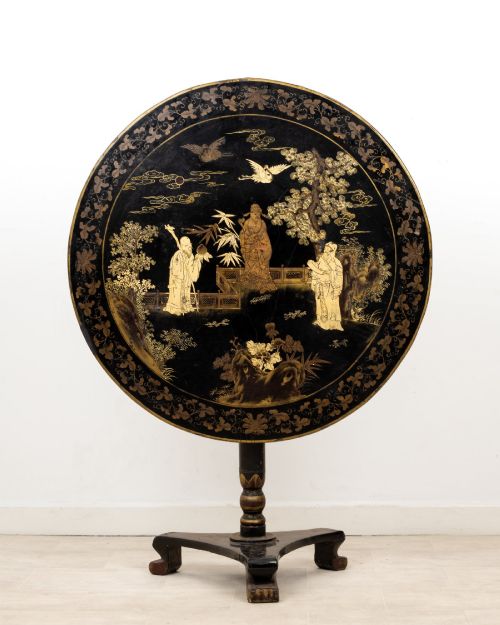

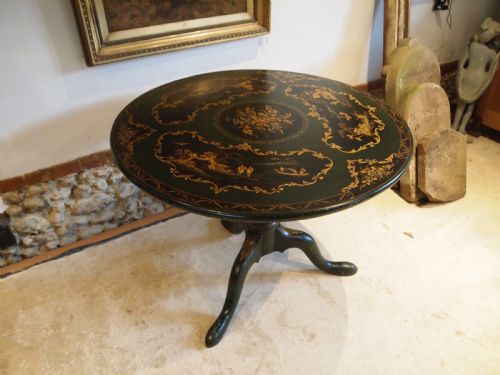


Gold Gilt Tripod Table
A gold gilt tripod table brings lightness and polish to a room, offering a decorative surface supported on three slender legs.
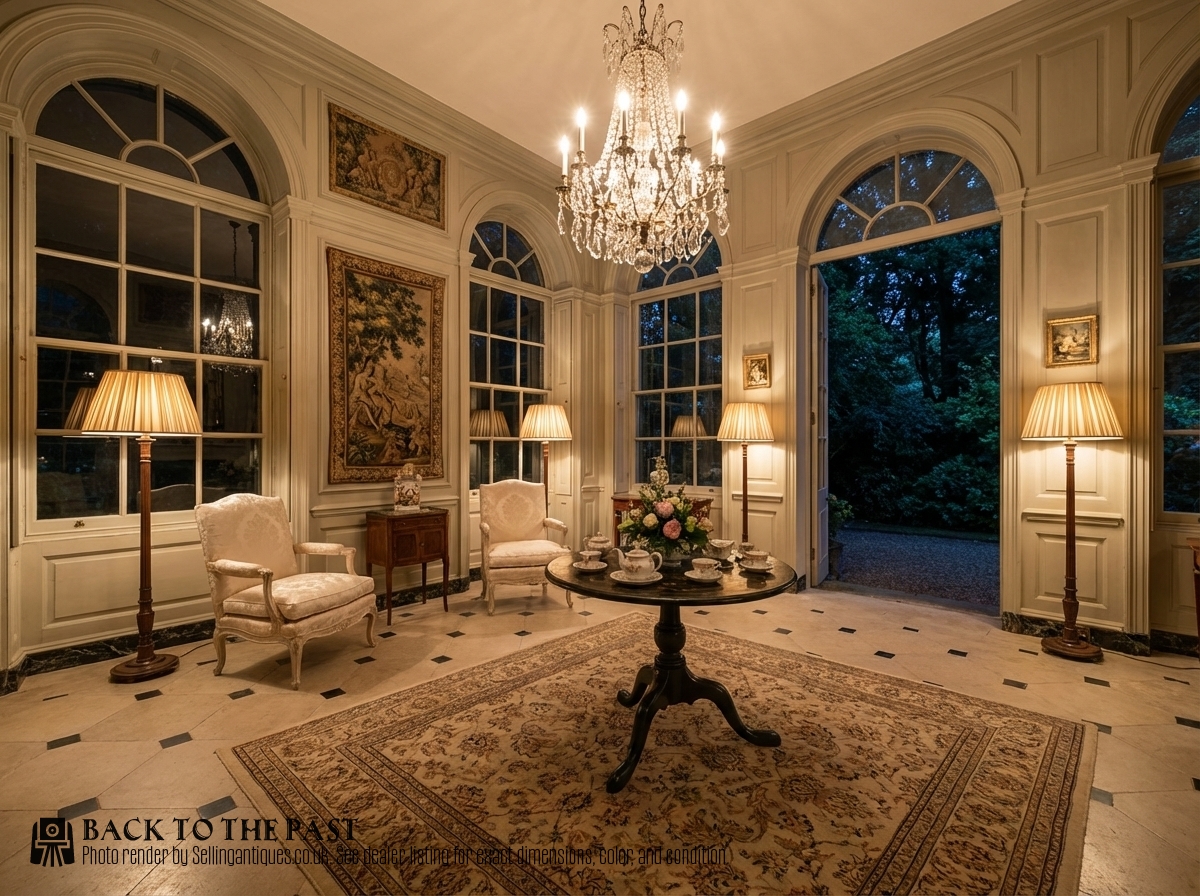
Gold Gilt Tripod Table
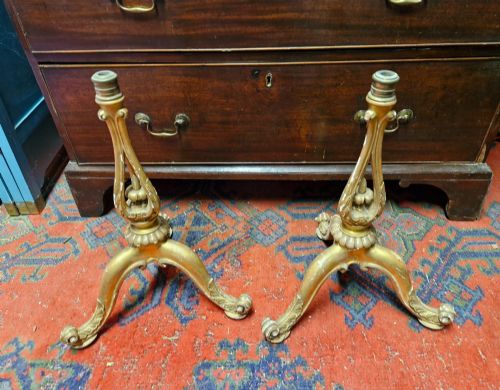
When you search for a gold gilt tripod table, you encounter a selection of occasional tables, side tables, and lamp bases resting on three-legged supports. The pieces span periods from the Georgian and Regency eras through the nineteenth century and up to 1900, reflecting styles such as French Rococo, Neoclassical, and Chinoiserie.
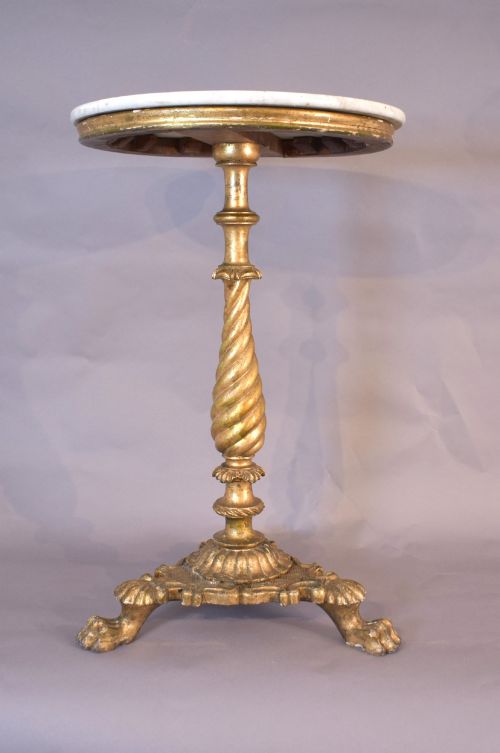
The forms vary from simple ebonised and parcel gilt stools to elaborate marble-topped tripod tables and ormolu-mounted stands. Each version utilises the distinctive three-legged format to provide a stable, compact surface for lamps, drinks, or display.
How they were made
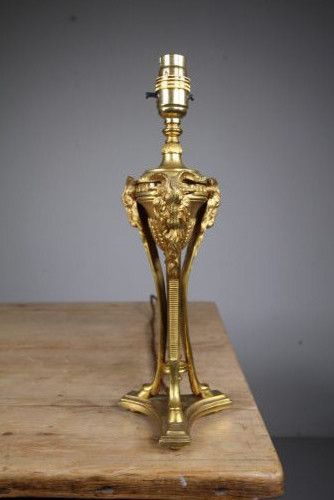
The construction of these pieces relies on traditional cabinetmaking timber combined with applied surface decoration, utilising wood, brass, and lacquered wood as structural bases. Artisans applied gold leaf, giltwood, or ormolu to highlight carved details, ram heads, and structural mounts.
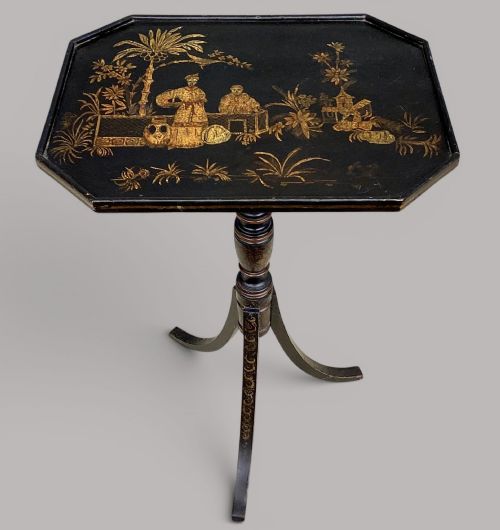
Finishes involve hand-painted lacquer, ebonising, and parcel-gilt treatments, often paired with inset marble tops. The tripod configuration requires precise joinery to ensure the three legs support the central column and top securely.
Object types include occasional tables, lamp bases, side tables, candelabra lamps, and stools.
What varies in quality
The standard of a piece rests upon the crispness of the carving in the wood or the casting of the ormolu and gilt bronze mounts. Finer examples display meticulous hand-painted details on lacquered surfaces and well-balanced proportions between the top, column, and legs.
Materials dictate the upper tiers of the range, where genuine marble tops, fire-gilt bronze, and high-grade giltwood outclass simpler ebonised or painted pine versions. The integration of period techniques, such as genuine gold leaf application rather than modern metallic paint, separates workshop execution.
The Gold Gilt Tripod Table Glossary
- Ormolu
- A method of applying finely ground, high-carat gold to a bronze base using mercury. This technique produces a rich, durable metallic finish seen on mounts and lamp bases from the eighteenth and nineteenth centuries.
- Giltwood
- Timber, frequently lime or pine, that has been coated with gold leaf over a prepared gesso ground. It provides a warm, reflective surface for frames and furniture details.
- Tilt top
- A table mechanism allowing the surface to fold vertically when not in use. This design originated to save space in smaller rooms.
- Parcel-gilt
- A decorative treatment where only specific portions of an object are gilded, leaving the underlying wood, lacquer, or ebonised finish visible.
- Chinoiserie
- European interpretations of Chinese and East Asian artistic traditions. It is frequently expressed through hand-painted lacquer and decorative motifs on furniture.
Gold Gilt Tripod Table: Frequently Asked Questions
What is a tripod table used for?
These tables served as portable stands for tea, wine, or reading materials in grand interiors. Their compact footprint made them easy to move beside seating.
Today, they function effectively as side tables, lamp stands, or display surfaces in sitting rooms and hallways.
How do I identify a Regency piece?
Regency items often draw upon classical antiquity and exotic influences such as Chinoiserie. They feature clean lines, dark lacquer, and restrained gilt highlights.
Look for architectural influences and specific decorative motifs that distinguish them from later Victorian revivals.
Are these tables sturdy?
The three-legged design naturally accommodates uneven floorboards without wobbling. The central column distributes weight evenly down to each foot.
While stable for normal use, their slender legs mean they require careful placement away from heavy traffic areas.
What is parcel-gilt furniture?
Parcel-gilt surfaces combine exposed dark wood or painted ground with selective areas of gold leaf. This technique creates contrast and emphasises carved details.
It appears frequently on nineteenth-century ebonised stools and occasional furniture to catch the light.