


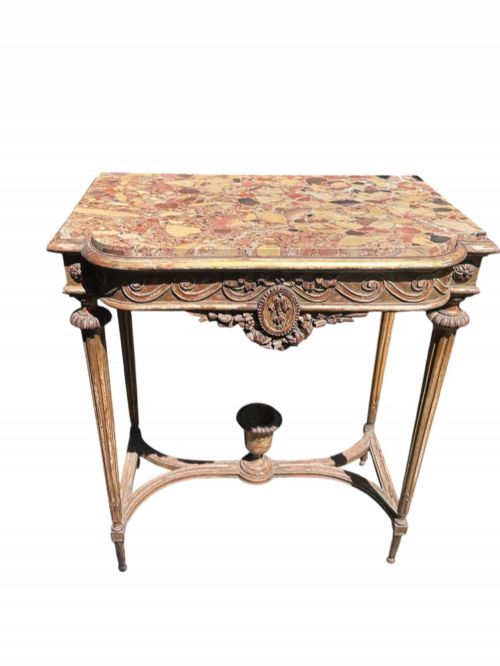


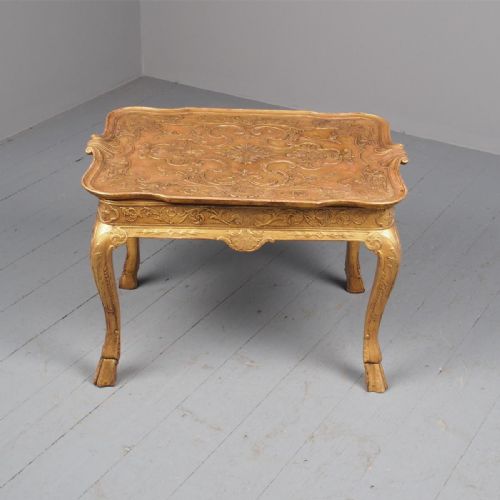
Carved Giltwood Accent Table
A carved giltwood accent table brings immediate warmth and historical depth to a room through rich carved detail and gold leaf surfaces.
Carved Giltwood Accent Table
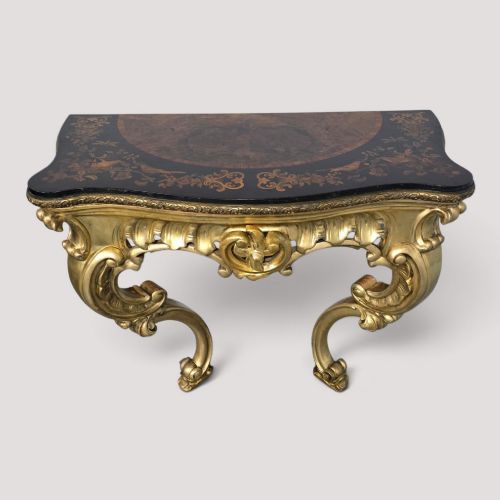
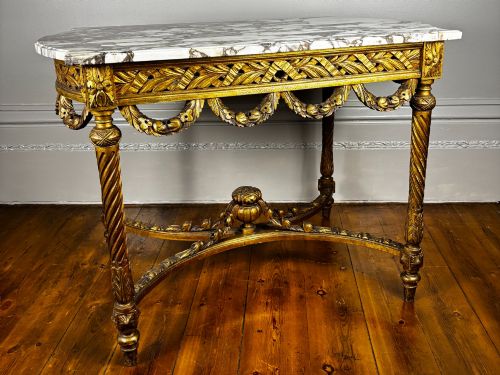
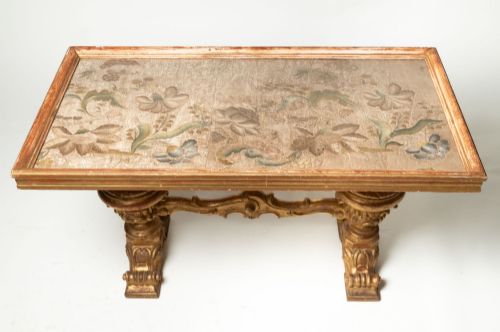
A carved giltwood accent table encompasses a variety of forms designed to sit beside seating or against walls, including side tables, console tables, and occasional tables. These pieces draw on historical aesthetic movements such as Louis XVI, Italian Baroque, and Regency styles.
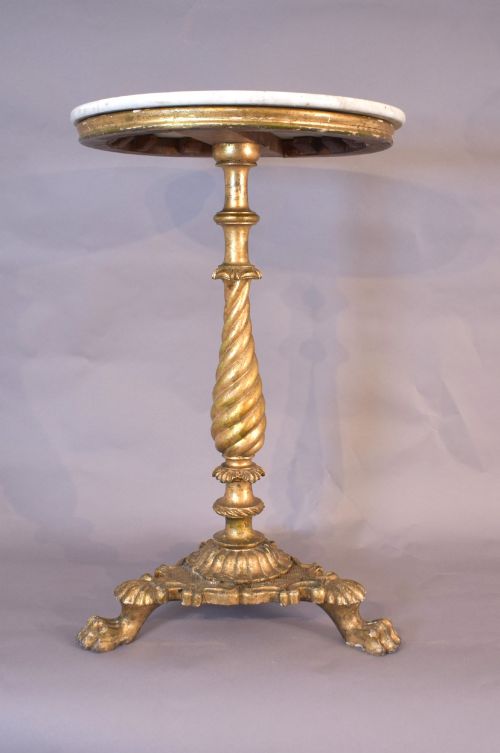
The selection ranges from tripod tables and circular centre tables to marble-topped consoles featuring decorative motifs like dolphins or swans. Pieces originate primarily from nineteenth-century workshops alongside eighteenth-century examples and early twentieth-century revivals.
Buyers will encounter both compact occasional pieces and taller pedestals or plant stands. The integration of marble tops with gilded wood is a common characteristic across the selection.
Materials and construction methods
Makers utilised timber substrates such as lime wood, mahogany, and general wood frames as the structural base for detailed hand-carving. Gesso was frequently applied over the carved wood to create a smooth preparatory layer for subsequent gilding.
Gold leaf or applied paint finishes coat the exterior surfaces to deliver the characteristic reflective metallic appearance. Inset marble slabs are fitted to the tops of many tables, while brass components and fabric elements appear in specific designs.
Carved Giltwood Accent Table Retail Price Guide 2026
Typical asking prices for carved giltwood accent table among the pieces listed under this phrase on Sellingantiques today, from the lower quarter to the upper quarter. They describe what is for sale here now, not the wider market.
Listings feature periods spanning from the eighteenth century through to early twentieth-century revivals.
Assessing quality in carved giltwood
The depth, crispness, and definition of the hand-carved ornamentation separate superior examples from simpler production. Skilled carving displays sharp undercutting and fluid lines in motifs like foliage, scrolls, or animal figures.
The application and preservation of the gold leaf and underlying gesso influence the visual character of the surface. Original gilding that has aged with balanced patination holds distinct appeal compared to unsympathetic later re-gilding.
The Carved Giltwood Accent Table Glossary
- Giltwood
- Wood that has been coated with gold leaf or gold dust. This finish gives the furniture its bright, reflective surface.
- Gesso
- A plaster-like mixture applied to wood frames as a base for gilding. It provides a smooth surface for detailed carving work.
- Console table
- A table designed to be fixed against a wall, often supported by ornate brackets or legs. These frequently feature heavy carving and marble tops.
- Tripod table
- A small freestanding table supported by three legs. They are commonly round and used as occasional or side tables.
- Louis XVI style
- A neoclassical design aesthetic characterised by straight lines, symmetry, and classical motifs. It influences many nineteenth and twentieth-century tables.
Carved Giltwood Accent Table: Frequently Asked Questions
Where should I place a giltwood table?
These tables suit hallways, drawing rooms, or as bedside surfaces where their reflective finish catches light.
They function well against plain walls to let the intricate carving stand out without visual clutter.
How do I clean a giltwood surface?
Dust the carved areas gently with a soft, dry brush to prevent dirt accumulation in the crevices.
Avoid liquid cleaners or polishes, which can strip or damage the delicate gold leaf layer.
Are marble tops original to these tables?
Many period side and console tables were constructed specifically to hold fitted marble slabs.
Inspect the seating edge of the stone and the supporting frame to ensure the top corresponds to the period of the base.
How do I date a giltwood table?
Examine the construction joints, tool marks on the timber, and the composition of the gesso beneath the gold leaf.
Stylistic cues like Regency proportions or Baroque carving depth also point toward specific manufacturing eras.