
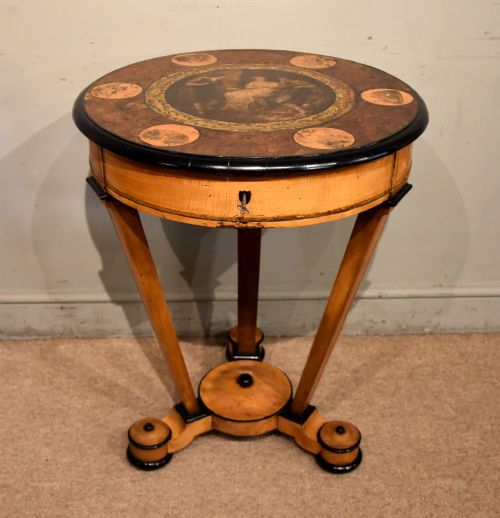
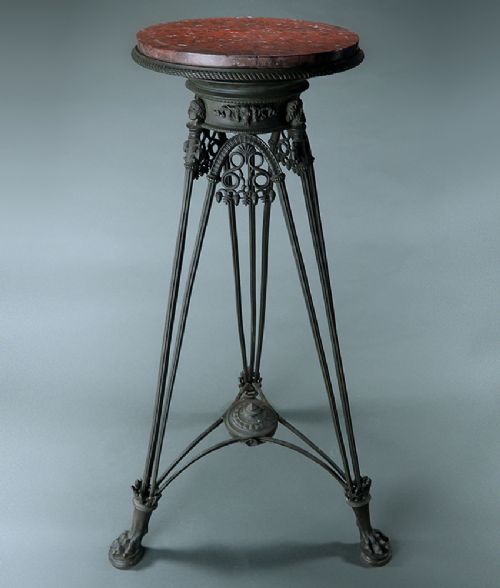
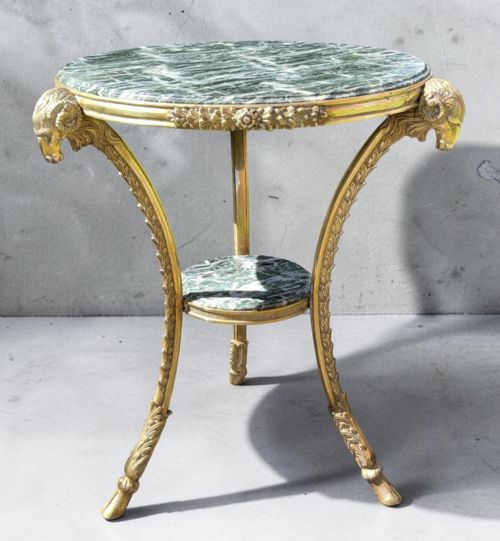


Neoclassical Tripod Table
These neoclassical tripod table pieces bring architectural proportion and classical motifs into rooms through bronze, marble, and mahogany forms.
Neoclassical Tripod Table
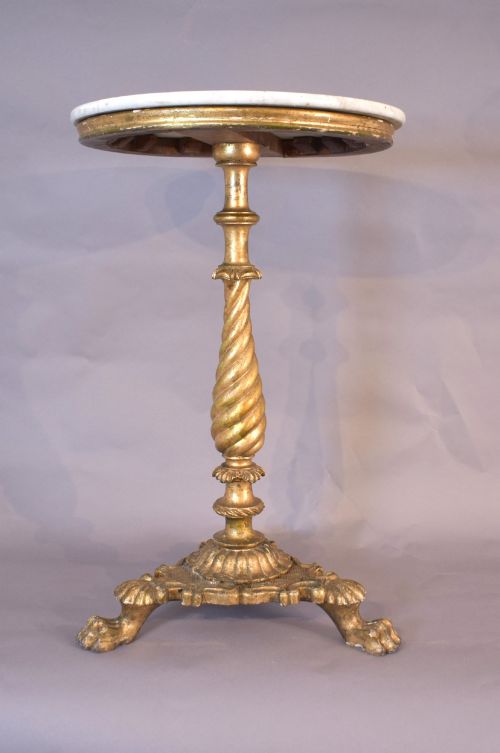
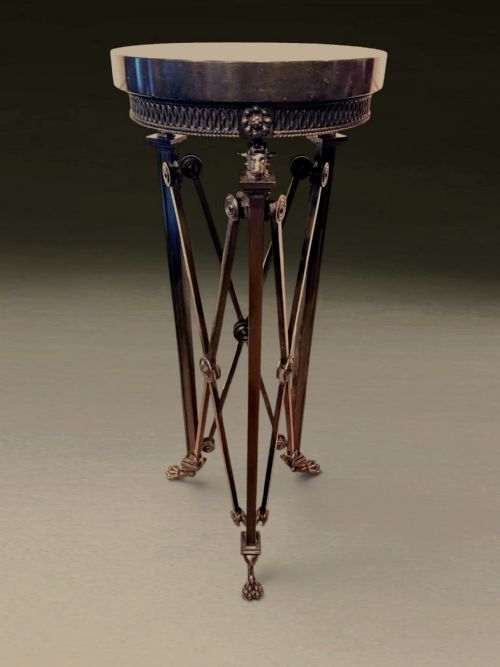
A neoclassical tripod table combines three-legged support with classical architectural detailing, appearing on this page in forms such as guéridons, side tables, and occasional tables. Buyers examining these pieces encounter works spanning the nineteenth century, including specific Regency examples and dated items from eighteen-sixty, eighteen-eighty, and eighteen-ninety.
The objects take diverse shapes, ranging from marble-topped guéridons and mahogany dressing centre tables to specialised stands and table lamps utilising classical motifs. French Empire and French Neoclassical styles dominate alongside Biedermeier, Etruscan Revival, and French Chateau aesthetics.
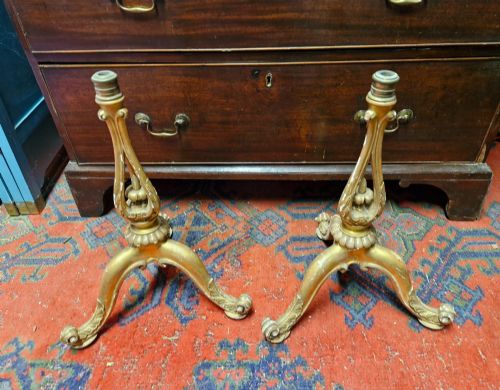
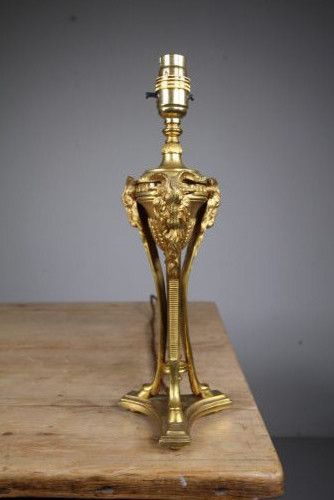
Support structures frequently incorporate specific sculptural elements like rams heads, swans, and cast brass mounts, linking domestic furniture to Greco-Roman design traditions. These variations provide distinct silhouettes while maintaining the fundamental three-legged format characteristic of the category.
Materials and construction methods
Construction relies heavily on timber framing paired with decorative metals, utilising mahogany, satinwood, and ebonised wood alongside marble and alabaster for tabletops. Gilt bronze, ormolu, brass, and copper provide structural mounts and decorative detailing across nineteenth-century examples.
Metalworking techniques involve casting bronze and brass to produce intricate motifs such as rams heads, swans, and laurel wreaths, which are then finished with parcel-gilding or ormolu. Woodworking methods shape the supporting columns and three-legged bases, integrating stone tops through precise fitted joinery.
Listings feature nineteenth-century items spanning Regency, French Empire, and Etruscan Revival styles, constructed from mahogany, marble, and cast brass.
Quality variations in design and execution
The refinement of cast metal mounts, such as ormolu rams heads and bronze swan details, separates standard productions from works of superior execution. Sharpness in chased bronze and the weight of cast brass components indicate the level of craftsmanship invested in the metal elements.
Material selection for the primary surfaces and structural timbers dictates the piece's standing, with figured mahogany, dense marble, and matched satinwood elevating the physical presence. The integration between stone tops and wooden or metal bases shows whether proportion and stability were carefully resolved during manufacture.
The Neoclassical Tripod Table Glossary
- Guéridon
- A small circular table on a central pillar or three legs, frequently topped with marble and ornamented with classical mounts. Originating in seventeenth-century France, these forms remained popular through the nineteenth century.
- Ormolu
- Gilded bronze used for decorative mounts and hardware on furniture and lighting. The technique involves applying a mercury-gold amalgam to cast bronze before heating.
- Biedermeier
- A Central European style dating from the nineteenth century emphasising utilitarian comfort and clean lines over excessive ornamentation. Woods used are often domestic species finished to highlight natural grain.
- Etruscan Revival
- A nineteenth-century design movement drawing inspiration from ancient Greek and Etruscan artefacts. Pieces incorporate archaeological motifs and classical proportions.
- Regency
- An English period spanning the early nineteenth century defined by classical revival architecture and furniture forms influenced by ancient Rome and Greece.
Neoclassical Tripod Table: Frequently Asked Questions
What rooms suit a neoclassical tripod table?
These tables adapt well to sitting rooms, hallways, and studies where a compact footprint is required alongside architectural character.
Their classical proportions allow them to function as side surfaces or display pedestals without dominating the floor space.
How do I identify French Empire pieces?
French Empire pieces typically employ dark mahogany timbers contrasted with gilt bronze mounts, featuring motifs like swans, laurels, and rams heads.
Strict symmetry and references to classical antiquity guide the overall design of these nineteenth-century items.
What is the difference between a guéridon and an occasional table?
A guéridon specifically denotes a round table supported by a central column or three distinct legs, frequently paired with a stone top.
Occasional tables encompass a broader range of rectangular or multi-form surfaces designed for flexible placement within a room.
How should marble-topped tables be maintained?
Marble surfaces require gentle cleaning with neutral soap and water to protect the polished stone from acidic liquids and staining.
Avoiding harsh abrasives preserves the historical finish of nineteenth-century tabletops.
Are these tables sturdy enough for daily use?
The three-legged tripod construction provides a stable footprint on level flooring, though the delicate nature of cast bronze mounts warrants careful placement.
Regular checks of the joints ensure the structural integrity remains sound during everyday placement of lamps or decorative objects.