







Giltwood Torchere Stand
A giltwood torchere stand brings height and gilded theatre to a room, holding a light or figure aloft.
Giltwood Torchere Stand
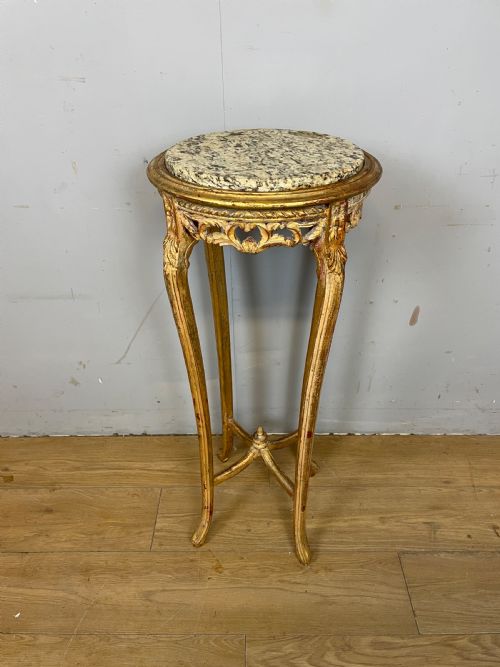
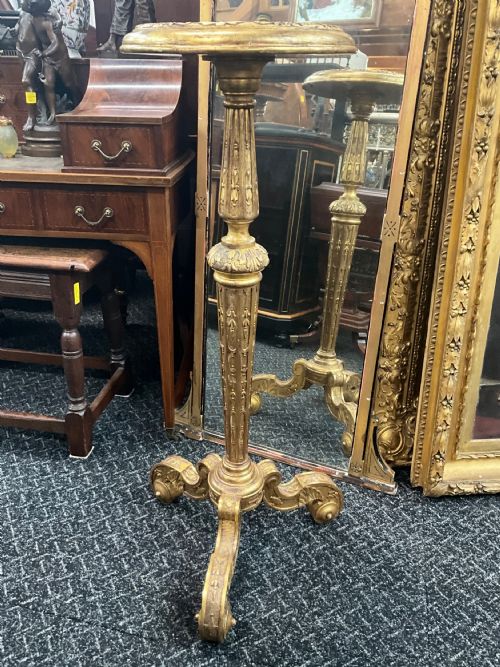
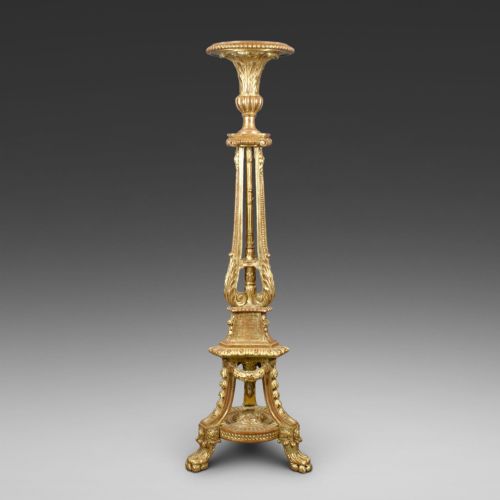
A giltwood torchere stand is a tall, slender pedestal designed originally to support a candle, light or decorative figure above the floor. You will encounter forms ranging from simple carved shafts to elaborate Venetian figures and triform pedestals.
The pieces on this page span several centuries, with examples originating from the eighteenth century through to the Edwardian period and the early twentieth century. Styles vary from Italian and Venetian Baroque to French Neoclassical and Regency designs.
Many function as plant stands, occasional tables or lamp holders alongside their traditional role as torchaires. Marble tops appear on certain Edwardian and nineteenth-century variants, adding a practical surface to the decorative base.
How they were made
Carved wood forms the structural core of these stands, overlaid with gesso to create a smooth, responsive surface for gilding. Artisans applied thin sheets of gold leaf to the prepared ground, often burnishing the metal to a high shine.
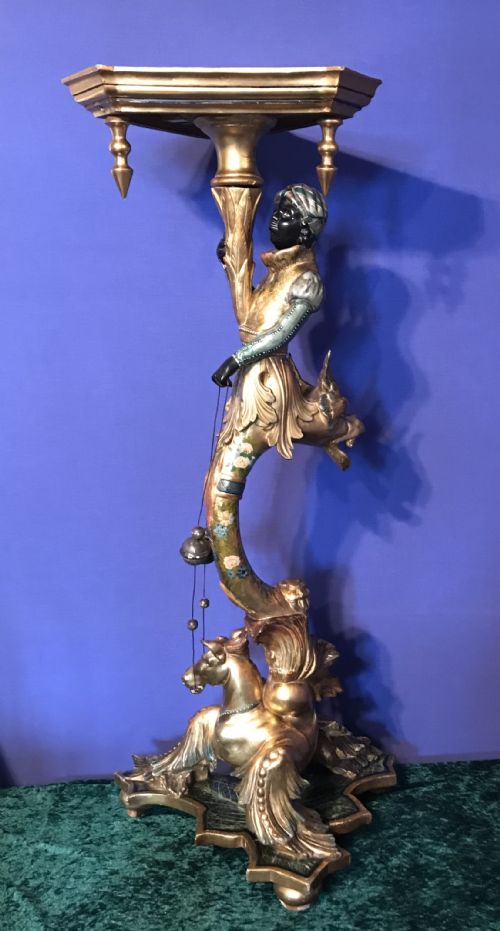
Polychrome paint and applied pigments frequently appear alongside the gold leaf, particularly on Venetian figures and candle holders. This combination of gilded surfaces and painted detail creates the rich chromatic depth characteristic of these objects.
Several listings include Venetian figures and blackamoor tables, bringing painted human presence directly into the furniture.
What varies in quality
The crispness of the carved wood separates finer stands from simpler production, particularly in the rendering of acanthus leaves, drapery or figurative elements. Deep, undercut carving requires skilled handwork rather than routine mechanical shaping.
The integrity of the giltwood and gesso surface dictates much of the visual success of the piece. Superior examples retain their original gold leaf and polychrome decoration with minimal disturbance, showing natural ageing rather than heavy modern repainting.
The Giltwood Torchere Stand Glossary
- Giltwood
- Wood that has been coated with gold leaf over a prepared gesso ground. This finish provides the characteristic metallic brilliance seen on period stands.
- Torchere
- A tall stand or pedestal originally built to carry a torch or candle lamp. The form later evolved to support statues, plants and occasional items.
- Gesso
- A mixture of binder and chalk used to coat carved wood before gilding. It fills the grain and allows artisans to carve fine details into the surface.
- Triform
- Having a triangular base or three-sided plan. Eighteenth-century pedestals frequently utilise this configuration for structural stability.
- Polychrome
- Decorated in multiple colours. Venetian figures and certain candle holders use this technique alongside gilding to create lifelike ornamentation.
Giltwood Torchere Stand: Frequently Asked Questions
Where should I place a torchere?
These tall stands suit corners, empty wall spaces or flanking larger pieces of furniture where height is needed to balance the room.
They work well carrying a lamp, a bronze figure or a trailing plant, drawing the eye upward.
How do I clean giltwood?
Dust the surface gently with a soft, dry brush or feather duster.
Avoid using water, chemical sprays or abrasive cloths, as moisture and friction will damage the fragile gold leaf.
Are these stands sturdy enough for daily use?
Most are designed to support steady decorative items like lamps, statues or small plants rather than heavy daily weight.
Place them where they will not be knocked by passing traffic, as their slender height makes them vulnerable to tipping.
How can I tell an eighteenth-century stand from a later copy?
Examine the hand-carving under the gilding for the tool marks and irregularities typical of period craftsmanship.
Later revival pieces often show more uniform machine shaping beneath the gesso and different signs of ageing in the wood.