





Antique Blackamoor Pedestal
An antique blackamoor pedestal brings dramatic Venetian presence and sculptural utility to a room through carved wood and polychrome decoration.
Antique Blackamoor Pedestal
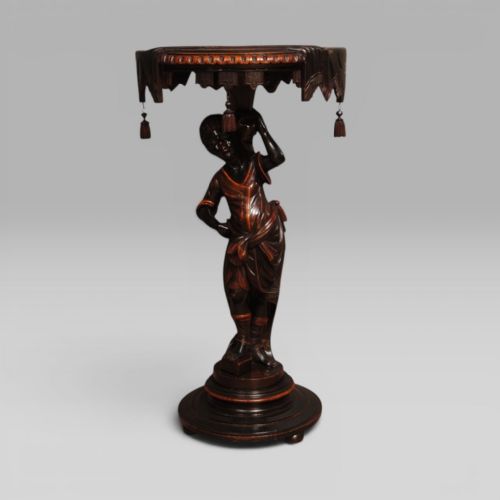
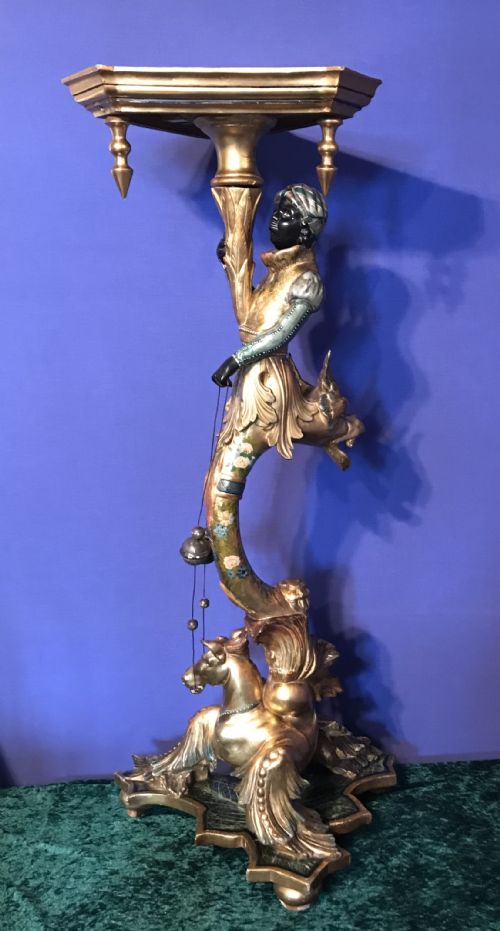
An antique blackamoor pedestal serves as a decorative stand, torchere, or small table within a domestic interior. These pieces function primarily as display surfaces for plants, lamps, or sculpture while holding a sculptural human figure.
The versions met most frequently on this page belong to the nineteenth century, often associated with Venetian workshops. They take the form of figures on stands, torchere stands, and small side tables.
Makers drew heavily upon Venetian Baroque and Venetian Rococo styles, shaping walnut and other carved wood into elaborate decorative objects. The resulting forms combine functional furniture with figural sculpture.
How they were made
Carved wood forms the structural core of these pieces, utilising walnut and other timber subjected to intricate hand-carving. Artisans shaped the wood into detailed figures of gondoliers or exotic attendants integrated into pedestals and tables.
Polychrome paint and gold leaf provide the characteristic surface decoration seen across these stands. Original gilt polychrome finishes layer pigments over metallic leaf to create rich, light-catching textures.
Listings span the nineteenth century, featuring materials such as carved wood, polychrome paint, gold leaf, and walnut in Venetian styles.
What varies in quality
The preservation of original surface finishes dictates the secondary distinction between average and superior pieces. Surviving original polychrome and gold leaf retain a depth of colour and historical integrity that later repainting obscures.
The Antique Blackamoor Pedestal Glossary
- Torchere
- A tall stand or ornamental candlestick designed to hold a light source. In this context, it refers to pedestals built to carry lamps or display objects at elevated heights.
- Polychrome
- Decorated in multiple colours. This technique involves applying various pigments to the carved wooden surface, often combined with metallic leaf.
- Giltwood
- Wood that has been treated with a thin layer of gold leaf or gold paint. It provides a reflective surface that highlights carved details.
- Venetian Baroque
- An ornate artistic style originating in Venice, characterised by dramatic movement, rich ornamentation, and theatrical composition. It heavily influences the posture and dress of these figures.
- Walnut
- A dense, dark hardwood favored for carving intricate furniture and decorative objects. Its stability allows for sharp, enduring sculptural detail.
Antique Blackamoor Pedestal: Frequently Asked Questions
What is a blackamoor pedestal?
A blackamoor pedestal is a nineteenth-century decorative stand or torchere featuring a carved and painted human figure. These objects combine figural sculpture with a functional surface for lamps, plants, or display.
Originating largely from Venetian workshops, they employ carved wood finished with polychrome paint and gold leaf. Their designs draw on Venetian Baroque and Rococo styles to create dramatic interior furnishings.
How were these stands used originally?
These pieces served primarily as decorative torchere stands, plant stands, or small side tables in nineteenth-century interiors. They provided elevated surfaces for lighting and decorative objects while acting as striking sculptural focal points.
Their placement in grand reception rooms or hallways allowed them to display lamps and decorative arts. The combination of furniture and figural art fulfilled both practical and ornamental roles in period homes.
How do I identify a nineteenth-century piece?
Nineteenth-century pieces show characteristic hand-carving in walnut and other traditional timbers, coupled with period finishing techniques. Look for the application of original polychrome paint and gold leaf over carved wooden foundations.
Stylistic markers often include Venetian Baroque Revival or Rococo design motifs, such as gondolier attire and elaborate drapery. The integration of the figure with the structural pedestal defines the typical manufacturing approach of this era.
How do I care for original polychrome?
Caring for original polychrome and gilt surfaces requires stable indoor humidity and protection from direct sunlight. Dusting should be done gently with a dry, soft brush to avoid disturbing the historic paint layers.
Avoid liquid cleaners, chemical polishes, or abrasive cloths that can strip or soften the delicate old finishes. Maintaining a consistent environment prevents the carved wood from expanding and contracting beneath the paint.