







Carved Gilt Display Column
A carved gilt display column lifts your best object into the room, catching the light and framing the silhouette with gilded confidence.
Carved Gilt Display Column
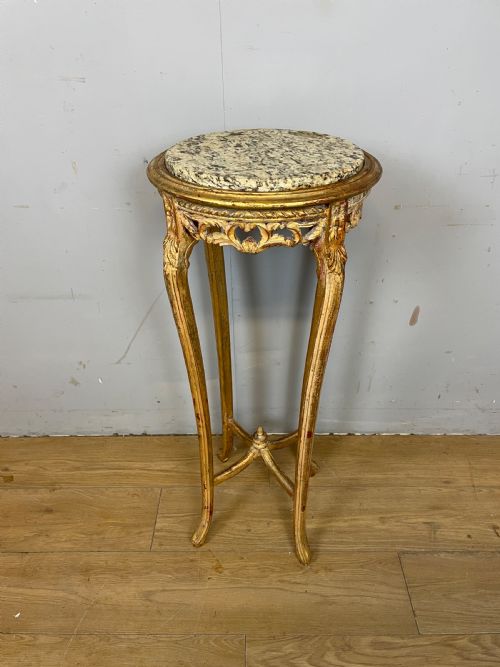
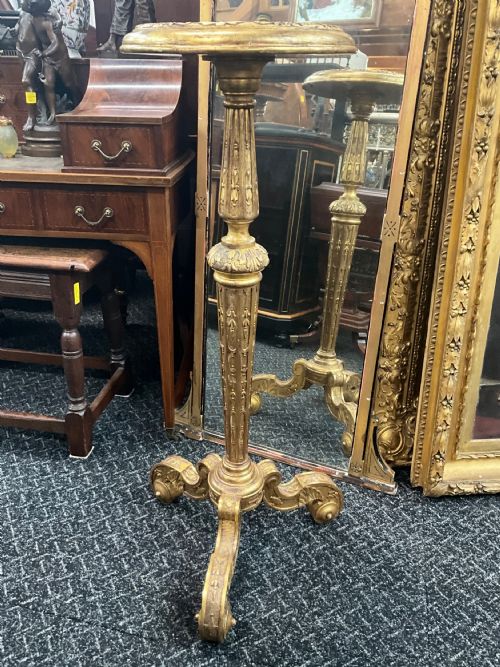
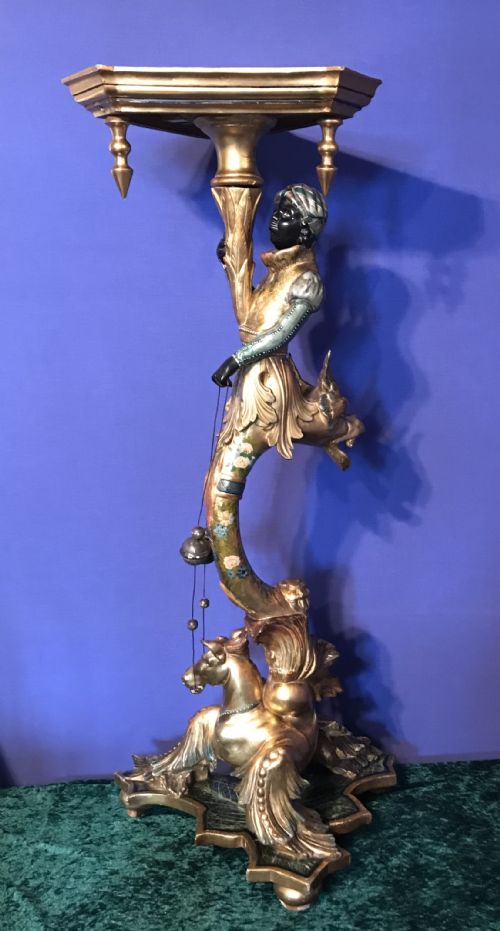
When you search for a carved gilt display column, you are looking at tall stands and pedestals designed to elevate urns, figures and decorative objects. These forms appear primarily in nineteenth century and Edwardian pieces, drawing on Italian Rococo, French Neoclassical and Baroque Revival styles.
The objects on this page take various shapes, from classical architectural columns to slender torcheres and plant stands. Walnut, kingwood and carved wood provide the structural core, whilst marble tops frequently supply a sturdy and cool surface for display.
How they were made
Makers shaped these columns from wood such as walnut and carved wood, applying gesso to build up intricate relief decoration before adding gold leaf and paint. Ormolu mounts and marble tops frequently complete the construction, bringing contrasting textures to the gilded surfaces.
Giltwood and gesso techniques demand patient handwork, layering thin metal leaf over prepared grounds to achieve a brilliant reflective finish. The combination of carved wooden elements with stone inserts requires precise joinery to support heavy items securely.
Several columns double as planters, proving that Victorian botanists demanded their ferns be elevated on gilded timber.
What varies in quality
Quality rests in the crispness of the carved detail and the depth of the gilding, where confident hand carving separates spirited Italian and French work from simpler adaptations. The fidelity to historical styles, such as Louis XVI or French Rococo, dictates the sophistication of the silhouette.
The selection of materials also marks the tier of a piece, with genuine marble tops and heavy ormolu mounts indicating higher ambition than painted wood alone. Structural integrity within the tall column form ensures that the stand remains stable under weight.
The Carved Gilt Display Column Glossary
- Torchere
- A tall stand or pedestal originally intended to hold a candle or light. These slender columns now serve to display decorative objects.
- Gesso
- A plaster mixture applied to wood surfaces as a base for gilding or painting. It provides a smooth ground for intricate relief carving.
- Ormolu
- Gilded bronze or brass mounts applied to furniture and decorative objects. This technique adds metallic highlights and ornamental detail.
- Neoclassical
- A style drawing on classical antiquity with symmetrical forms and restrained ornamentation. It appears frequently across nineteenth century French and Italian pieces.
- Kingwood
- A dense, richly figured timber often used in veneers. It brings dark contrasting grain to fine display stands.
Carved Gilt Display Column: Frequently Asked Questions
What goes on a display column?
These tall stands support heavy decorative objects such as bronze figures, ceramic urns or trailing plants. They place sculptural pieces at eye level within a room.
Heavier marble tops provide a stable and resilient platform for stone or metal items. Lighter plant stands suit trailing foliage that softens the vertical timber line.
How do I spot a torchere?
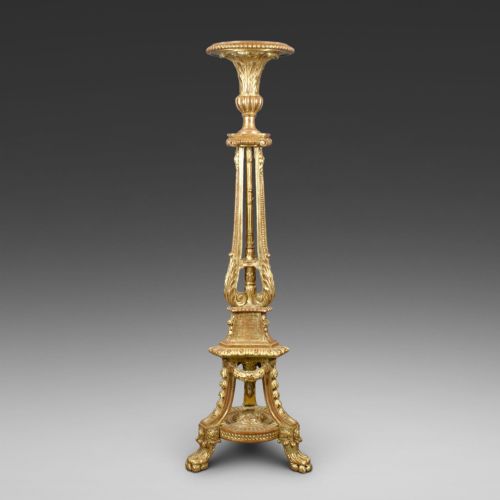
A torchere is characterised by its exceptionally tall and slender proportions designed to elevate a single light source or ornament. They often feature tripod bases or narrow fluted shafts.
Distinction from standard pedestals lies in this heightened slenderness. Many examples incorporate carved giltwood or gesso decoration true to nineteenth century revival styles.
Where should I place a pedestal?
Columns and pedestals stand effectively in corners, framing doorways or punctuating blank wall spaces. They require enough surrounding clearance to let the silhouette read clearly.
Positioning them away from heavy foot traffic protects the gilded surfaces from accidental knocks. Good natural light will catch the gold leaf and gesso relief details.
How do I date these columns?
Dating relies on combining the stylistic vocabulary, such as Baroque Revival or Edwardian restraint, with the physical signs of age in the wood and gesso. Nineteenth century pieces often show Italian or French workshop traits.
Materials like ormolu mounts and specific timber choices help narrow the period of manufacture. Examining the construction methods underneath reveals the age of the joinery.