






Giltwood Display Pedestal
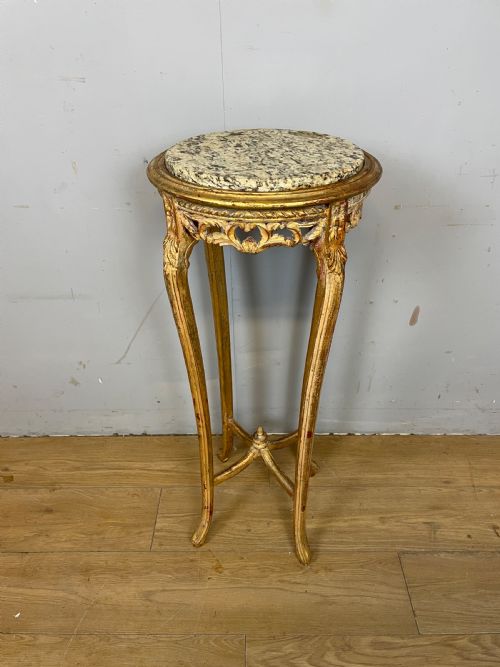
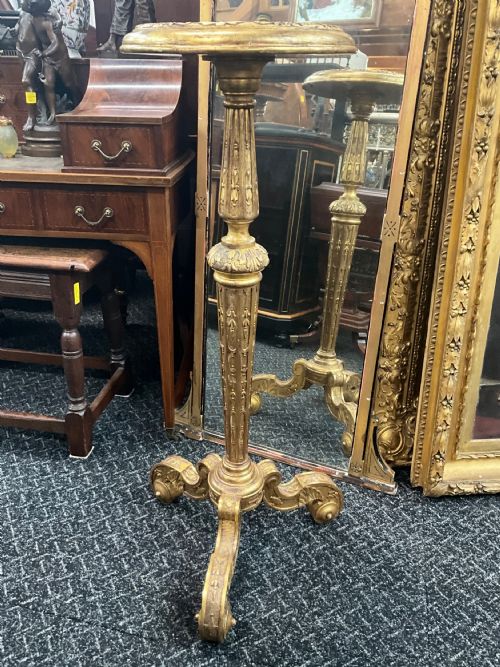
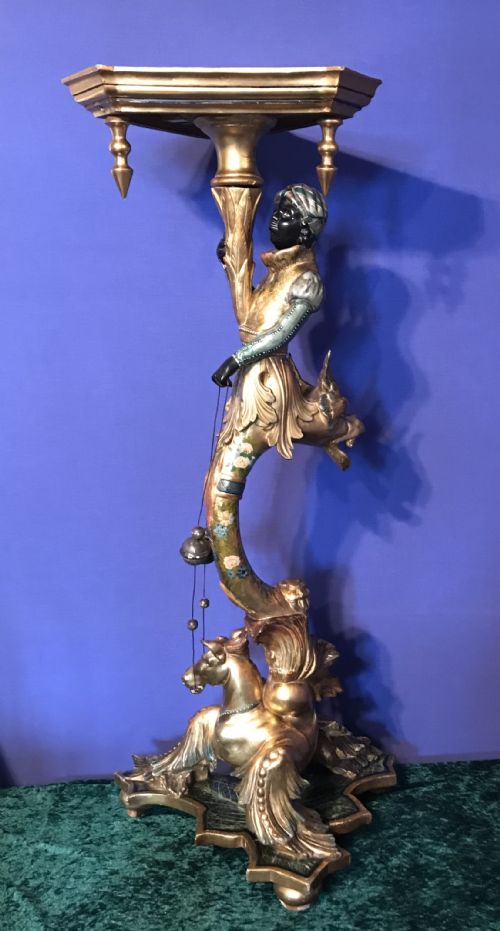
These giltwood display pedestal examples bring carved grandeur and marble tops to interiors, offering an elevated surface for sculpture and urns.
Giltwood Display Pedestal
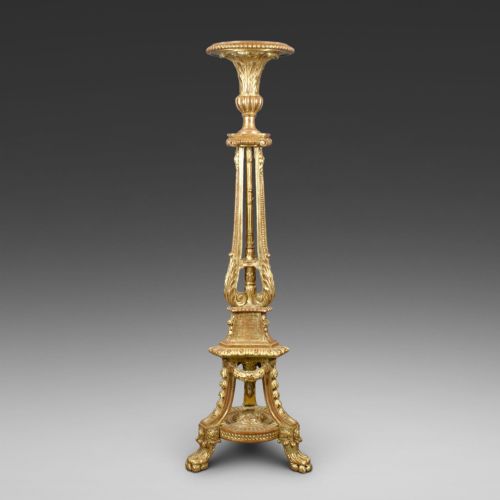
A giltwood display pedestal stands ready to elevate sculpture, plants, or decorative urns within a room. Buyers searching this phrase encounter carved wooden stands shaped as triform pedestals, cylindrical display cabinets, and slender torcheres.
How they were made
Craftsmen shaped these stands from solid wood and applied layers of gesso to build up intricate relief decoration before finishing the surface in gold leaf or paint. Carved details range from scrolling foliage to architectural moulding, reflecting regional workshops across France, Italy, and Britain.
Many of these pedestals incorporate inset marble tops to provide a stable, cool surface for heavy bronze figures and porcelain urns. Structural forms vary from robust cylindrical display cabinets to slender triform supports resting on carved feet.
The selection includes French Chateau, Italian Baroque, and Edwardian design styles.
What varies in quality
The distinction between ordinary and exceptional examples rests upon the depth and crispness of the hand carving within the wood and gesso. Superior pieces reveal sharp, undercut foliage and clean architectural lines that do not lose definition beneath successive layers of gilding.
Quality also shows in the integration of materials, particularly where fitted marble tops sit flush within the carved wooden frame. Early eighteenth-century examples display greater sculptural ambition than later nineteenth-century revival interpretations.
The Giltwood Display Pedestal Glossary
- Giltwood
- Wood coated with gold leaf or a metallic substitute. This finish gives the furniture its characteristic reflective metallic sheen.
- Gesso
- A plaster mixture applied to wood surfaces as a base for carving and gilding. It allows artisans to model fine decorative relief before applying gold leaf.
- Torchere
- A tall stand designed to hold a light source or decorative object. These slender pieces often feature tripod or triform bases.
- Triform
- Having three sides or a triangular plan. This configuration provides steady support for tall pedestals and display stands.
- Neoclassical
- A style drawing on classical Greek and Roman art. It emphasises symmetry, straight lines, and restrained ornamental motifs.
Giltwood Display Pedestal: Frequently Asked Questions
What is a giltwood display pedestal?
A giltwood display pedestal is a tall, gilded stand designed to elevate decorative objects, urns, or sculptures inside a room. These pieces combine carved wooden frames with gold leaf and often feature inset marble tops.
Originating across various European traditions, they function both as furniture and as decorative art. Collectors use them to create distinct focal points within period interiors.
How were torchere stands used?
Torchere stands originally supported candlesticks or oil lamps to illuminate dark corners of a grand room. Over time, their function shifted toward displaying ornamental vases, planters, and sculptural figures.
Their slender profile allowed them to occupy corners or wall spaces without obstructing movement through a room. Today, they serve the same display purpose in domestic settings.
How do I style a pedestal at home?
A pedestal looks best placed in a corner, an entryway, or flanking a fireplace where it can command visual attention. Selecting an object for the top requires considering both the weight capacity and the visual scale of the stand.
Pairing an eighteenth-century stand with classical bronze or porcelain creates a traditional focal point. Placing a modern sculpture on a nineteenth-century base offers a contrasting juxtaposition.
How do I identify eighteenth-century pieces?
Eighteenth-century pedestals typically exhibit hand-carved details integrated directly into the wood rather than heavy reliance on moulded gesso. The proportions tend to follow strict classical orders associated with French Neoclassical or Italian Baroque designs.
Examining the construction joints and the patina of the underlying wood helps distinguish genuine period pieces from later nineteenth-century revivals.