
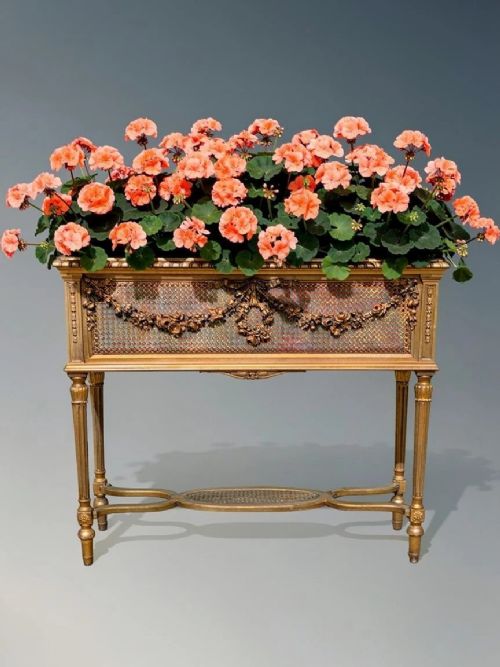
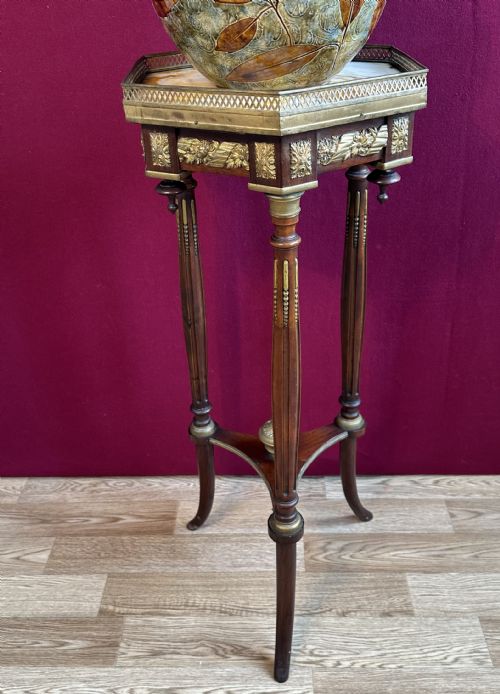


Louis XVI Plant Stand
A louis xvi plant stand brings classical French symmetry and refined floral display into a room through marble, ormolu, and fine timber.
Louis XVI Plant Stand
A louis xvi plant stand combines classical proportion with elevated surfaces designed specifically to display botanical arrangements, jardinières, and sculptural planters. You will encounter these pieces under various designations including pedestals, torchères, and gueridons that share the straight tapered legs and architectural restraint characteristic of the neoclassical taste.
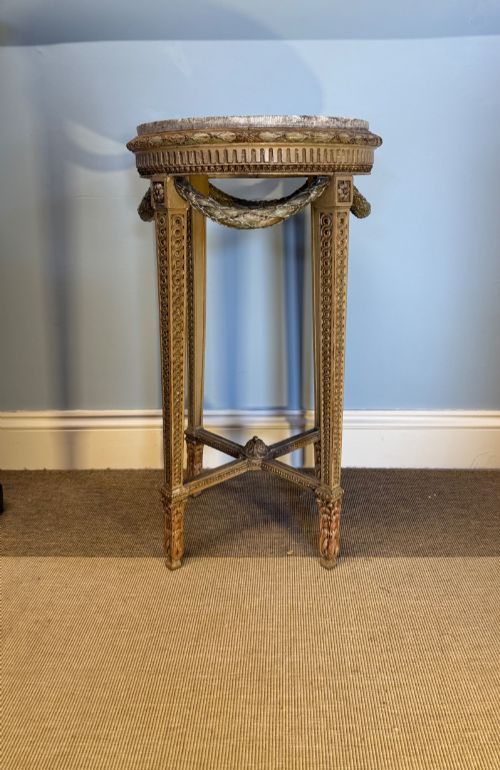
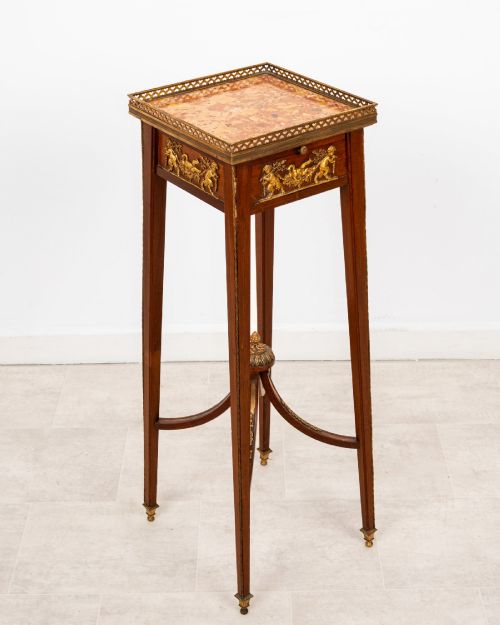
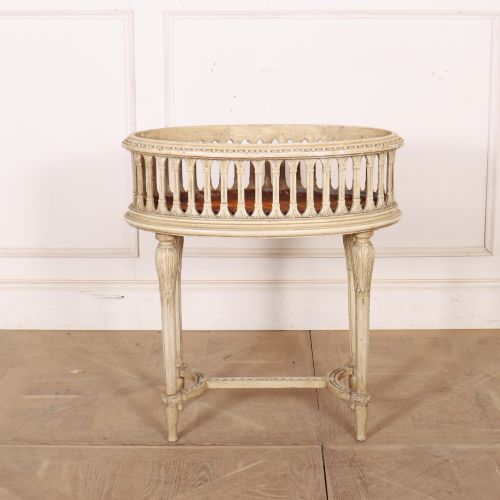
The versions most common on this page date from the nineteenth century and the early twentieth century, reflecting revivals of French court design. They often appear as circular or square tables topped with marble, onyx, or cane inserts, supported by giltwood, mahogany, or walnut frames.
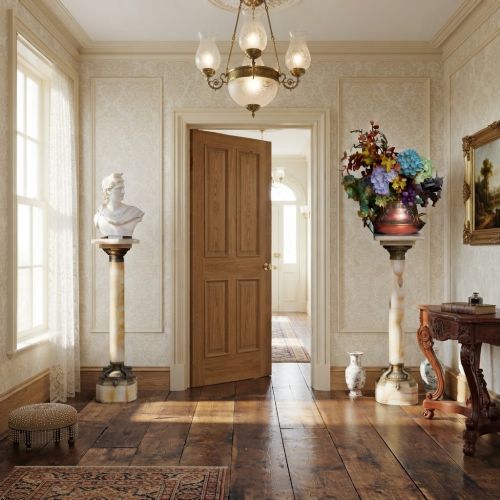
Many examples incorporate bronze or ormolu mounts, collars, and floral mouldings that echo the architectural vocabulary of eighteenth-century France. Whether standing as a tall torchere or a low occasional table, each piece serves to lift foliage and decorative pots into the light.
Materials and construction
Cabinetmakers built these stands using sturdy foundational timbers such as mahogany, walnut, satinwood, and kingwood, frequently applying parquetry veneers to create geometric surface patterns. Ormolu mounts in cast bronze were then chased and fire-gilt before being fitted to corners, collars, and aprons.
Tops required dense stones to support heavy potted plants, leading makers to employ inset slabs of white and rouge marble or polished onyx. Giltwood and painted finishes added further decorative dimension, while specialist pieces utilised cane work for lighter basketry planters.
Listings demonstrate that makers frequently substituted mahogany and walnut with exotic veneers like kingwood and satinwood for decorative contrast.
Distinguishing quality
The standard of a louis xvi plant stand rests upon the crispness of its bronze or ormolu mounts and the precision of the timber parquetry. Superior workshops employed master metalworkers whose hand-chased brass collars and floral mouldings display sharp relief and deep, warm gilding.
Heavier stone tops fitted flush into rebated wooden frames indicate careful joinery, whereas inferior pieces rely on loose surface placement. The integrity of the structural carcass, whether solid mahogany or figured walnut, dictates how gracefully the stand ages under the weight of damp soil and pottery.
The Louis XVI Plant Stand Glossary
- Ormolu
- Gilt bronze mounts applied to furniture for decorative accent. This technique involves fusing ground gold to a bronze base through mercury amalgamation.
- Gueridon
- A small circular table on a central pillar or multiple legs. These versatile French tables frequently function as plant stands or torchères.
- Torchere
- A tall ornamental stand designed to hold a light or a floral display. They often feature slender fluted columns and carved giltwood surfaces.
- Jardiniere
- An ornamental pot or stand for holding plants and flowers. In nineteenth-century French pieces, these often incorporate metal liners to protect the surrounding timber.
- Parquetry
- Geometric wood mosaic work used for veneering tabletops. Makers arranged contrasting timbers like kingwood and mahogany in precise patterns.
Louis XVI Plant Stand: Frequently Asked Questions
What is a louis xvi plant stand?
A louis xvi plant stand is a decorative French-style piece designed to elevate pots and urns. These stands utilise classical columns, marble tops, and ormolu mounts.
Originating in revival periods of the nineteenth century, they adapt eighteenth-century architectural motifs for domestic botanical display.
How do I use one at home?
These stands suit corners, window alcoves, or hallways where greenery benefits from elevation. They provide a sturdy platform for heavy ceramic pots and trailing plants.
Pairing a marble-topped stand with classical or contemporary foliage creates a striking focal point in a reception room.
How do I date these pieces?
Dating relies on timber choice, construction methods, and the style of the metal mounts. Nineteenth-century revival pieces often exhibit machine-cut screws alongside hand-cut joinery.
Comparing the decorative motifs against known periods helps separate mid-nineteenth-century interpretations from later twentieth-century reproductions.
Are marble tops original?
Original marble and onyx tops are generally heavy, thick slabs fitted directly into rebated wooden channels. Their edges are hand-polished to match the profile of the frame.
Replacements often show modern cutting marks underneath or fail to sit flush with the surrounding ormolu or timber rim.