




Ornate Brass Pedestal Table
These ornate brass pedestal table examples combine metalwork and stone or wood to anchor a room with period weight.
Ornate Brass Pedestal Table
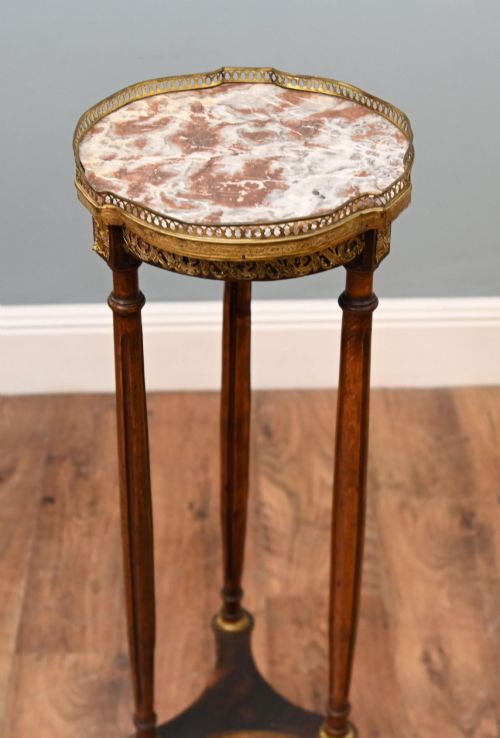
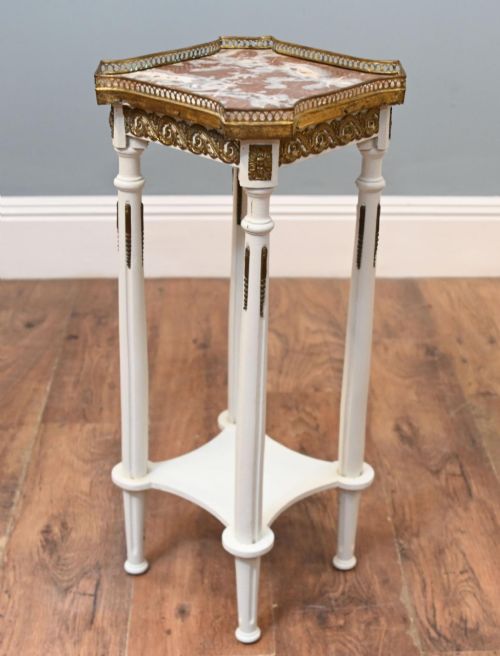
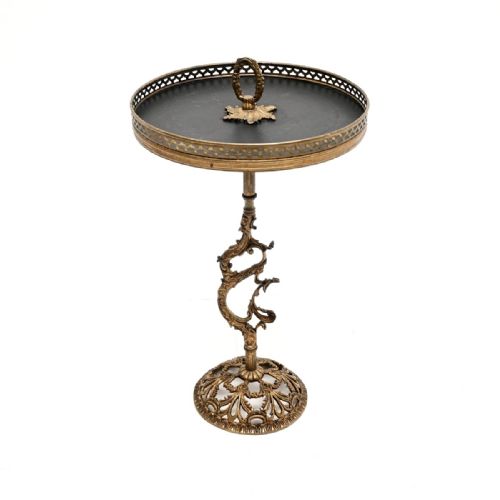
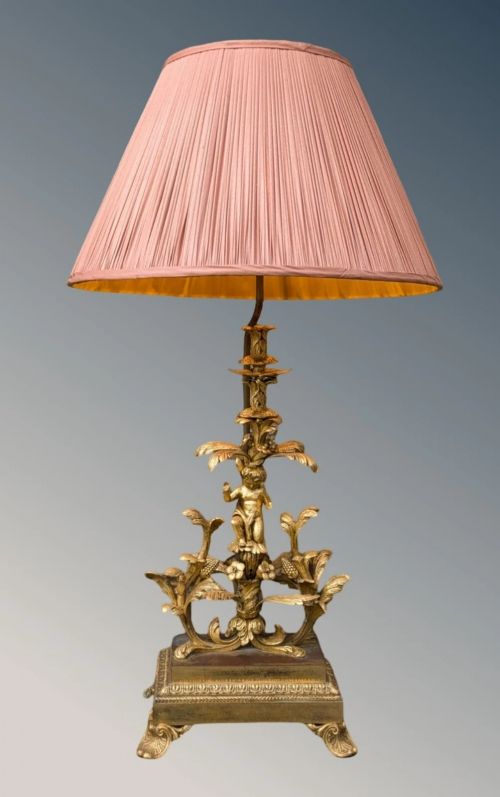
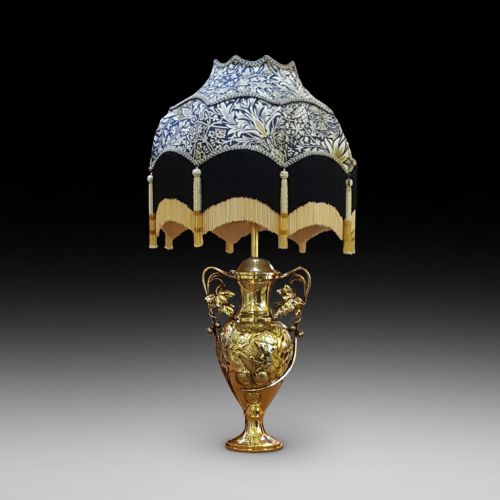
An ornate brass pedestal table brings decorative metalwork into a domestic space, typically taking the form of a small stand or lamp table. Buyers searching for an ornate brass pedestal table will encounter pieces drawing on Victorian and French Rococo Revival or Louis XVI styles.
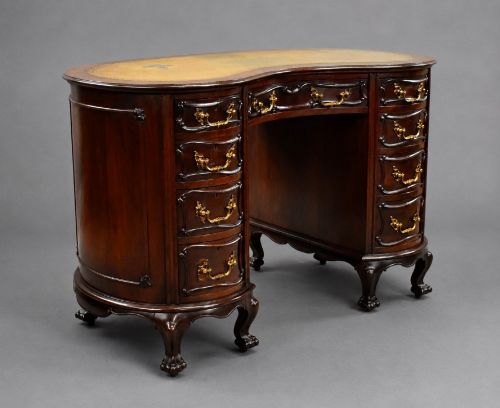
The selection on this page ranges across the nineteenth century into the 1930s and 1940s, including related forms such as side tables, desks, and plant stands. Mahogany, marble, leather, and onyx appear alongside the core brass framework to create varied display surfaces.
How they were made
Construction relies heavily on brass and ormolu framing paired with inset materials like marble and onyx to form solid display tops. Workshops utilised ebonised wood, mahogany, and painted wood structures to support cast and chiseled metal mounts.
Stylistic details draw directly from French Chateau, Belle Epoque, and Rococo traditions, executed through metal casting, inlay work, and gilding.
Ornate Brass Pedestal Table Retail Price Guide 2026
Typical asking prices for ornate brass pedestal table among the pieces listed under this phrase on Sellingantiques today, from the lower quarter to the upper quarter. They describe what is for sale here now, not the wider market.
Listings span from the nineteenth century through the 1940s, featuring materials like onyx, marble, and ormolu.
What varies in quality
Quality rests upon the crispness of the cast brass or chiseled ormolu mounts and how securely they integrate with the primary wood or stone structure. Pieces featuring heavy marble tops, fine leather inserts, or complex Boulle inlay demonstrate superior workshop execution compared to simpler utility stands.
The depth of period character also dictates value, with well-preserved French revival styling and integrated onyx tiers showing higher artisanal ambition than basic twentieth-century variants.
The Ornate Brass Pedestal Table Glossary
- Ormolu
- Gilded bronze or brass applied to furniture mounts and decorative objects. This technique creates a rich golden decorative finish characteristic of French revival pieces.
- Boulle
- An elaborate marquetry process using tortoiseshell and brass inlay developed in France. It frequently appears on grand nineteenth-century centre tables.
- Belle Epoque
- A period of French prosperity spanning the late nineteenth and early twentieth centuries. Design from this era embraces ornate and decorative aesthetics.
- Rococo Revival
- A nineteenth-century design movement mimicking the curved, asymmetrical ornamentation of the eighteenth century. It favours natural motifs and elaborate scrolls.
Ornate Brass Pedestal Table: Frequently Asked Questions
How do I date a brass pedestal table?
Dating relies on examining the casting techniques, fastener types, and stylistic vocabulary used in the brass and secondary materials. Nineteenth-century examples often feature heavier hand-chiselling and traditional timber framing, whereas twentieth-century items incorporate simpler tubular brass elements.
Matching the stylistic markers - such as Louis XVI neoclassical lines or exuberant Rococo curves - to documented periods helps narrow down the decade of manufacture.
What materials are paired with brass on these tables?
Makers frequently combined brass and ormolu with natural stone like marble and onyx to create durable, decorative tabletops. Leather inserts, mahogany, ebonised wood, and painted wood also appear as primary structural surfaces.
These mixed-media constructions allowed workshops to balance structural weight with ornate visual appeal.
Are these tables suitable for everyday use?
Most pedestal tables and side tables are built to hold lamps, plants, or small decorative items rather than heavy loads. The inclusion of delicate stone tops or leather surfaces means they require sensible placement away from moisture and heat.
Using coasters and treating the brass frames with care preserves the antique finish during daily living.
What distinguishes French style pieces from Victorian items?
French style pieces on this page typically draw on Louis XVI, Belle Epoque, or Rococo Revival design vocabularies, emphasising gilt bronze, chiseled details, and fine marquetry. Victorian examples lean towards heavier mahogany construction and kidney-shaped forms.
Both traditions intersect in nineteenth-century hybrid pieces that incorporate French decorative techniques onto British furniture forms.