


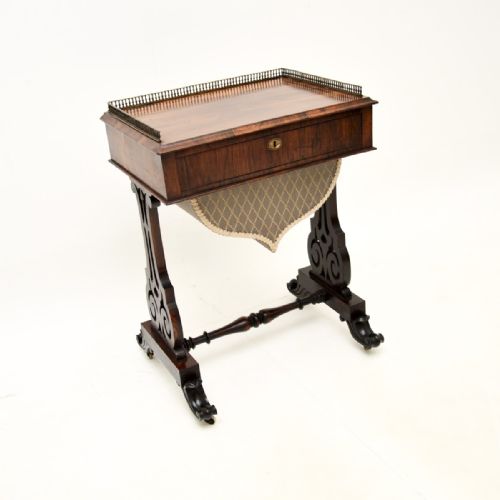

Brass Tray Top Table
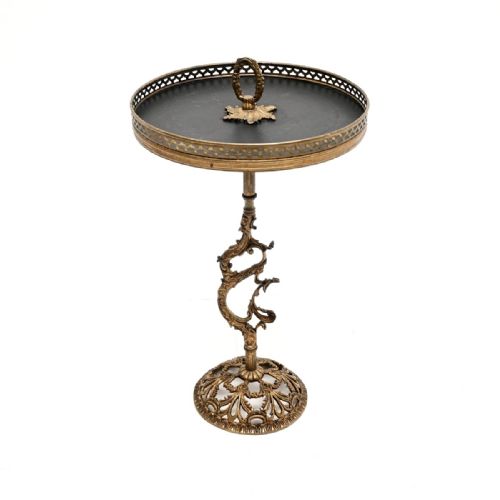
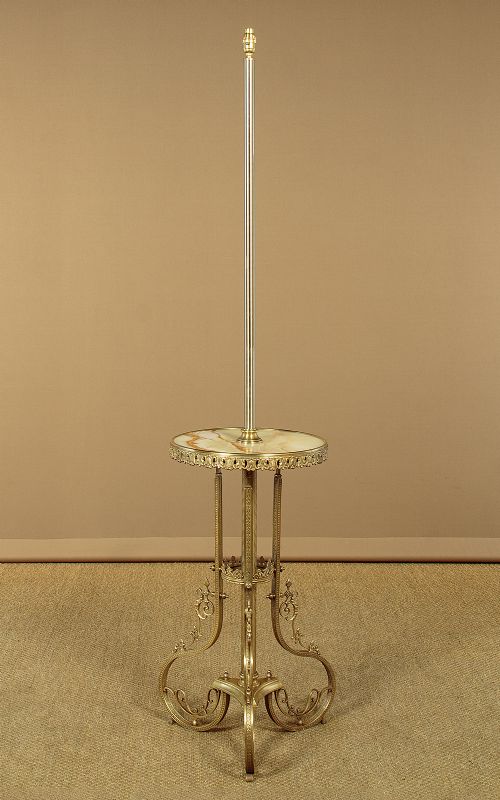
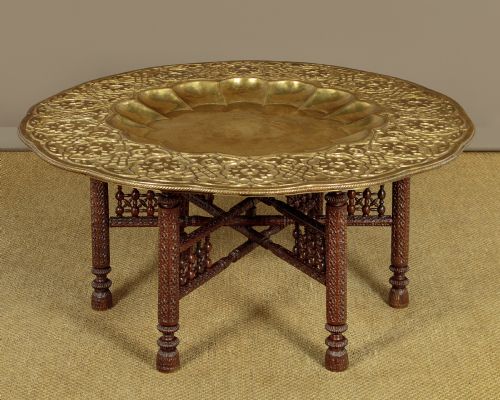
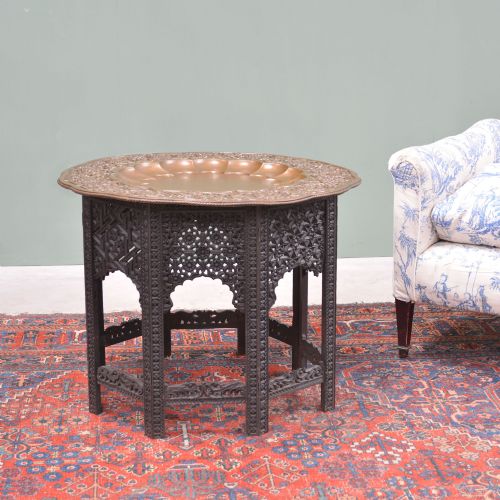
A brass tray top table brings a tactile surface of engraved metal and folding timber into a room.
Brass Tray Top Table
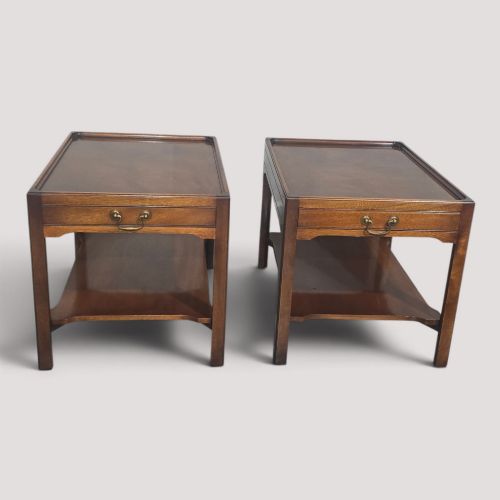
A brass tray top table combines a removable metal tray with a supporting stand, creating a versatile surface for daily use. When searching for a brass tray top table, buyers encounter folding occasional pieces alongside rigid wooden frames.
The selections span from late nineteenth century Anglo-Indian and Middle Eastern examples to Edwardian and Georgian interpretations. Many pieces feature folding stands that allow the entire unit to be stored flat when not in use.
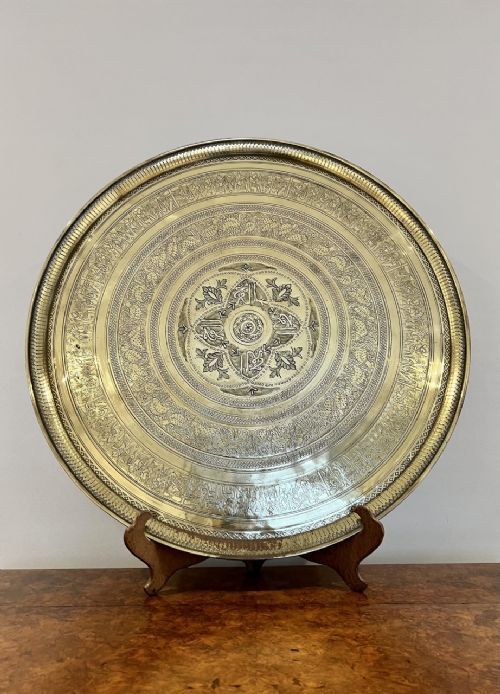
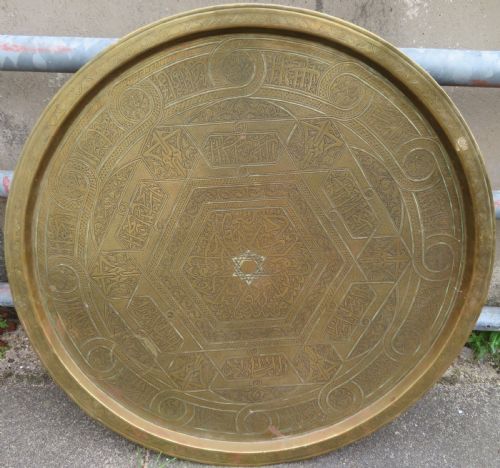
The form appears as coffee tables, side tables, and small centre tables depending on the height of the base. The trays themselves range from plain polished metal to dense surface engraving depicting zodiac symbols, foliage, or figures.
Materials and construction
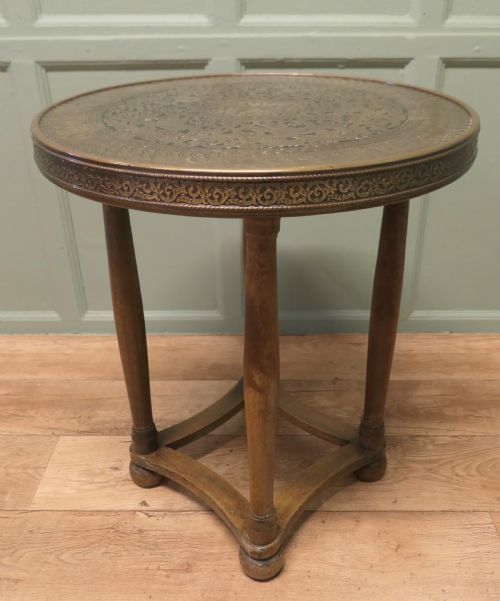
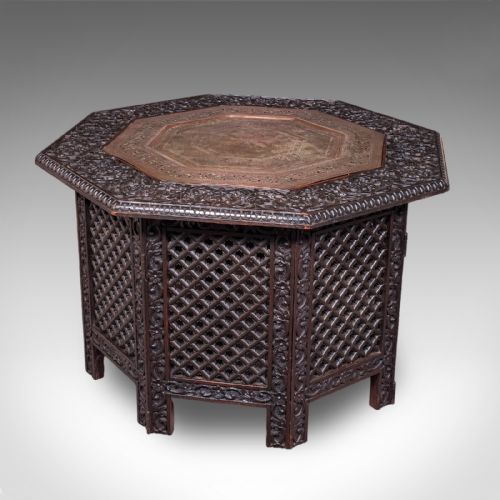
Makers shaped the removable tops from brass, copper, and mixed metals, applying hand-engraving and punchwork directly to the surface. These metal plaques rest upon folding wooden stands or solid frames constructed from mahogany, teak, rosewood, and other hardwoods.
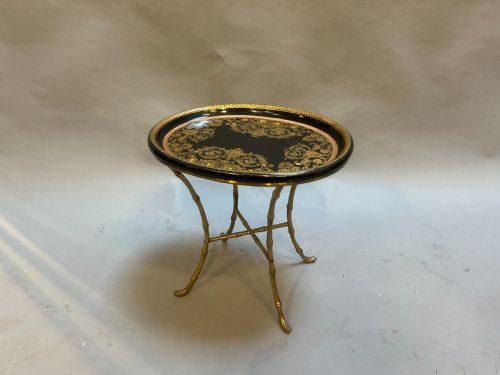
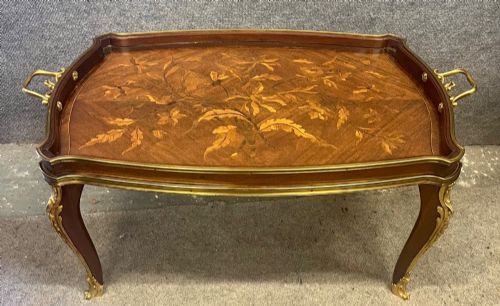
Stands often feature turned wooden legs, inlaid decoration, or intricate pierced carving associated with Hoshiarpur production. Ormolu mounts and lacquer finishes appear on European adaptations of the form.
The inventory spans the Georgian era through the Edwardian period, including 1920s Art Nouveau and Mamluk Revival styles.
Assessing quality
Quality rests upon the crispness of the hand-engraving on the metal plaque and the structural integrity of the timber base. Heavy gauge brass and densely detailed chasing separate finer workshop production from simpler commercial pieces.
The joinery of the folding stand and the precise fit between the tray rim and its support indicate the level of care invested by the maker. Timbers with rich grain and intact inlay provide a stable foundation for the heavier metal tops.
The Brass Tray Top Table Glossary
- Anglo-Indian
- Descriptive of furniture and decorative objects made in India during the British period, frequently incorporating traditional local carving techniques with European forms. These pieces often utilise dense hardwoods and brass inlay.
- Benares
- A stylistic designation linked to brassware produced in the Indian city of Varanasi, known for dense engraved and chased surface patterns. Trays from this tradition typically display deities, animals, or geometric motifs.
- Mamluk Revival
- A nineteenth century design movement that drew inspiration from medieval Islamic metalwork produced under the Mamluk Sultanate. Objects in this style display intricate geometric strapwork and inlaid calligraphic decoration.
- Chinoiserie
- European decorative style reflecting Chinese artistic influences, characterised by lacquerwork and painted scenes. This aesthetic occasionally appears on the wooden stands supporting imported metal trays.
- Butlers tray
- A portable wooden tray with hinged or cutout sides designed for serving, which sits upon a folding X-frame stand. This form provides the structural precedent for many domestic tray table designs.
Brass Tray Top Table: Frequently Asked Questions
How are these tables cleaned?
Cleaning involves dusting the engraved metal surface with a soft brush and wiping the wooden stand with a dry or slightly damp cloth. Avoid harsh chemical polishes that strip the historic patina from the brass and copper.
Preserving the darkened recesses within the chased patterns maintains the visual depth of the engraved decoration. Regular maintenance requires only gentle care suited to antique metals and polished hardwoods.
Are the trays fixed in place?
The metal trays on these tables are generally removable and simply rest upon the supporting wooden stand. This traditional construction allowed the surface to serve as a serving tray independent of its base.
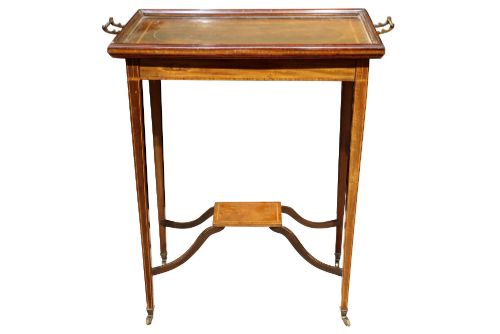
Some Edwardian and European interpretations secure the tray with small brackets or incorporate it into a rigid table frame. Folding stands rely on the weight of the metal top to maintain stability when assembled.
Where were these tables made?
Production locations span Britain, continental Europe, and various regions across the Middle East and India. Nineteenth and early twentieth century workshops produced export pieces for international markets, combining local metalworking traditions with European furniture forms.
Anglo-Indian examples often originated in craft centres such as Hoshiarpur, while other pieces emerged from workshops in Cairo, Morocco, and Persia.