



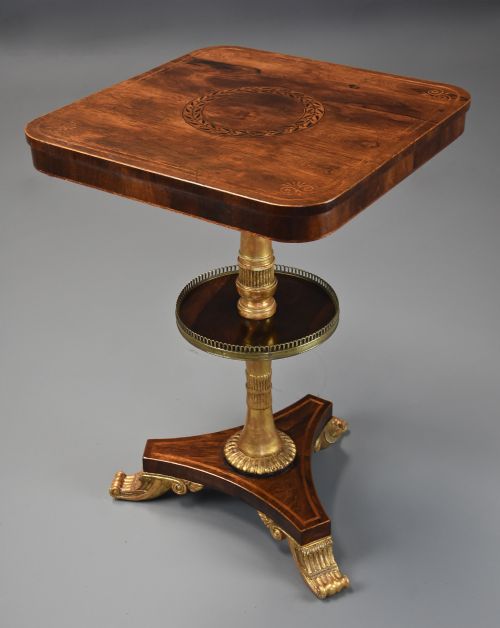


Gilt Brass Occasional Table
A gilt brass occasional table brings French revival elegance into a room, offering a functional surface framed in decorative metalwork.
Gilt Brass Occasional Table
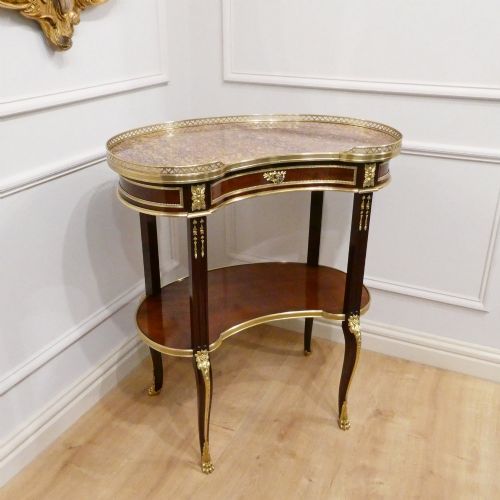
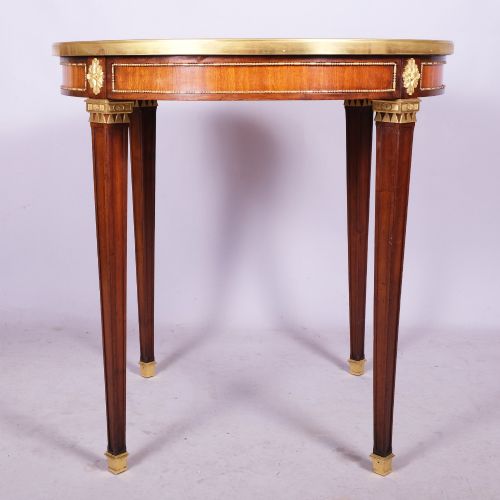
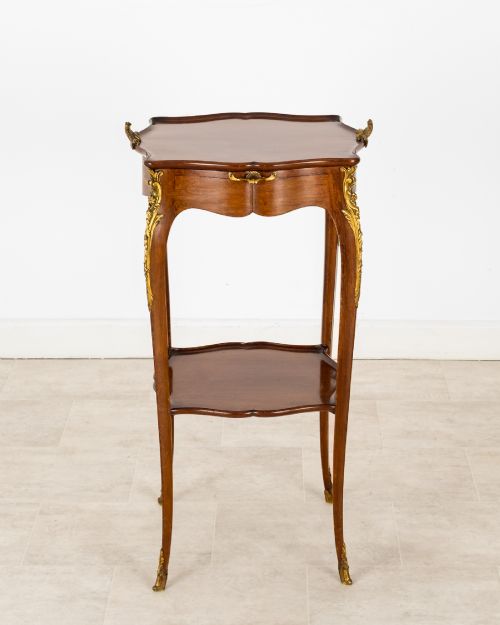
A gilt brass occasional table is a compact surface designed for display or general use, frequently taking the form of a side, lamp, or wine table. The selection here leans heavily towards French revival aesthetics, particularly Louis XV and Louis XVI styles, alongside Empire designs.
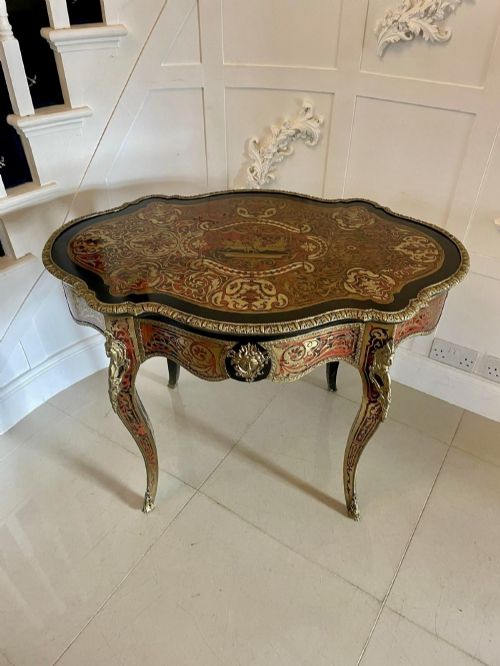
Most pieces date from the nineteenth and early twentieth centuries, constructed in forms like the guéridon or kidney-shaped table. These items serve as functional accents that reflect nineteenth-century interpretations of earlier monarchical French decoration.
How they were made
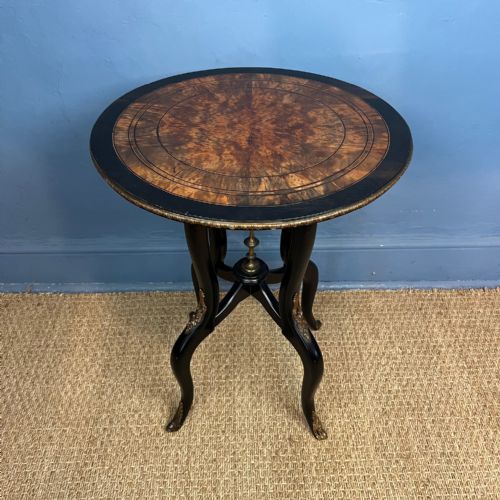
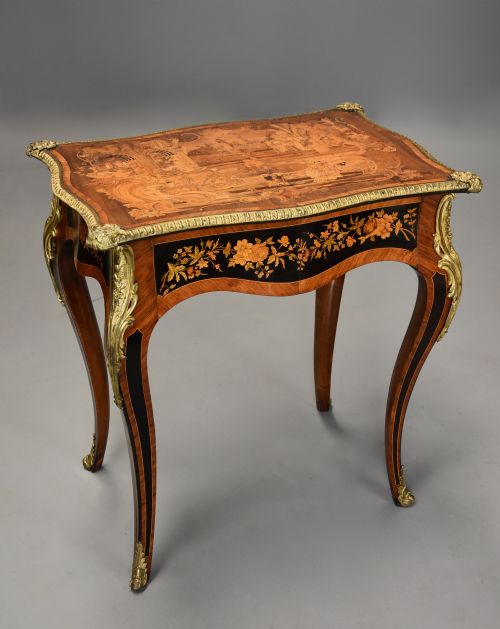
Makers constructed the foundational frames from timbers such as mahogany, kingwood, walnut, and rosewood, often applying marquetry, parquetry, or boulle work to the surfaces. Ebonised wood and black lacquer also appear among the structural materials.
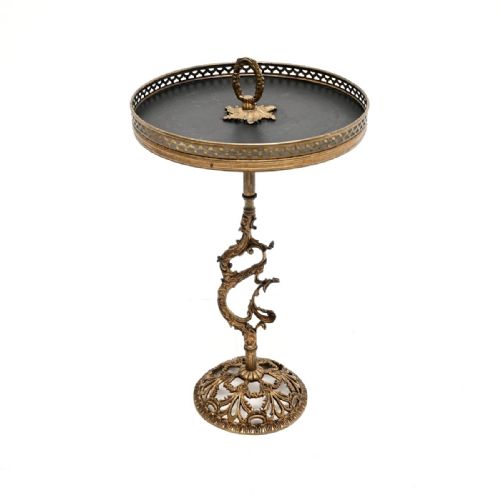
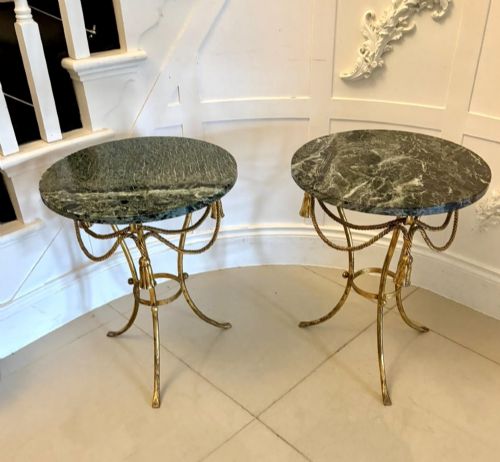
Mounts, feet, and galleries of gilt brass, ormolu, and gilt bronze provide the characteristic metallic enrichment. Marble tops, particularly verde marble, frequently complete the upper surface of these tables.
Gilt Brass Occasional Table Retail Price Guide 2026
Typical asking prices for gilt brass occasional table among the pieces listed under this phrase on Sellingantiques today, from the lower quarter to the upper quarter. They describe what is for sale here now, not the wider market.
Listings span the nineteenth century through the 1930s, featuring woods like mahogany, kingwood, and rosewood paired with marble.
What varies in quality
Quality shows in the crispness of the gilt brass or ormolu mounts and the precision of the underlying woodwork, such as inlaid marquetry. Pieces associated with named makers or workshops generally display finer detailing in their cast metalwork and timber selection.
The choice of top material also indicates tier, with integrated marble slabs or porcelain plaques representing a more ambitious build than plain wooden boards.
Maison Millet·François Linke·George Bullock·Haentgos Freres
The Gilt Brass Occasional Table Glossary
- Ormolu
- Gilded bronze applied to furniture mounts and decorative details. It provides a rich, warm metallic finish common on French revival pieces.
- Guéridon
- A small round table supported by a central pillar or multiple legs. This form frequently incorporates a marble top and gilt metal mounts.
- Boulle
- A type of marquetry using brass and tortoiseshell inlaid into a dark ground. It is named after the French cabinetmaker André-Charles Boulle.
- Marquetry
- Decorative veneer patterns formed from pieces of wood or other materials applied to a carcase. It creates pictorial or geometric surface designs.
- Etagere
- A set of open shelves or a multi-tiered small table used for display. It combines upright supports with several horizontal surfaces.
Gilt Brass Occasional Table: Frequently Asked Questions
What is a gilt brass occasional table used for?
These tables function as small surfaces for lamps, drinks, or decorative objects within a room. Their compact proportions allow them to sit easily beside seating or in corners.
Historically, they filled similar auxiliary roles in French-inspired interiors, prized for mobility and decorative impact.
How do I identify the period?
Dating relies on timber choices, construction methods, and the specific revival style employed by the cabinetmaker. Nineteenth-century pieces often reflect Louis XV or Louis XVI revivals with cast ormolu mounts.
Later examples from the early twentieth century continue these classical idioms using similar decorative vocabularies.
Are these tables French in origin?
Many of the pieces on this page follow French designs or were made in France during the nineteenth and early twentieth centuries. Makers such as François Linke and Maison Millet worked within these Parisian traditions.
English and Italian interpretations also occur, adapting the same continental vocabulary of gilt metal and marquetry.
How should I care for marble and gilt brass?
Marble surfaces require gentle cleaning with mild soap and water to avoid staining or etching from acidic liquids. Gilt brass mounts should be dusted carefully without harsh metal polishes that can strip the gilding.
Keeping the timber and metal away from direct heat sources helps preserve the finish.