

French Leather Top Table
A French leather top table brings writing desks, bureau plats and occasional pieces into a room with rich veneers and tooled surfaces.
French Leather Top Table
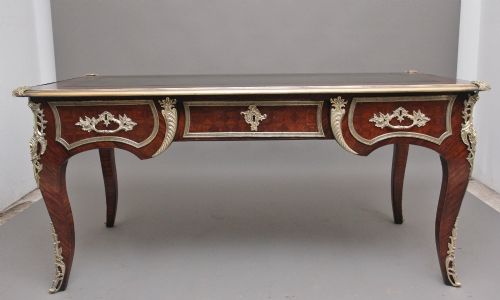
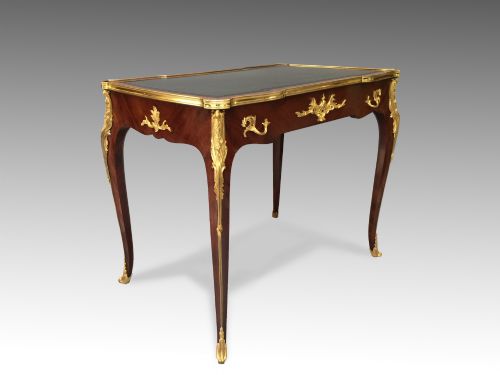
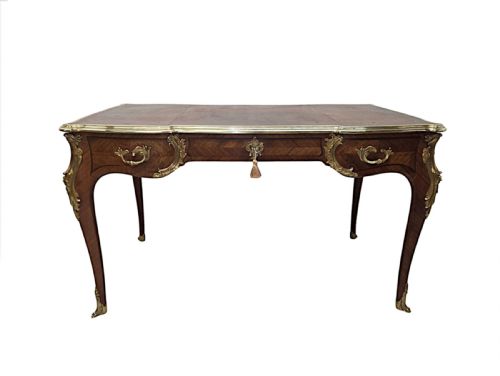
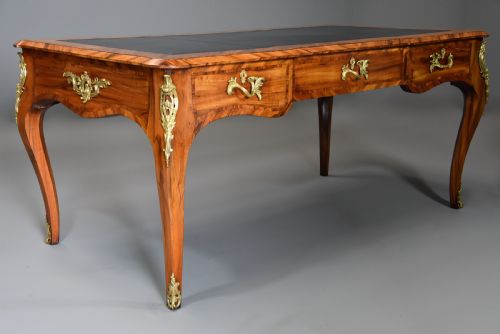
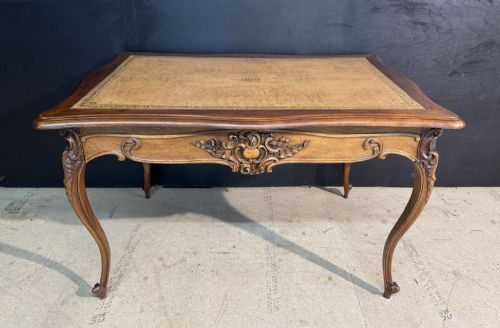
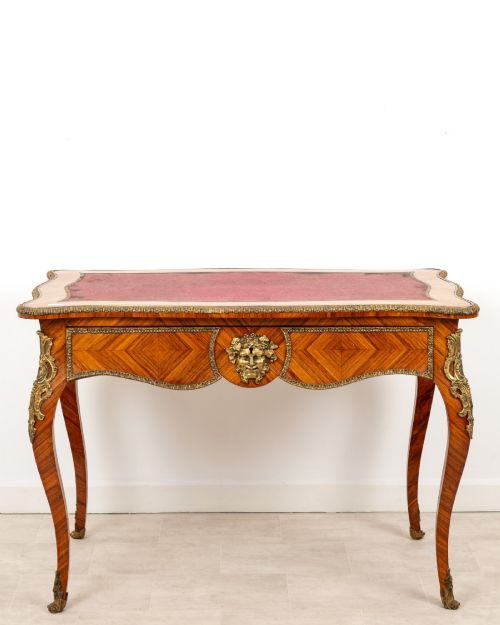
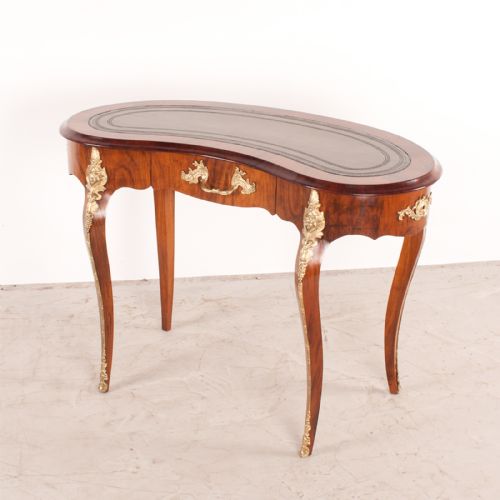
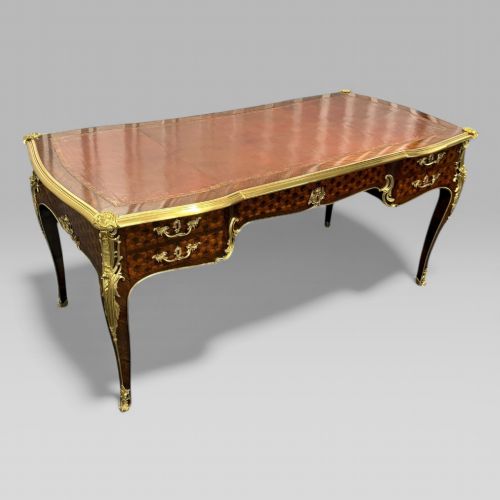
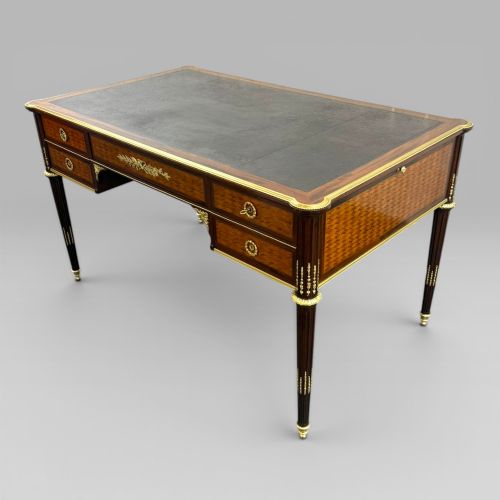
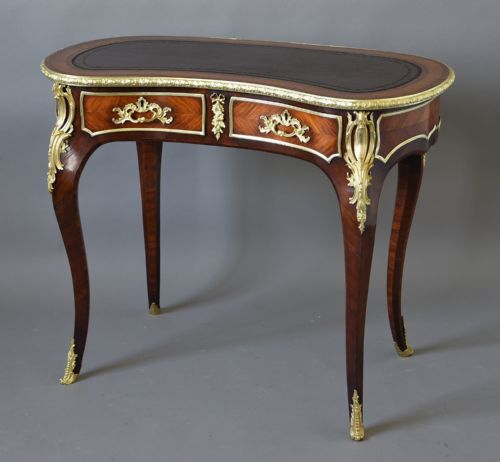
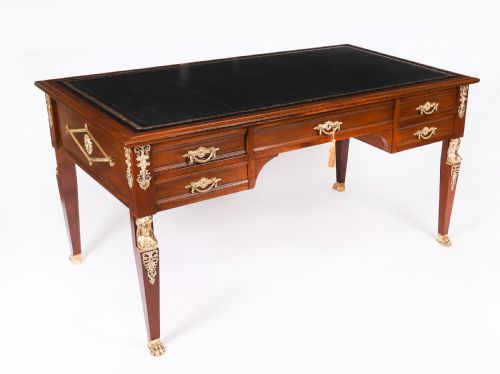
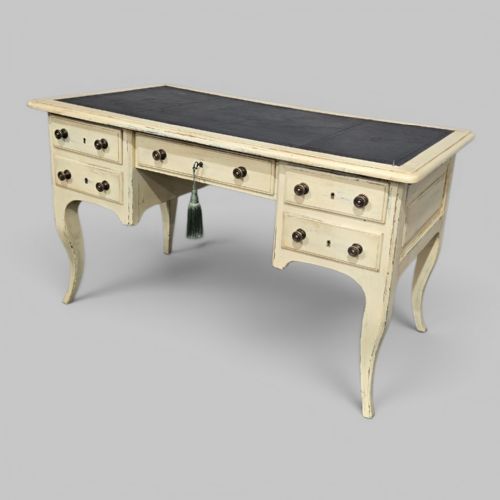
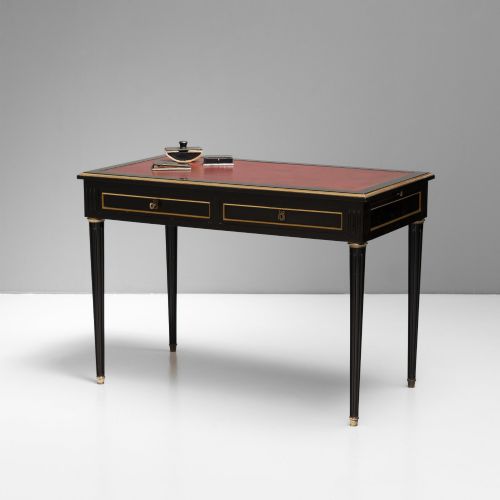
A french leather top table primarily spans nineteenth-century writing desks, freestanding bureau plats and occasional side tables. The selection ranges from compact kidney-shaped ladies writing desks to large proportions in the Louis XV and Louis XVI styles.
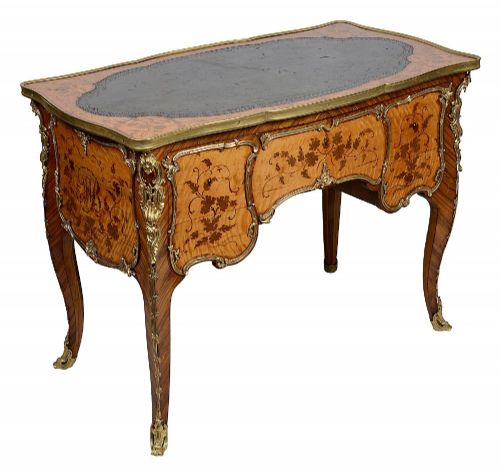
Makers and workshops across the nineteenth century produced these freestanding tables in mahogany, kingwood, walnut and rosewood. Many incorporate inlaid parquetry, marquetry and patinated leather inserts designed for practical writing and study.
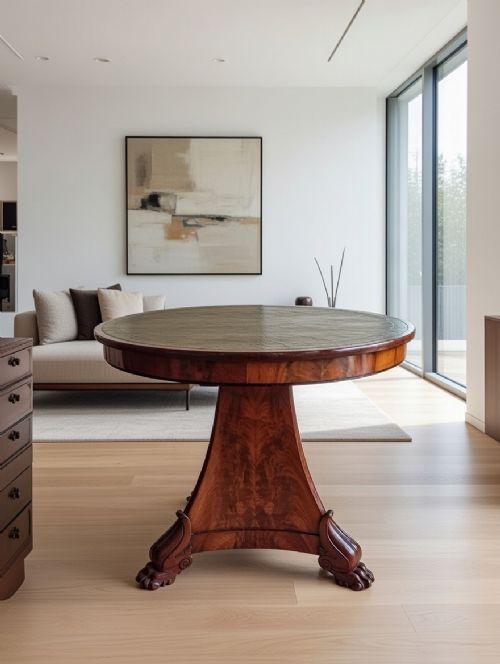
Alongside formal desks, the pieces include games tables, nests of tables and compact side tables adapted with leather writing surfaces. These items reflect revivalist tastes spanning the Victorian era through to the early twentieth century.
Materials and technique
Cabinet makers utilised dense hardwoods such as mahogany, walnut and kingwood as foundations for intricate parquetry and marquetry patterns. Finer examples combine contrasting timbers like tulipwood and satine within structured veneered panels.
Gilt bronze and ormolu mounts accentuate the corners, drawer edges and cabriole legs of desks and side tables. These cast bronze elements provide structural definition and decorative contrast against polished timber surfaces.
The inset writing surfaces feature supple leather, frequently decorated with blind and gilt tooling around the perimeter. This material provides a durable, tactile writing plane integrated directly into the timber framework.
Listings feature mahogany, kingwood, walnut, rosewood and goncalo alves alongside cast ormolu and tooled leather.
What varies in quality
The standard of carving and the crispness of chased ormolu mounts distinguish finer workshop output from simpler production. Superior pieces display deeply articulated bronze work and precise timber matching across all visible surfaces.
Construction methods and timber selection determine structural longevity, particularly in the stability of large bureau plat tops and drawer linings. High-grade examples employ robust secondary woods and meticulous joinery that withstands heavy daily use.
François Linke·Edwards and Roberts·Donald Ross·Maurice Dufrêne
The French Leather Top Table Glossary
- Bureau plat
- A freestanding writing table fitted with one or more drawers, designed to sit in the centre of a room rather than against a wall. These desks typically feature inset leather writing surfaces and elaborate bronze mounts.
- Ormolu
- Gilded bronze ornamentation applied to furniture, popular in French cabinet making. The technique involves coating cast bronze with a mercury and gold amalgam before firing.
- Kingwood
- A dense, richly figured tropical timber utilised extensively in high-end marquetry and parquetry during the eighteenth and nineteenth centuries. Its distinct purple-brown grain makes it easily recognisable.
- Parquetry
- Geometric wood inlay patterns assembled from small veneer pieces to form mosaic designs on table tops and drawer fronts. This technique showcases the natural colour variations of different exotic timbers.
- Cabriole leg
- A furniture leg that curves outward and then tapers inward, mirroring the shape of an animal limb. It is a defining feature of Louis XV revival furniture and related nineteenth-century designs.
French Leather Top Table: Frequently Asked Questions
Where should a bureau plat sit?
These freestanding writing desks work best placed in the centre of a study or living space rather than pushed against a wall. Because the back and sides receive the same decorative marquetry and ormolu mounts as the front, they look complete from any angle.
Ensuring adequate clearance around the table allows the drawers to function properly and highlights the proportions of the cabriole or tapered legs within the room.
How do I care for the leather?
The leather inset on the top surface benefits from occasional cleaning with a slightly damp cloth followed by a neutral leather cream. Avoid harsh chemical cleaners or excess moisture, which can damage the underlying timber and dissolve any gilt tooling.
Keeping the surface protected from direct sunlight prevents the leather from drying out and maintains the depth of the original colour over time.
How do I identify Louis XV style?
Louis XV style pieces are characterised by asymmetrical curves, flowing floral marquetry and prominent cabriole legs. Ormolu mounts on these items often depict naturalistic scrollwork and acanthus leaves rather than rigid geometric patterns.
The absence of straight lines defines this aesthetic, creating a softer silhouette that distinguishes it from the later neoclassical revival periods.
What is parquetry?
Parquetry is a decorative woodworking technique where small geometric pieces of veneer are arranged to create repeating patterns across flat surfaces. Cabinet makers used contrasting timbers like kingwood, tulipwood and mahogany to build up cubes, herringbone designs and checkerboards.
This method differs from pictorial marquetry by focusing on structured, repeating geometrical arrangements that highlight the grain and tone of each wood block.