

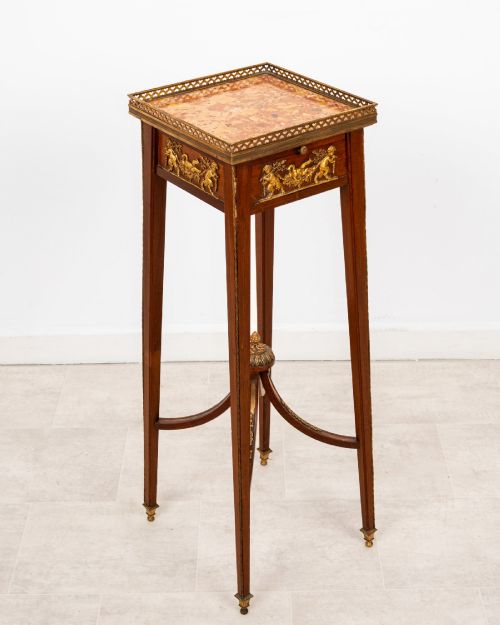
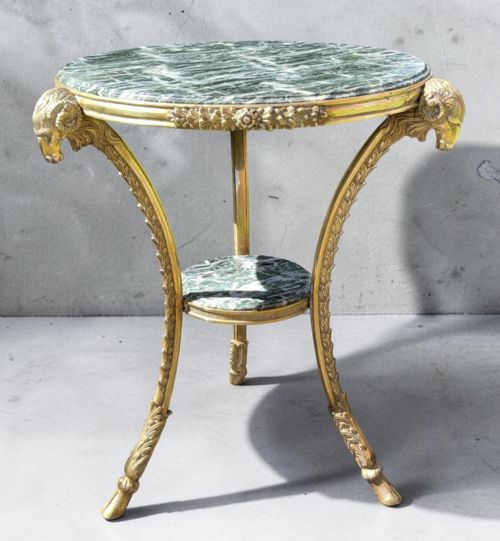


French Brass Gueridon
A french brass gueridon is a round table built for display, bringing light reflection and continental proportion into a room.
French Brass Gueridon
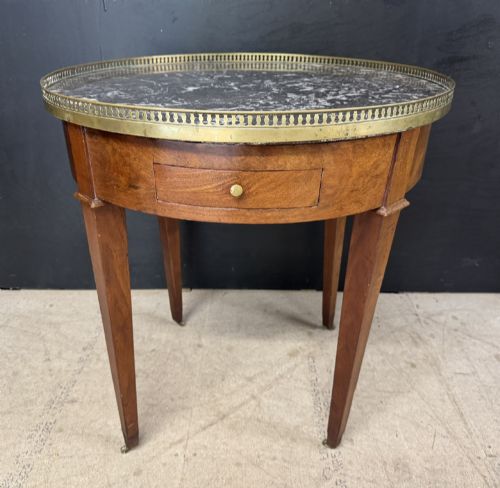
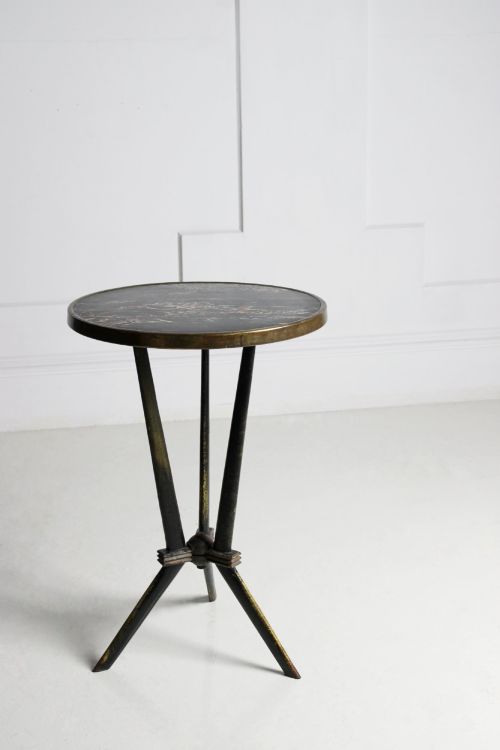
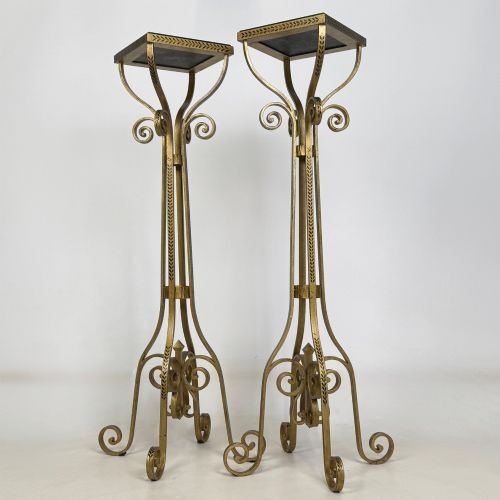
When you search for a french brass gueridon, you are looking at circular pedestal tables designed in continental workshops during the nineteenth and early twentieth centuries. These pieces function as occasional tables, plant stands, lamp tables, or centre tables within domestic interiors.
The version you are most likely to meet on this page combines a round marble top set within a brass or gilt-bronze gallery, supported by a central column or tripod base. They emerge in styles spanning French Empire, Louis XV, and Louis XVI revivals, alongside Edwardian interpretations.
Makers and designers working in Paris produced these forms using native and exotic timbers alongside cast mounts. Their footprints remain compact, making them adaptable for placement beside seating or in hallways.
How they were made
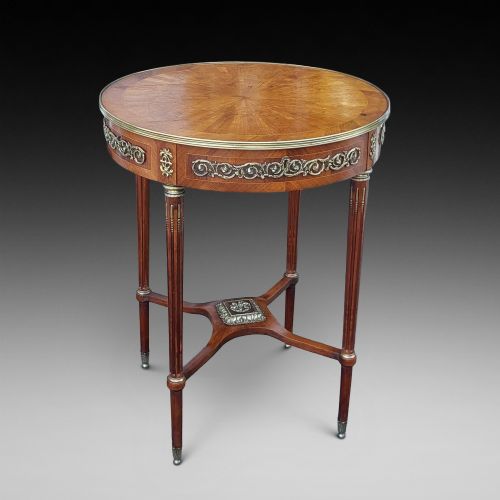
Carpenters constructed the carcasses of these tables using timbers such as mahogany, kingwood, walnut, and rosewood, frequently employing marquetry, parquetry, or satinwood inlays across the tops and aprons. Marble inserts in white, rouge, or dark shades provide durable surfaces fitted snugly inside cast metal galleries.
Foundries supplied the cast brass, gilt bronze, and ormolu mounts, including rams heads, foliage, and feet, which workers chased by hand and secured to the wooden frames. Structural columns often rest on heavy tripartite bases that give stability to the elevated circular tops.
Cast brass rams heads peer outward from beneath several nineteenth-century table tops, watching every visitor who enters the room.
What varies in quality
The standard of a piece rests upon the crispness of the cast brass or ormolu mounts and the depth of hand-chasing applied after casting. Heavier, finely detailed metalwork indicates a workshop of higher ambition than simple stamped sheet brass.
Selection of materials dictates grade, marked by figured mahogany veneers, substantial slab marble tops with polished bevels, and tight joinery in the underlying framework. Pieces bearing attribution to known makers command distinct attention through superior cabinetwork.
A Hugnet Paris·François Linke
The French Brass Gueridon Glossary
- Guéridon
- A small circular occasional table supported by a central pillar or legs, originating in seventeenth-century France. The form evolved from candle stands into general display and wine tables.
- Ormolu
- Gilded bronze applied as decorative mounts to furniture frames and legs. The technique involves dipping copper alloys into gold amalgams and firing.
- Gallery
- A low pierced metal or wooden rail fitted around the edge of a table top. Its purpose is to keep items from sliding off the surface.
- Marquetry
- The art of forming decorative patterns on wooden furniture using thin veneers of different timbers, shells, or metals. Craftsmen cut these elements precisely to fit flush across the surface.
French Brass Gueridon: Frequently Asked Questions
Where did people use these tables?
Owners placed these circular tables in salons, boudoirs, and hallways as functional surfaces for lamps, plants, and decorative objects. Their compact footprints allowed flexible placement beside seating or in corners.
In larger rooms, centre tables stood independently to display decorative items under the light of chandeliers, while smaller wine and lamp tables served immediate seating areas.
How do I identify the period?
Dating relies on combining the stylistic vocabulary, such as Empire or Louis XVI revival motifs, with construction methods visible in the timber framing and mounting techniques. Nineteenth-century examples often display heavier bronze casting.
Twentieth-century pieces tend to show lighter proportions and simplified mounts, reflecting Edwardian and later tastes while retaining traditional French silhouettes.
How do I care for marble tops?
Marble surfaces require gentle cleaning with mild, pH-neutral soap and warm water, followed by immediate drying with a soft cloth. Acidic liquids like wine or citrus juice can etch the polished stone if left unattended.
Applying a specialised stone sealer helps protect against stains without altering the natural appearance of the marble or affecting the surrounding brass mounts.
Are these tables sturdy enough for daily use?
The central pillar and tripod base provide a stable platform for holding lamps, books, and decorative items under normal domestic conditions. Heavier marble tops anchor the tables effectively against casual knocks.
Care should be taken when moving them across uneven floors to avoid stressing the joints where the central column meets the feet and top.