






Antique Papier Mache Furniture
Antique papier mache furniture offers striking lacquered surfaces and intricate mother-of-pearl inlay that elevate a Victorian interior.

Antique Papier Mache Furniture
Antique papier mache furniture comprises a distinctive group of Victorian household items built from durable pulped paper formations and reinforced wooden frames. When buyers search for antique papier mache furniture, they typically encounter versatile occasional surfaces and seating designed for nineteenth-century drawing rooms.
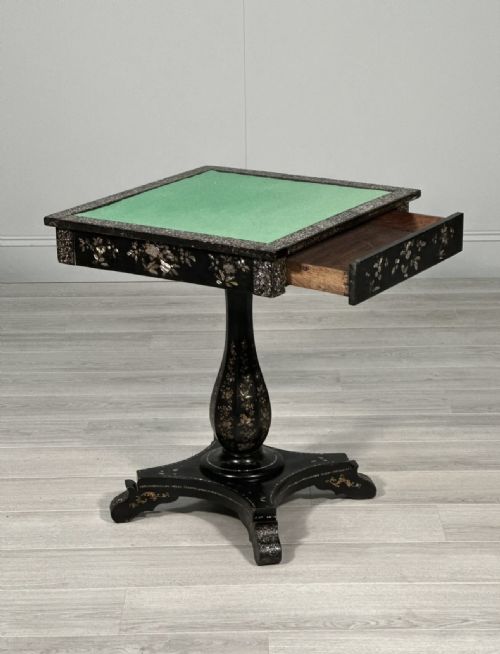
The selection on this page centres primarily on nineteenth-century pieces spanning tray tables, games tables, and sewing tables. Many examples incorporate stands created during the Victorian era or later to elevate decorative serving trays into functional tables.
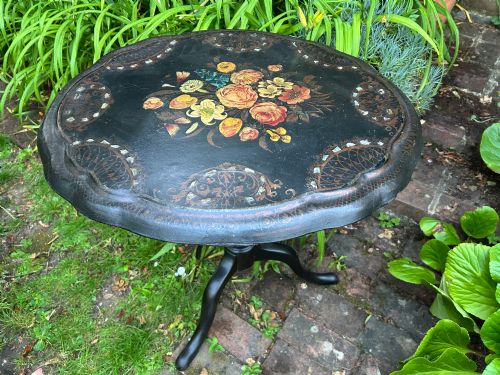
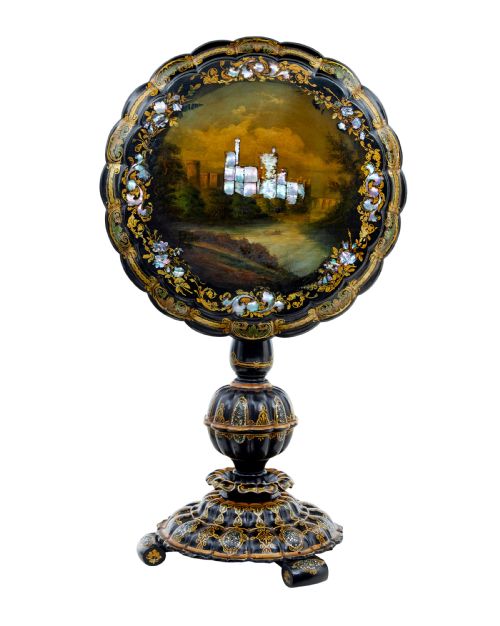
Chinoiserie design dominates the decorative vocabulary of these objects, bringing painted landscapes and gilt motifs to surfaces like tilt-top tables and pole-screens. Alongside tables and chairs, specialised items such as pairs of children's chairs and Welsh-interest pole-screens appear within the nineteenth-century material record.
How they were made
Craftsmen built these pieces using compressed paper pulp layered and treated to create a rigid, smooth substrate capable of holding intricate decoration. Artisans then applied dark lacquer finishes, often ebonised to provide a deep, glossy background for subsequent ornamentation.
Decoration relied heavily on contrasting materials, embedding iridescent mother-of-pearl flakes into the lacquer and applying gilt paint by hand. Metal components such as brass fittings occasionally reinforced structural joints on tables and stands.
Antique Papier Mache Furniture Retail Price Guide 2026
Typical asking prices for papier mache furniture among the pieces listed under this phrase on Sellingantiques today, from the lower quarter to the upper quarter. They describe what is for sale here now, not the wider market.
All listed pieces belong to the nineteenth century, utilising wood, lacquer, papier-mache, gilt, and mother-of-pearl within Victorian Chinoiserie styles.
What varies in quality
The sophistication of the painted Chinoiserie scenes and the depth of the mother-of-pearl inlay distinguish finer examples from simpler production. Superior pieces display meticulous hand-painted detail and harmonious integration of inlaid shell within the ebonised surface.
Structural integrity also separates individual items, particularly where original stands support antique trays or where tilt-top mechanisms require precise engineering. The condition of the original lacquer finish directly impacts the visual presence of the piece.
The Antique Papier Mache Furniture Glossary
- Papier-mache
- A composite material made from paper pulp or layers of paper mixed with glue and resin, pressed into moulds and baked until rigid. This substance formed the lightweight yet durable body of Victorian trays and tables.
- Chinoiserie
- A European artistic style reflecting Chinese motifs and decorative landscapes, popular in nineteenth-century British design. Artisans rendered these scenes in gilt and colour upon dark lacquered surfaces.
- Mother of Pearl
- The iridescent inner layer of mollusc shells, harvested and cut into thin pieces for inlay work. Craftsmen embedded these shimmering fragments into papier-mache furniture to catch the light.
- Tilt-top table
- A small occasional table featuring a mechanism that allows the tabletop to pivot into a vertical position when not in use. These space-saving forms were common in Victorian reception rooms.
- Pole-screen
- A vertical adjustable screen mounted on a freestanding pole, designed to shield a person's face from the radiant heat of an open fireplace. Nineteenth-century examples often featured decorated papier-mache panels.
Antique Papier Mache Furniture: Frequently Asked Questions
What is antique papier mache furniture made of?
These pieces are constructed from compressed paper pulp and binding agents, forming a dense material that accepts fine lacquer finishes. Artisans then enhanced the surfaces with gilt painting and mother-of-pearl inlay.
Wooden components and brass elements frequently provided structural support, particularly in the construction of stands, frames, and tilt-top mechanisms for tables.
How do I date antique papier mache items?
Dating relies primarily on the Victorian period characteristics seen across nineteenth-century manufacturing techniques and design styles. The presence of specific Chinoiserie motifs and ebonised finishes points directly to this era.
Certain items may also feature later modifications, such as nineteenth-century trays mounted on subsequent stands, requiring careful inspection of the fixing points.
How were these tables used originally?
Victorian households utilised these portable surfaces for serving refreshments, playing board games, or holding sewing equipment in drawing rooms. Tray tables and wine tables offered flexible placement during social gatherings.
Tilt-top variants allowed owners to clear floor space easily by pivoting the decorated surface against the wall when the table was idle.
How do I care for papier mache furniture?
Protect these pieces by keeping them away from direct sunlight and excessive moisture, which can damage the delicate lacquer and gilt decoration. Gentle dusting with a soft, dry cloth preserves the glossy ebonised surface.
Avoid using liquid cleaners or polishes that might penetrate worn areas of the lacquer or loosen embedded mother-of-pearl pieces.