



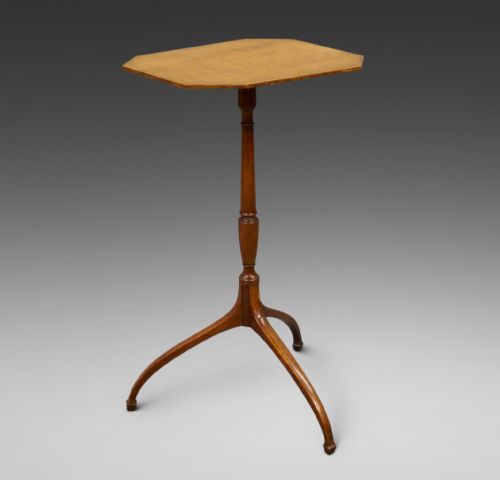
Regency Octagonal Tilt Table
A regency octagonal tilt table is a practical dining or lamp table with a pivoting top, prized for clever space-saving engineering.
Regency Octagonal Tilt Table
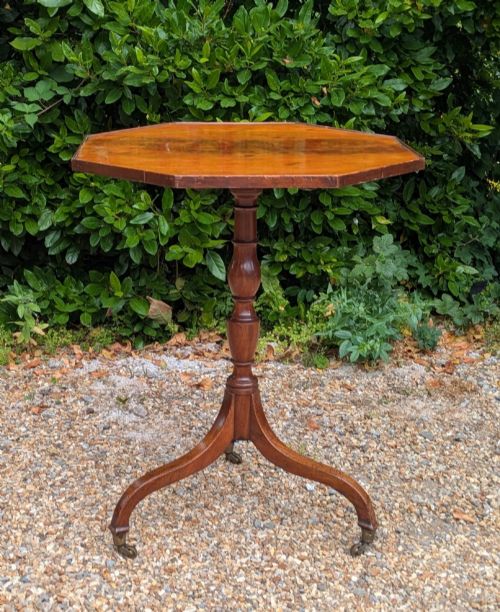
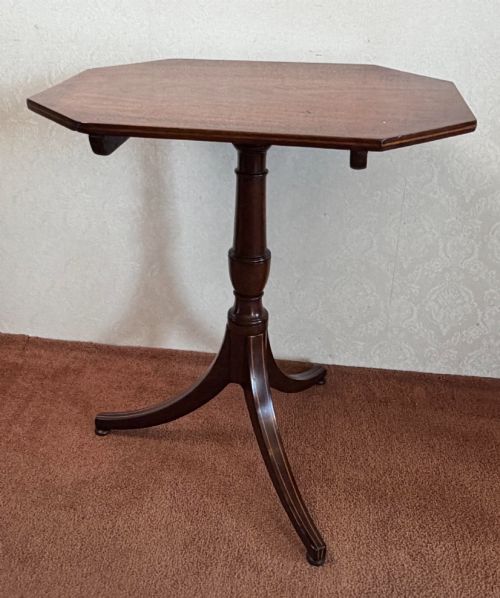
A regency octagonal tilt table is a versatile piece designed for occasional dining, games, or display, pivoting vertically when not in use to save floor space. The form combines an eight-sided top with a central pillar and tripod base, originating primarily from the Regency and William IV periods with influences from the Georgian era.
Most examples found on this page date from the early nineteenth century, constructed with either mahogany or rosewood surfaces. Buyers encounter occasional tables, wine tables, and side tables featuring this distinctive tilting mechanism alongside fixed-top variants.
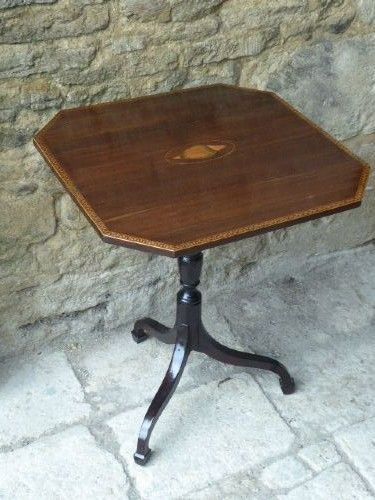
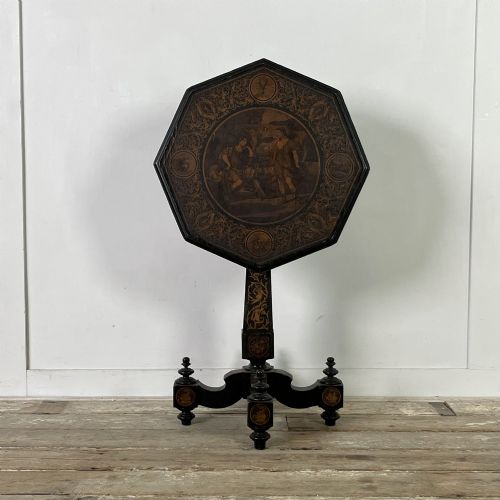
The aesthetic bridges formal Georgian restraint and the heavier proportions of the later nineteenth century. Makers applied decorative stringing, brass inlay, or painted finishes to enhance the geometric eight-sided top.
How they were made
Cabinet makers utilised dense timbers such as mahogany and rosewood for the primary surfaces and structural pillars. Contrasting woods including boxwood, satinwood, and ebonised wood were incorporated for stringing, inlay, and decorative borders.
The tilting action relies on a clever pivot mechanism fixed to the underside of the top and the top of the central column, often secured with a brass catch. Tripod bases employ three shaped legs joined to a central pedestal, frequently featuring brass castors for mobility.
Regency Octagonal Tilt Table Retail Price Guide 2026
Typical asking prices for regency octagonal tilt table among the pieces listed under this phrase on Sellingantiques today, from the lower quarter to the upper quarter. They describe what is for sale here now, not the wider market.
The archive and current listings demonstrate forms ranging from simple wine tables to grand centre tables.
What varies in quality
The grade of timber selected for the top dictates the visual presence of the piece, with figured mahogany and richly grained rosewood commanding greater attention. The precision of the boxwood or brass inlay work reveals the hand of a skilled cabinet maker rather than standard production.
Stability in the tilt action and firmness in the tripod base separate robust examples from those with weakened joints. Originality of surface finish and the retention of period brass elements preserve the historical integrity of the piece.
Gillows
The Regency Octagonal Tilt Table Glossary
- Tilt-top action
- A mechanical hinge system that allows the table surface to pivot from horizontal to vertical. This clever engineering enables the furniture to stand flat against a wall when not in use.
- Tripod base
- A supporting structure featuring three outward-curving legs attached to a central pedestal. This configuration ensures stability on uneven floors.
- Boxwood-strung
- Inlay work utilising narrow strips of pale boxwood set into dark timber veneers. It creates a crisp linear border around the edge of the tabletop.
- Occasional table
- A small, movable table designed for specific, intermittent uses such as holding a lamp or wine glasses. These pieces are easily repositioned within a room.
Regency Octagonal Tilt Table: Frequently Asked Questions
What is a tilt top table used for?
These tables served multiple functions in nineteenth century rooms, acting as dining surfaces, wine tables, or lamp stands when positioned beside seating.
The tilting mechanism allowed owners to store the furniture flat against the wall, clearing floor space when the room was needed for other activities.
How do I identify a Regency period table?
Regency pieces typically display classical proportions, restraint in ornament, and specific timber choices such as dark mahogany or figured rosewood.
Detailing like boxwood stringing, brass inlay, and octagonal tops point firmly toward the early nineteenth century and the Georgian transition.
Will the tilt mechanism wear out with use?
The brass catches and wooden pivots on these tables were engineered for daily operation and remain remarkably durable after two centuries.
Gentle handling when pivoting the top ensures the original timber housing and metal components stay secure and functional.
Where should I place an octagonal table?
An octagonal top works effectively beside a sofa or in the corner of a room, providing a useful surface without dominating the floor area.
When not in use, tipping the surface upright transforms the furniture into a decorative wall panel displaying the wood grain.