
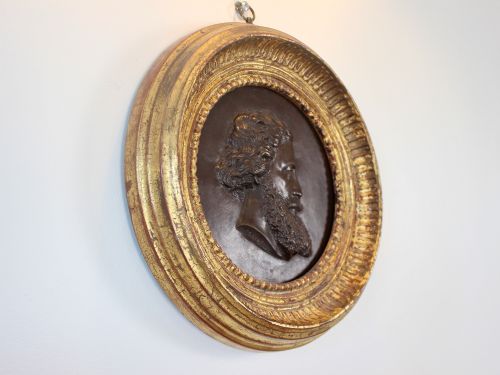


Gilt Framed Plaque
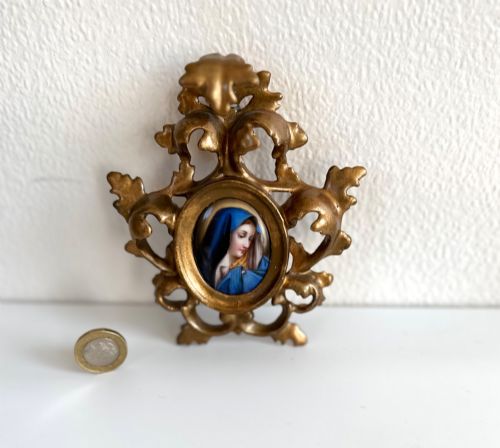
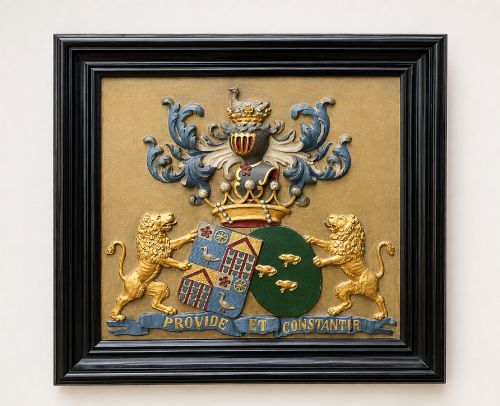
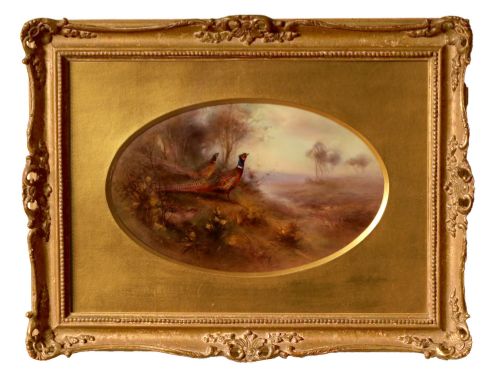
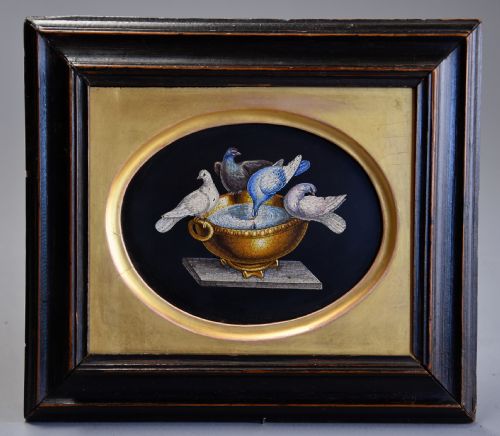
These gilt framed plaque examples bring together painted porcelain, bronze, enamel and marble within ornate surrounds.
Gilt Framed Plaque
When a buyer searches for a gilt framed plaque, they encounter a diverse assembly of wall art, portrait miniatures and decorative panels. The selection spans the eighteenth, nineteenth and early twentieth centuries, drawing on Victorian, Georgian, Edwardian and Neoclassical sensibilities.
The dominant forms on this page include hand-painted porcelain panels, Limoges enamels on copper, micromosaics and bronze reliefs. These objects frequently take domestic wall display as their primary purpose, housed within period frames of giltwood, gilt metal or ebonised timber.
Originating across Britain and continental Europe, particularly from workshops in Berlin, Vienna, Limoges and Worcester, these plaques capture historical, religious and classical subjects. Buyers find everything from delicate miniature portraits to substantial scenic compositions.
Materials and Technique
The physical construction of these pieces relies on the union of a durable centre panel and a decorative perimeter. Painters and sculptors worked on porcelain surfaces, copper bases for enamel, or stone such as Ashford marble for pietra dura work, firing or setting their compositions before mounting them.
Frames employ giltwood, ormolu, gilt metal and carved wood, sometimes housing the plaque behind glass or velvet backing. The mounting technique secures the delicate enamel, ceramic or metal relief safely within its protective border.
Sailors departing and returning captured in enamel remind us that nineteenth-century artisans painted love stories to weather long separations.
Distinctions in Quality
Quality reveals itself in the fidelity and precision of the hand-painted brushwork or the crispness of the bronze and metal relief casting. Pieces originating from established factories like KPM, Royal Worcester or Limoges demonstrate superior artistic execution compared to anonymous or simpler production.
The material integrity of the frame and its harmony with the central panel dictate the overall success of the piece. Superior examples maintain original gilding, clear signatures from known artists, and undamaged ceramic or enamel surfaces without loss to the painted detail.
James Stinton·Henry Pierce Bone·William Rayworth·H. Desprez·Mainfroy
The Gilt Framed Plaque Glossary
- Micromosaic
- A detailed Italian technique utilising tiny glass tesserae to create pictorial images. These tiny pieces are meticulously arranged and fused together to form intricate scenes.
- Pietra dura
- An artistic process using cut and fitted polished coloured stones to create geometric or figurative designs. Hardstones such as marble and jasper are shaped to form seamless pictorial panels.
- Limoges enamel
- A traditional glass-based coating applied to metal plates, predominantly copper, and fired at high temperatures. This method yields rich polychrome portraits and narrative scenes.
- Ormolu
- Gilded bronze used widely for decorative mounts and frames during the eighteenth and nineteenth centuries. The technique involves applying a mercury-gold amalgam to cast bronze.
- Ex Voto
- A votive offering presented to a sanctuary in fulfilment of a vow or for thanksgiving. These objects often take tactile forms like sacred hearts in metal or wood.
Gilt Framed Plaque: Frequently Asked Questions
How do I hang a heavy framed plaque safely?
Wall plaques require secure fixings suited to their specific weight and frame material, such as reinforced picture hooks driven into wall studs or solid masonry anchors.
Heavier bronze reliefs and marble panels need professional weight-bearing wire or brackets attached firmly to the structural backing rather than relying on decorative hanging loops alone.
How should I clean porcelain and enamel surfaces?
Dust enamel and porcelain panels gently using a soft, dry artist's brush to dislodge particles without disturbing the painted or gilt surface. Avoid liquid cleaners, abrasive cloths or chemical solvents, as these can permanently damage delicate pigments and nineteenth-century varnishes.
What indicates a nineteenth-century origin?
Nineteenth-century pieces typically display period-specific framing methods, hand-mixed pigments, and maker marks or artist signatures associated with known European factories and studios.
Examination of the reverse side often reveals period hardware, old paper labels, or characteristic substrate materials like early porcelain bodies and hand-beaten copper plates.
Can I display these plaques in direct sunlight?
Direct sunlight causes fading in painted porcelain pigments, enamels and the organic dyes often found in velvet or textile backings used within the frames.
Positioning these works away from windows or utilising UV-filtering glass protects the fragile colours and maintains the integrity of the painted composition.